
Contact Us Today
Uncategorized
How Virginia’s Climate Impacts Asphalt Shingle Longevity
August 26, 2026
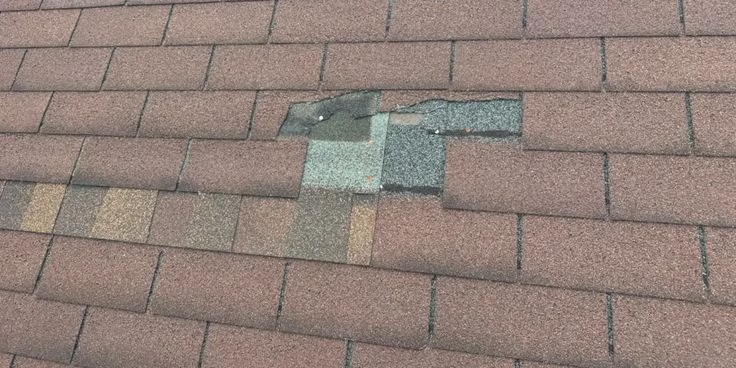
Understanding Asphalt Shingle Decay in Virginia’s Climate
- Asphalt shingles installed in Central Virginia face a combination of conditions (sustained heat, high humidity, UV intensity, and freeze-thaw cycling) that act on the material simultaneously, producing degradation patterns not always accounted for in manufacturer lifespan ratings built on national averages.
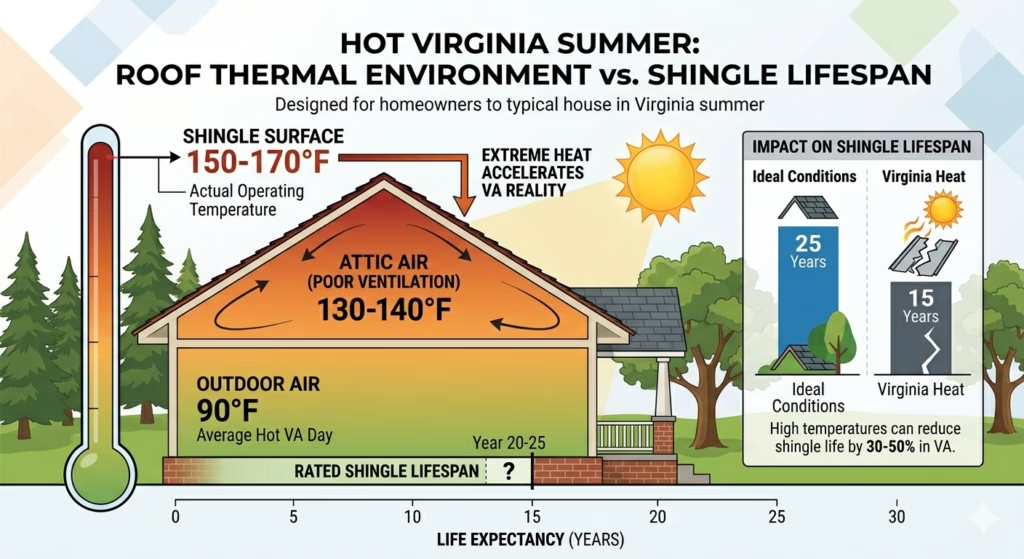
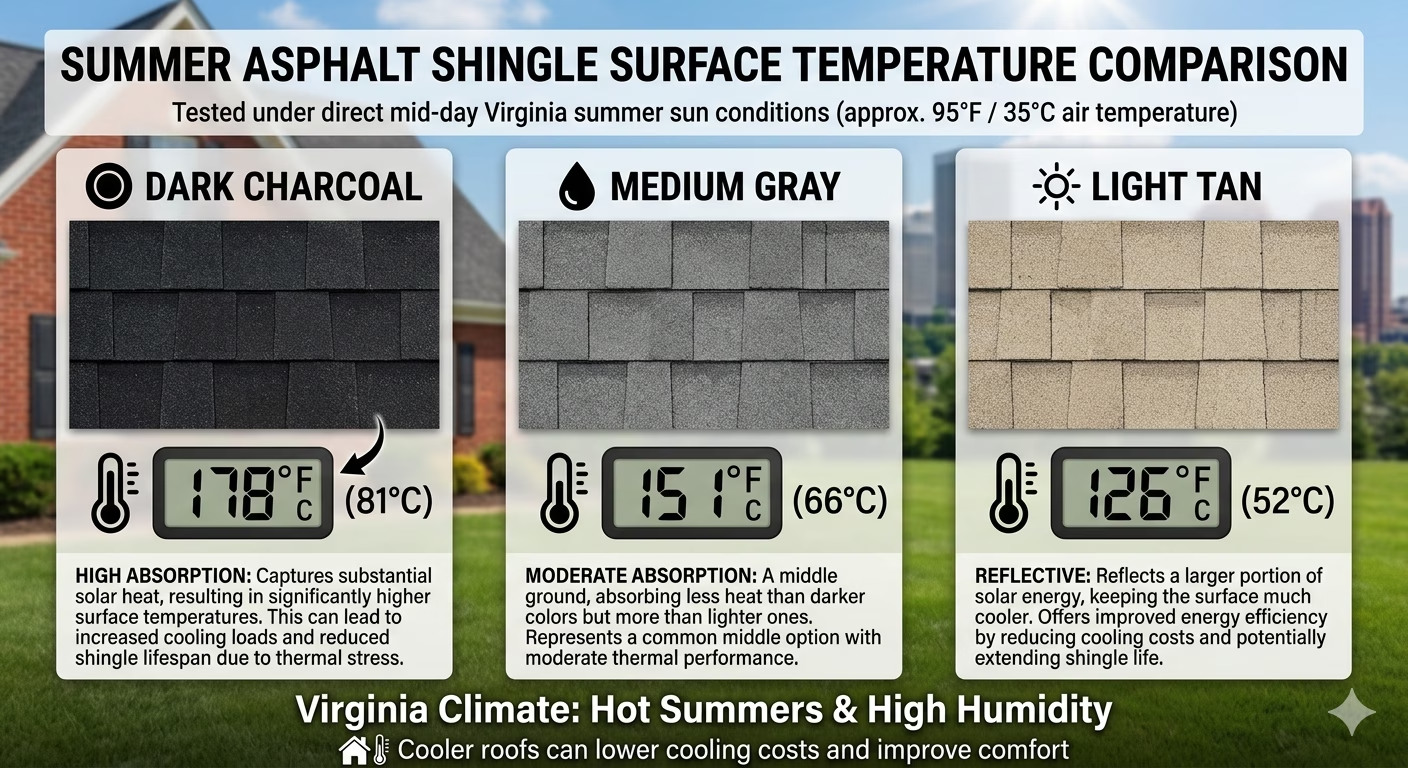
- The surface temperature of dark asphalt shingles in Virginia’s summer can reach 150 to 170 degrees Fahrenheit. At those temperatures, the asphalt binder softens, granules loosen, and the thermal cycling process begins compressing the material’s useful lifespan.
- Humidity does not affect shingles directly in the way it affects wood, but it dramatically affects everything around and beneath the shingles: the attic environment, the decking, the underlayment, and the biological growth conditions that develop on the shingle surface.
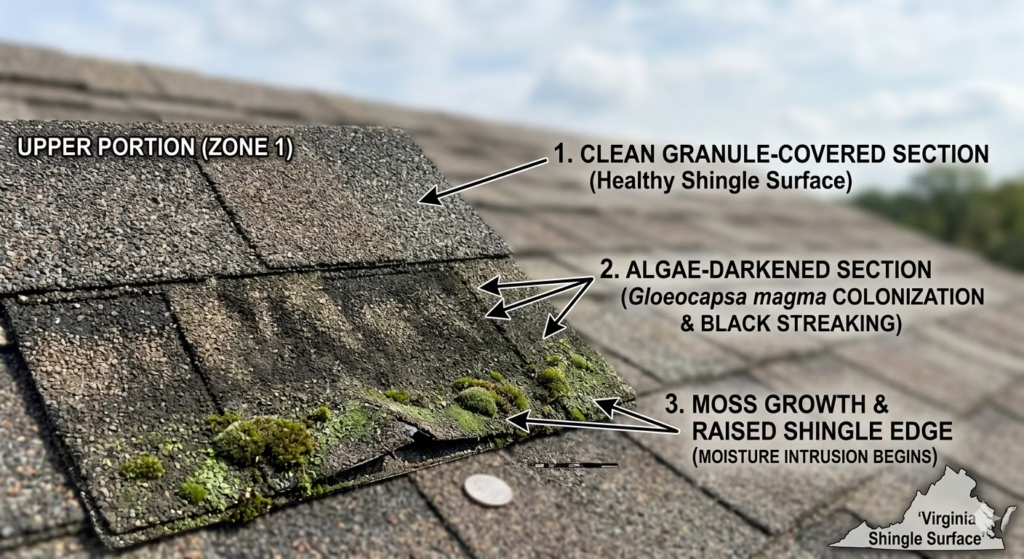
- Gloeocapsa magma (the black algae responsible for the dark streaking on shingle roofs) feeds on the limestone filler in asphalt shingles. Virginia’s climate supports rapid algae colonization, and untreated algae accelerates shingle surface degradation.
- Proper attic ventilation is the most underappreciated factor in shingle lifespan. A poorly ventilated attic in a Virginia summer traps heat that cooks the shingles from below, reducing a 30-year shingle’s effective lifespan to 15 to 20 years.
- Regular professional inspection is the most reliable way to catch early-stage shingle degradation before it becomes a structural moisture problem. Most Virginia homeowners wait too long.
The Lifespan Gap Nobody Talks About
When a roofer installs a 30-year architectural shingle on your Central Virginia home, the 30-year figure is technically accurate in a specific, limited sense: the shingle meets the manufacturer’s testing standards that correspond to a 30-year warranty classification.
What that figure doesn’t account for is what 30 years of Virginia weather actually does to a shingle compared to 30 years in the mild, drier climate where much of roofing product testing and historical performance data was accumulated.
Virginia’s climate is not forgiving to asphalt roofing. The combination of summer heat intensity, sustained humidity, significant UV exposure, seasonal freeze-thaw cycling, and biological growth conditions creates a cumulative stress environment that genuinely compresses the functional lifespan of asphalt shingles compared to their rated performance.
This isn’t a product quality issue. Modern architectural shingles are well-engineered products. It’s a climate reality that homeowners deserve to understand clearly, both so they can set accurate expectations for when their roof will actually need attention, and so they can make decisions about installation, ventilation, and maintenance that extend the lifespan as much as the environment allows.
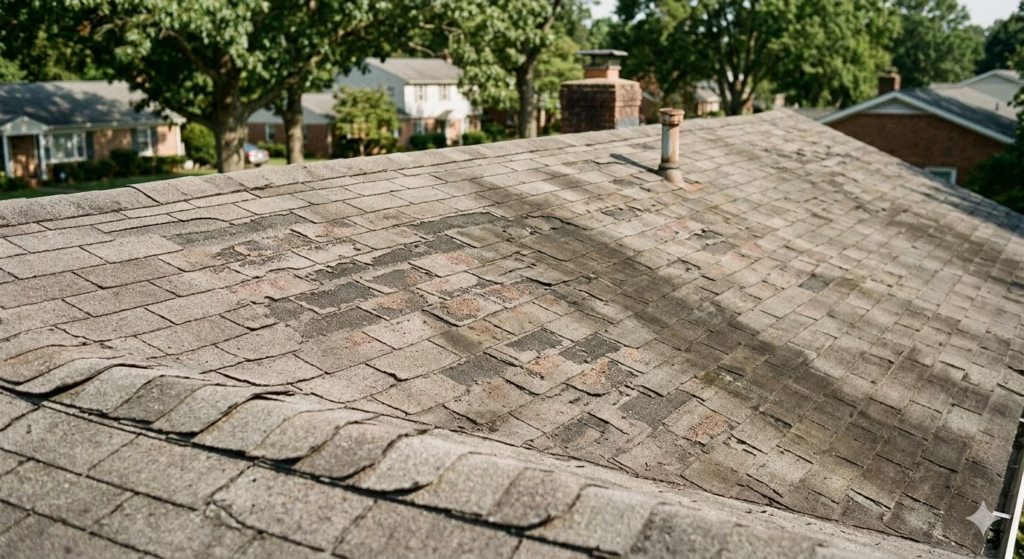
Heat: The Primary Mechanical Stressor
What Heat Does to Asphalt at the Material Level
Asphalt is a petroleum-based product. Its properties change with temperature, which is what makes it useful as a binding agent in roofing materials, but also what makes it vulnerable to heat-related degradation over time.
In a standard architectural shingle, asphalt functions as the binder that holds the mineral granule surface to the fiberglass mat beneath it. At moderate temperatures, this binder is stable and the bond between granule and mat is strong. At high temperatures, the binder softens slightly, and the mechanical bond between individual granules and the asphalt matrix becomes less secure.
What this means in practice: During a Virginia summer, the surface temperature of a dark-colored asphalt shingle on a south-facing slope can reach 150 to 170 degrees Fahrenheit on a sunny day. The binder at these temperatures is measurably softer than at ambient air temperature. Thermal expansion of the shingle occurs, stressing the fiberglass mat. Wind across the surface at these temperatures accelerates granule displacement.
Each high-heat day doesn’t produce dramatic visible damage. But the cumulative effect of hundreds of high-heat cycles over years progressively weakens the granule adhesion across the entire shingle surface.
The Thermal Cycling Problem
Worse than sustained heat is the cycle: intense heat during the day, cooler temperatures at night, repeated across every summer month and across the winter freeze-thaw season.
Each thermal cycle causes the shingle to expand when hot and contract when cool. This dimensional change is small per cycle but accumulates into mechanical fatigue in the fiberglass mat over years. The mat develops microfractures. The surface becomes less dimensionally stable. At the edges and at fastener locations, the cycling stress is highest, which is why shingle edge cracking and lifting near fastener points are often among the first visible degradation signs in older Virginia shingles.
The freeze-thaw season compounds this. Water that has infiltrated any crack or separation in the shingle surface freezes and expands, mechanically widening the damage that heat cycling created.
Virginia’s Summer Is Longer and Hotter Than Many Ratings Assume
Manufacturer performance ratings are based on testing protocols that use standardized environmental conditions. The actual summer experienced by a shingle on a Central Virginia home, specifically the combination of duration (Virginia’s summer heat season runs May through September), intensity (regularly above 90°F air temperature with corresponding shingle surface temperatures well above 150°F), and humidity (sustained high relative humidity that slows shingle surface cooling at night), is toward the challenging end of the performance envelope for standard asphalt shingles.
A shingle that is rated for 30 years in testing conditions may genuinely deliver 22 to 25 functional years on a well-ventilated Virginia roof and 15 to 18 years on a poorly ventilated one.
Humidity: The Indirect but Pervasive Factor
Humidity doesn’t attack asphalt shingles directly the way it attacks wood. Asphalt itself is hydrophobic, and a surface shingle that is intact and granule-covered has reasonable moisture resistance.
Humidity’s damage to an asphalt roofing system is more indirect but pervasive throughout the system.
Attic Humidity and Moisture Accumulation
The attic space beneath the shingles is where humidity-related damage to the roofing system most often begins.
In a humid Virginia summer, exterior air contains significant moisture. When that air enters an attic (through soffit vents, gaps, or deliberate ventilation pathways), it carries humidity into the space. An attic that traps this air rather than moving it through accumulates moisture that condenses on cooler surfaces when night temperatures drop.
Over time, this condensation cycle produces moisture accumulation in the attic:
- On the underside of the roof decking (sheathing)
- On the rafter framing
- On insulation
Moisture in the decking is the mechanism that produces rot, structural compromise, and the soft spots that a professional inspector discovers when they access the attic. From the outside of the house, the roof may look entirely normal. From inside the attic, the decking can be showing significant moisture damage that is actively worsening.
A shingle replacement on a deck in this condition installs new surface material on a compromised substrate. The new shingles will perform below their rated lifespan because the structure beneath them is not sound, and in some cases the deck failure will accelerate.
Humidity and Biological Growth Conditions
Virginia’s humidity is the primary factor enabling the biological colonization of shingle surfaces that is one of the most visible and practically significant degradation pathways in this region.
The microorganism responsible for most of the dark streaking visible on Virginia shingle roofs is Gloeocapsa magma, a cyanobacterium (blue-green algae) that grows on roofing surfaces in humid conditions. Here’s what makes it specifically problematic for asphalt shingles as opposed to, say, metal or composite materials:
Asphalt shingles are a food source. Manufacturers add limestone filler (calcium carbonate) to asphalt shingles to add weight and dimensional stability. Gloeocapsa magma feeds on calcium carbonate. The shingle surface is not just a surface the algae is growing on; it is a substrate the algae is actively consuming.
Virginia’s humidity supports year-round algae activity. In drier climates, algae activity is limited to periods of high moisture. Virginia’s climate, particularly in the wooded areas that characterize much of Central Virginia’s residential landscape, supports biological activity through most of the year.
Algae create conditions for moss colonization. Algae are typically the first biological colonizer. Once established, they create the surface condition (increased moisture retention, partial shading from the algae mass itself) that moss needs to establish. Moss is more physically damaging than algae because its root structures (rhizoids) penetrate between shingles and lift edges, creating entry points for water.
Left untreated, the colonization cycle accelerates shingle surface failure. A shingle surface that has significant algae and moss coverage is losing granules from the areas beneath the biological growth, retaining more moisture than a clean shingle surface, and experiencing physical disruption from moss root structures. All of these accelerate the same surface degradation that heat cycling produces through thermal mechanisms.
UV Exposure: The Slow Degradation Nobody Notices
Ultraviolet radiation from sunlight attacks the asphalt binder in shingles through a process called photo-oxidation. The UV breaks down the chemical bonds in the asphalt, progressively making the material more brittle, more prone to cracking, and less effective at holding granules.
This process is invisible until it reaches a threshold where visible changes appear. By the time a homeowner can see the effects of UV degradation (cracking along the shingle surface, granule loss in the pattern of sun exposure, brittleness when a shingle edge is flexed), the underlying material has already been significantly compromised for some time.
Virginia’s UV exposure is meaningful year-round. Unlike northern states where winter sun angles significantly reduce UV intensity, Virginia’s geographic position means UV-active solar radiation remains significant across more of the year. A Virginia shingle accumulates more UV exposure hours per year than the same product installed in Massachusetts or Minnesota.
This doesn’t make Virginia uniquely hostile to asphalt shingles in the way that extreme desert climates can be, but it means that the UV degradation component of shingle aging operates at a higher rate than in cooler, cloudier markets.
The Granule Connection
The granule surface coating on asphalt shingles serves a specific function: UV protection for the asphalt beneath. Granules are the primary barrier that slows UV degradation of the asphalt binder.
When granules are lost from any part of the shingle surface (through thermal cycling, biological growth, physical impact, or installation damage), the asphalt beneath is directly exposed to UV. Once direct UV exposure begins, degradation of that area accelerates rapidly relative to the granule-covered sections of the same shingle.
This is why granule loss is not just a cosmetic issue. It’s a functional failure of the UV protection system, and it’s self-compounding: heat softens the binder, granules loosen, more asphalt is exposed to UV, UV hardens and cracks the asphalt, more granules fall off.
The Ventilation Factor: The Most Impactful Controllable Variable
Here’s the factor where the damage to Virginia shingles is most preventable: attic ventilation.
Proper attic ventilation serves two critical functions for shingle longevity:
- It removes heat accumulated in the attic during the day, which reduces the temperature delta experienced by the shingles from below
- It moves humid air through the attic rather than allowing it to accumulate and condense
A properly ventilated attic on a hot Virginia day maintains temperatures significantly lower than an under-ventilated attic. The shingles on a properly ventilated roof are being heated from below by an attic at 90 to 100 degrees Fahrenheit rather than one at 130 to 150 degrees Fahrenheit.
That temperature difference at the underside of the decking changes the thermal cycling environment the shingles experience significantly. The shingles on a well-ventilated roof still experience surface temperatures driven by solar gain, but the heat accumulation from below is controlled.
The Standard for Adequate Ventilation
The general rule for attic ventilation is 1 square foot of net free ventilation area for every 150 square feet of attic floor area (or 1:300 if there is a vapor barrier). This ratio should be divided between intake ventilation at the soffits and exhaust ventilation at or near the ridge.
Common ventilation failures in Central Virginia homes:
- Blocked soffit vents (insulation installed during energy efficiency upgrades that covers the soffit ventilation area)
- Inadequate ridge ventilation (older ridge vents that have become less effective, or ridge vents that were never installed on older homes)
- Bathroom or kitchen exhaust fans vented into the attic rather than to the exterior (adds moisture directly to the attic environment)
- Improperly balanced intake and exhaust (more exhaust than intake causes the system to draw humid outside air through non-intended openings)
When a roofing contractor inspects a Virginia home and finds attic temperatures significantly above outdoor temperatures with no visible air movement through the space, the ventilation system needs attention regardless of the condition of the surface shingles. Installing new shingles over an inadequately ventilated attic is building a new roof on the foundation of the same condition that shortened the old one.
Four Seasons Roofing assesses attic ventilation as part of every roof inspection they conduct. Their replacement recommendations include an evaluation of whether the existing ventilation system needs improvement alongside the surface material installation.
How These Factors Interact: The Compounding Effect
The critical point about Virginia’s climate and asphalt shingle degradation is that the mechanisms described above don’t operate independently. They compound each other.
Heat and UV together accelerate binder degradation faster than either alone. Hot, UV-intense conditions break down the asphalt chemistry and the granule adhesion simultaneously.
Heat and humidity together create the worst possible attic environment. Hot air holds more moisture, and a hot, humid attic that isn’t ventilating properly is both cooking the shingles from below and creating condensation conditions that damage the decking.
Granule loss and biological growth together create a vicious cycle: algae establishes, granules in the affected area are displaced by biological activity, exposed asphalt UV-degrades faster, the degraded area becomes more permeable, moss establishes, moss lifts shingle edges, water enters.
Thermal cycling and freeze-thaw together apply mechanical stress to the fiberglass mat from two different directions: summer cycling stresses the mat through high-temperature expansion, winter cycling stresses it through freeze-expansion of any infiltrated water.
This compounding is why Virginia shingles often appear to deteriorate in a non-linear pattern. The roof looks fine at year 12, a little worn at year 15, and by year 18 or 20, multiple problems are visible simultaneously in a way that seems sudden but represents years of accumulated compounding damage.
What to Look for as Early Warning Signs
Understanding how these damage mechanisms work makes the early warning signs more interpretable when you observe them.
Granule accumulation in gutters is an early indicator of surface degradation. Some granule displacement is normal in the first year after installation. Regular granule accumulation in established gutters, visible every time they’re cleaned, indicates ongoing binder deterioration.
Dark streaking on the shingle surface is Gloeocapsa magma algae. Its presence doesn’t mean the roof needs immediate replacement, but it means the biological colonization process has begun, and without treatment, progression to moss and physical shingle damage is the expected trajectory.
Curling at shingle edges (either cupping, where the edges turn up, or clawing, where the tab edges curl while the middle stays flat) indicates that the dimensional stability of the shingle has been compromised by moisture cycling or heat degradation.
Brittle shingles that crack when flexed indicate advanced UV degradation of the asphalt binder. A shingle that should flex slightly when handled but instead cracks or crumbles at the edges has lost the flexibility the material needs to accommodate thermal movement. These shingles will fail rapidly under any mechanical stress.
Light visible in the attic from the roof surface during a daytime inspection indicates actual penetrations in the deck. This is a late-stage indicator.
Water staining on attic framing or decking during an attic inspection is the most definitive indicator that moisture is reaching the structural components. By the time this is visible, the shingles have been failing for some time.
What Homeowners Can Do to Extend Shingle Life in Virginia
You can’t change Virginia’s climate. But you can address the controllable variables that determine where on the 15-to-25-year range your specific roof lands.
Get the attic ventilation right. This is the single highest-impact action available to Virginia homeowners. Have your ventilation assessed as part of any roofing inspection. If it’s inadequate, address it either at the time of a replacement or as a standalone project if the roof is still in serviceable condition.
Choose algae-resistant shingles. Most major manufacturers offer shingles with copper granules blended into the surface coating, which inhibit algae establishment. These products (sold under names like Scotchgard-protected, StainGuard, or similar manufacturer designations) cost marginally more than standard shingles and are worth the premium for Central Virginia’s biological growth conditions. When Four Seasons Roofing installs shingle roofing in Central Virginia, algae-resistant options are part of the standard conversation for every homeowner.
Keep gutters clean and functional. Gutters that overflow deposit water against the fascia and at the roof eave consistently. This chronic moisture exposure at the most vulnerable roof edge contributes to shingle edge degradation, fascia rot, and the ice dam conditions that can develop at the eave in winter.
Address biological growth before it establishes. If algae streaking is visible, a professional soft-wash treatment and preventive application can clean the surface and slow recolonization. This is not a permanent solution, but it interrupts the progression from algae to moss to physical shingle damage.
Schedule professional inspections on a regular cycle. The early-stage indicators described above are visible to a trained eye during a roof inspection before they are visible from the ground. A roof inspection every three to five years on a shingle roof in Virginia gives you the information to make timely decisions rather than reactive ones.
Choose the right shingle for the exposure conditions. South-facing and west-facing slopes receive the highest UV and heat exposure. Impact-resistant shingles with Class 4 ratings have a thicker mat and more substantial granule coverage that performs better under Virginia’s conditions. On homes where the exposure conditions are particularly demanding (large south-facing slopes with minimal shade), the upgrade from a standard architectural shingle to an impact-resistant product is often worthwhile.
When Damage Has Already Progressed: The Repair and Replacement Decision
Understanding how Virginia’s climate damages shingles is useful for prevention. For homeowners whose roof has already progressed through some of these damage stages, the relevant question is what to do now.
The decision between repair and replacement depends on how widespread the damage is, how much service life the roof has remaining, and what the attic inspection reveals about the condition beneath the surface. A targeted repair is appropriate for localized damage on a younger roof with sound decking. A full replacement is appropriate when damage is distributed, the roof is in the later stages of its lifespan, or the attic reveals structural moisture damage.
For storm-related damage specifically, Four Seasons Roofing provides storm damage assessment and insurance claim assistance to help homeowners understand what they have, what’s covered, and what the right path forward is before any work begins.
The Bottom Line
Asphalt shingles in Central Virginia operate in a climate that genuinely compresses their rated lifespan compared to national averages. The combination of summer heat intensity, humidity-driven biological growth, meaningful UV exposure, and seasonal freeze-thaw cycling acts on shingles through multiple simultaneous mechanisms that compound each other over time.
The most controllable variable in this equation is attic ventilation. The next most controllable is material selection: algae-resistant shingles, impact-resistant grades, and quality installation with proper attention to flashing and underlayment all contribute to where a specific roof lands in the 15-to-25-year range.
The most reliable action any Central Virginia homeowner can take is a professional inspection on a regular basis. The deterioration mechanisms described in this post are visible to a trained eye before they become visible to the homeowner, and early identification gives you options that reactive response does not.
Four Seasons Roofing provides free inspections across Central Virginia, performed by the same people who will do the work if it’s needed. If your roof is approaching the 12-to-15-year mark or if you’ve noticed any of the early warning signs described here, a free inspection is the right starting point.
Schedule your free roof inspection or call 434-390-0199.
Why Schedule a Call?
Popular Insights
Can a New Roof Lower Your Virginia Energy Bills? What to Expect by Material and Season
Oct. 21, 2026
Metal Roofing Cost in Virginia: Standing Seam vs Corrugated and What’s Actually Worth It for Your Home
Oct. 09, 2026
How to Choose a Roofing Contractor in Virginia: 6 Questions That Separate Professionals from Fly-by-Nights
Oct. 02, 2026
New Roof Installation in Lynchburg, VA: What Homeowners Can Expect from Estimate to Final Day
Sep. 25, 2026
Storm Damage Roofing in Central Virginia: What to Do in the First 24 Hours After Your Roof Is Hit
Sep. 23, 2026Topics
Our Services
- Gutter Services
- Storm Damage Roofing
- Commercial Roofing Service
- BRAVA Cedar Shake Roofing Tile
- Insurance Claim Assistance
- Residential Roofing Services
- Roof Inspection Services
- Roof Repair Service
- Roof Replacement Service
- Shingle Roofing Service
- Metal Roofing Service
- Emergency Roof Repair Services
- BRAVA Spanish Tile
- BRAVA Slate Tile