
Contact Us Today
Uncategorized
2026 Roof Replacement Cost Guide: Central Virginia Pricing
July 8, 2026
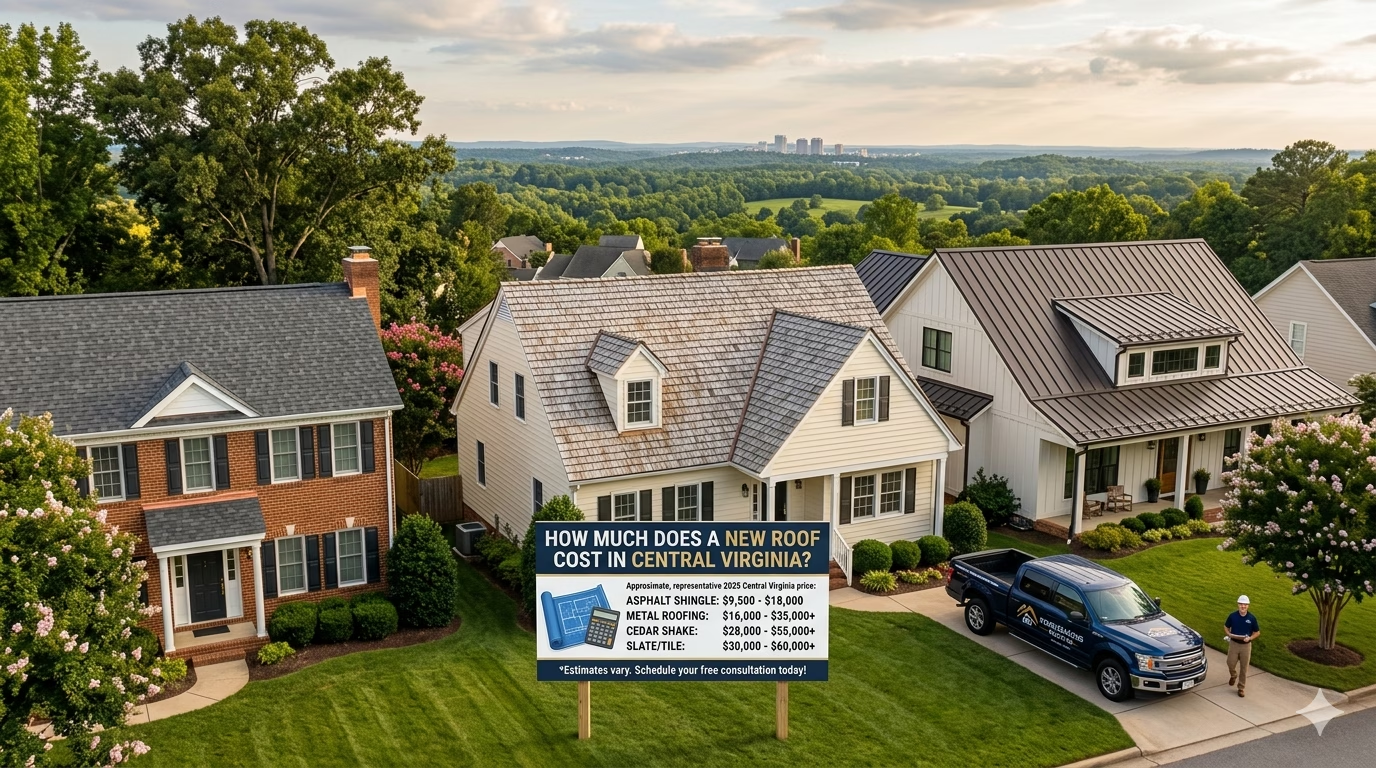
2026 Roof Replacement Costs: Key Takeaways for Virginia Homeowners
- A new roof in Central Virginia typically costs between $8,000 and $30,000+, depending on material, roof size, pitch, and the complexity of your specific home.
- Asphalt shingles remain the most affordable option, averaging $8,000 to $14,000 for a standard 1,500 to 2,000 sq ft home in this region.
- Metal roofing runs $15,000 to $28,000 installed and delivers a 40 to 70-year lifespan that makes it a smart long-term investment for Virginia homeowners.
- BRAVA composite tiles (cedar shake, Spanish, and slate styles) offer the look of premium materials at a competitive price, with lifespans exceeding 50 years and strong performance in Virginia’s climate.
- Labor, roof pitch, tear-off, decking condition, and valley complexity are the biggest variables that move your final quote up or down from any baseline number.
- A free professional roof inspection is the only reliable way to get an accurate price for your specific home. Generic online calculators miss too many local and structural variables.
Why “Average” Roof Pricing Is Misleading
If you’ve spent any time searching for roof costs online, you’ve probably landed on a national average that feels useless for your situation. A “$10,000 to $20,000 range” sounds wide enough to drive a truck through, and it doesn’t tell you anything about what your roof in Charlottesville, Buckingham County, or the Lynchburg area is actually going to cost.
Local pricing matters because roofing costs are shaped by your regional labor market, the materials contractors stock and install regularly, the climate your roof needs to perform in, and the specific quirks of your home’s structure.
This guide is built for Central Virginia homeowners. The numbers reflect what real homeowners in this region are paying in 2025, broken down by material so you can walk into a contractor conversation with realistic expectations.
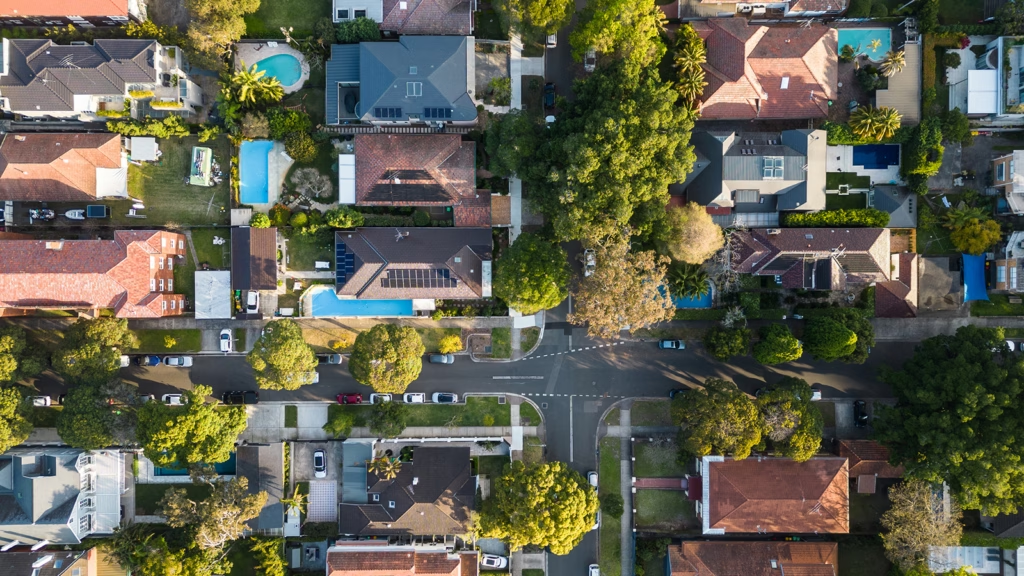
What Goes Into a New Roof Cost in Central Virginia
Before the numbers make sense, it helps to know what you’re actually paying for. A roofing invoice is not just shingles and labor. Here are the components that make up the total cost.
Roofing Material
The product itself, whether architectural shingles, standing seam metal panels, or BRAVA composite tiles, is the biggest driver of material cost. More on each below.
Labor
Labor typically accounts for 40 to 60 percent of a total roofing invoice in Central Virginia. The complexity of the installation, including roof pitch, number of angles, chimneys, skylights, and valleys, all affect how long the job takes and therefore what it costs.
Tear-Off and Disposal
Removing your old roof and hauling away the debris costs money. Most tear-offs on a standard home run $1,000 to $2,500 in this region. If there are two existing layers of shingles, that number goes up, and some jurisdictions have specific code requirements about how many layers are allowed before a full tear-off is required.
Decking Repairs
Once the old roofing material is off, inspectors can see the condition of the wood decking (sheathing) underneath. Rotten, damaged, or soft sections must be replaced before new material goes on. If your home has good bones and no storm damage history, this is often minimal. If there’s been long-term moisture intrusion, it can add $500 to $3,000 or more depending on scope.
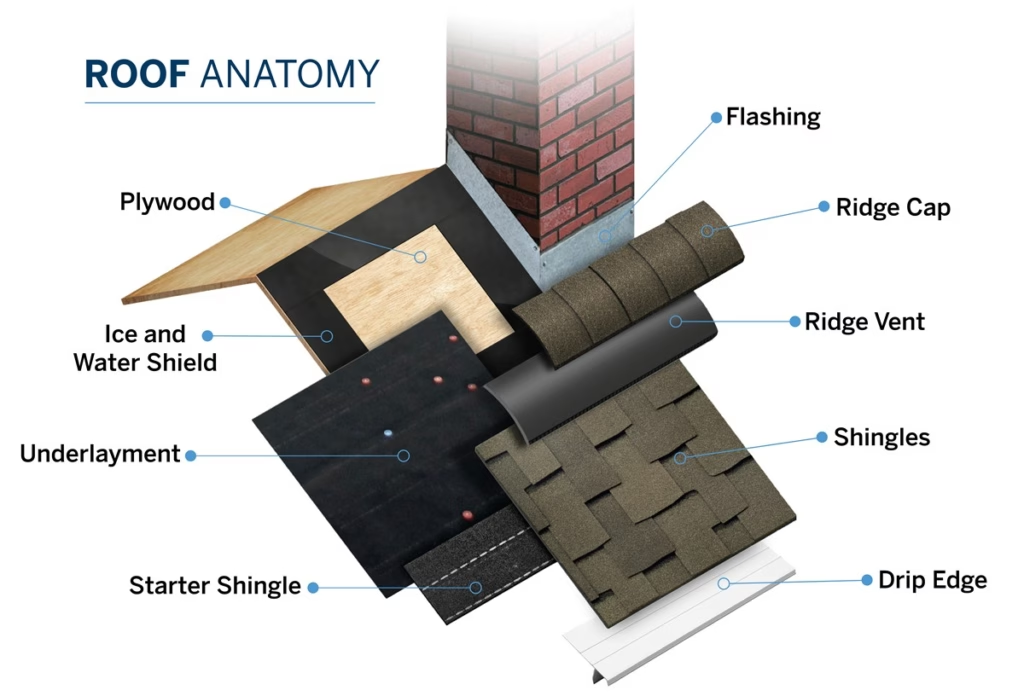
Underlayment, Flashing, and Ice and Water Shield
These are the layers and metal components that go on before your shingles or panels. Proper underlayment and flashing around chimneys, valleys, vents, and edges are what separate a roof that leaks in year three from one that performs for decades. They’re not optional, and cutting corners here is where cheap quotes come back to haunt homeowners.
Gutters
Gutters are often replaced at the same time as the roof, since they’re already being handled and the fascia boards are visible and accessible. Four Seasons Roofing provides gutter services alongside roofing work, which can simplify scheduling and save on setup costs when bundled.
2025 Roof Cost by Material: Central Virginia Pricing
Asphalt Shingles
Estimated total installed cost: $8,000 to $14,000 (for a typical 1,500 to 2,200 sq ft home with a standard pitch)
Asphalt shingles are the most common roofing material in Virginia for good reason. They perform reliably in the region’s mix of hot summers, ice events, and occasional tropical storm remnants. Modern architectural (dimensional) shingles look significantly better than the three-tab shingles common on older homes and carry 25 to 30-year warranties from major manufacturers.
What affects the price within this range:
- 3-tab shingles are cheaper upfront but carry lower wind ratings and shorter warranties
- Architectural shingles are the practical standard and what most contractors recommend for Virginia homes
- Impact-resistant shingles cost 15 to 20 percent more but can lower homeowner’s insurance premiums and perform better after hail events
- Designer-grade shingles (thicker, more dimensional, premium looks) run at the top of the range
Four Seasons Roofing installs shingle roofing across Central Virginia using quality materials appropriate for the region’s climate demands.
Lifespan: 25 to 30 years for architectural shingles under normal conditions Best for: Budget-conscious homeowners, properties where curb appeal is secondary to cost, homes being prepared for sale
Metal Roofing
Estimated total installed cost: $15,000 to $28,000 (for a typical residential home, depending on panel style and complexity)
Metal roofing has grown significantly in popularity in Central Virginia over the last decade, and for good reason. The region’s weather profile, with hot humid summers, freeze-thaw cycles in winter, and regular wind events from storm systems, makes metal an excellent long-term choice.
Types of metal roofing installed in this region:
Standing seam metal: The premium option. Concealed fasteners, interlocking raised seams, and a sleek modern profile. Standing seam panels expand and contract with temperature changes without exposing fasteners to the elements. These systems routinely last 40 to 70 years with minimal maintenance.
Exposed fastener metal panels (corrugated/R-panel): A more affordable metal option, commonly used on agricultural buildings, barns, and budget-conscious residential applications. Fasteners are visible and can develop small leaks at the penetrations over time if not maintained. Still a durable choice but doesn’t carry the same lifespan expectations as standing seam.
Metal shingles and tiles: Metal formed to look like traditional shingles or tiles. These offer a traditional aesthetic with the durability of metal at a price point between corrugated and standing seam.
What affects the price within this range:
- Standing seam costs more than exposed fastener
- Steel is more affordable than aluminum or copper
- Roof complexity, valleys, penetrations, and pitch add labor costs
- Color and coating selection (Kynar/PVDF coatings carry longer warranty coverage than standard paint)
Four Seasons Roofing specializes in metal roofing installation across Central Virginia, including both residential and light commercial applications.
Lifespan: 40 to 70+ years depending on panel type and coating Best for: Homeowners planning to stay long-term, historic homes and farm properties, anyone who doesn’t want to think about their roof again for decades
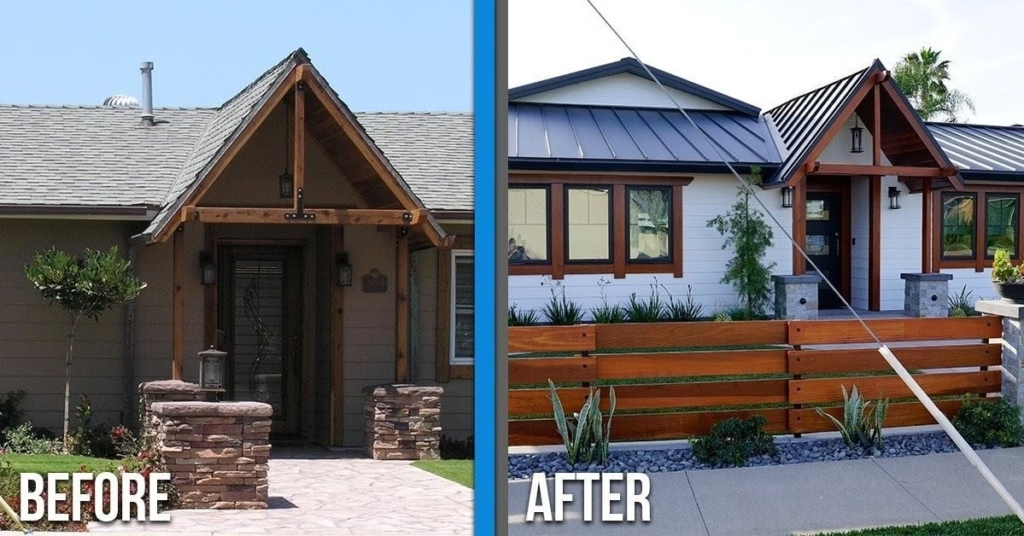
BRAVA Composite Roofing Tiles
Estimated total installed cost: $18,000 to $32,000+ (depending on style selected and roof complexity)
BRAVA is a manufacturer of premium composite roofing tiles made from recycled materials. Four Seasons Roofing is one of the certified installers of BRAVA products in Central Virginia, offering three distinct styles.
BRAVA tiles are engineered to deliver the visual character of high-end natural materials without the maintenance demands, weight concerns, or sourcing challenges those materials bring.
BRAVA Cedar Shake Looks like natural cedar shake, which is beloved for its rustic, textured appearance. Natural cedar has a 20 to 30-year lifespan in Virginia’s climate and requires regular maintenance to prevent moss, rot, and splitting. BRAVA Cedar Shake delivers the same aesthetic in a product that resists moisture, doesn’t rot, and is rated for 50+ years. It also carries a Class A fire rating that natural cedar does not. Learn more about BRAVA Cedar Shake roofing.
BRAVA Spanish Tile Spanish tile has a distinctive curved profile associated with Mediterranean and historic architecture. Natural clay Spanish tile is heavy, fragile, and expensive to install because it requires additional structural support. BRAVA Spanish Tile delivers the same visual profile in a lightweight composite that standard structures can support without reinforcement. Details on BRAVA Spanish Tile installation.
BRAVA Slate Tile Natural slate is arguably the most prestigious roofing material available, with lifespans exceeding 100 years. It is also extremely heavy, expensive, and difficult to source in this region. BRAVA Slate captures the clean, dimensional look of natural slate in a composite tile that weighs a fraction of the original material and doesn’t require specialized structural engineering for most homes. See the BRAVA Slate Tile option.
What affects the price within this range:
- Style selection (Spanish Tile is typically the highest-cost option)
- Roof complexity and square footage
- Tear-off of existing material
- Color selection and custom configurations
Lifespan: 50+ years with manufacturer warranty coverage Best for: Homeowners who want the look of premium natural materials with composite durability, historic renovations, architectural statement homes
What Makes One Quote Higher Than Another
Two homes of the same square footage in the same zip code can receive quotes that differ by $4,000 to $8,000 from the same contractor. Here’s why.
Roof pitch: A steep roof is harder to work on. Materials don’t stack as easily, workers move more slowly for safety, and more material is wasted on cuts. Steep pitch (anything above 8:12) typically adds 10 to 25 percent to labor costs.
Roof complexity: A simple rectangular hip or gable roof is fast to shingle. A roof with six different planes, dormers, skylights, a chimney, two valleys, and a porch overhang takes significantly longer. Every penetration is a detail that requires attention and adds time.
Accessibility: A ranch home with a low-slope roof over a crawl space is easy to access. A three-story colonial with a steep pitch over a finished attic creates more challenging logistics.
Number of layers being removed: If your existing roof has a second layer of shingles that was installed over the original without a tear-off (common in older homes), removing both layers costs more and takes longer.
Decking condition: You don’t know what’s under the shingles until they come off. A roof that shows no signs of moisture intrusion inside the attic may still have localized soft spots or rot near flashing areas.
Season and scheduling: Demand in Central Virginia peaks in spring and fall. Contractors scheduling in summer shoulder season or late fall may have slightly more flexibility on timing.
Factors Specific to Central Virginia
Local conditions matter. Here’s what makes Central Virginia roofing costs and material choices slightly different from national averages.
Climate demands: Central Virginia sits in a zone where roofs deal with humid heat from June through August, freeze-thaw cycles in January and February, and regular wind events from Atlantic storm systems tracking inland. Materials need to handle UV exposure, moisture, and wind uplift.
Steep, wooded lots: Many homes in Buckingham, Nelson, Albemarle, and Fluvanna counties sit on heavily wooded lots with steep grades. Debris accumulation is heavier than in open suburban developments, and access can require additional setup. This can add to job cost and should be discussed during the estimate.
Mix of older and newer construction: Charlottesville and surrounding counties have a significant stock of older homes, some dating back to the early 20th century. These homes may have original plank sheathing under the shingles rather than plywood, and may require more decking work once the tear-off is complete.
Farm and agricultural properties: Metal roofing on barns, outbuildings, and agricultural structures is very common in this region. Four Seasons Roofing has extensive experience with farm property roofing across Central Virginia.
Red Flags in a Roofing Quote
A low quote is appealing, but it isn’t always a good deal. Here’s what to watch for when comparing estimates.
No mention of underlayment or ice and water shield. These are not optional. If a quote doesn’t specify them, ask directly. If the contractor says they’re not needed, find a different contractor.
No written contract. A verbal agreement is not sufficient for a roofing project. Every detail, materials, scope, timeline, payment terms, and warranty coverage, should be in writing before work begins.
Significantly below market pricing. If one quote is 30 to 40 percent below every other estimate you’ve received, that gap has to be explained by something. It may be cut corners on materials, unlicensed or underinsured labor, or missing line items that will show up later as change orders.
Pressure to sign immediately. Legitimate contractors don’t need you to decide today. High-pressure tactics, especially common after storm events, are a warning sign worth taking seriously.
No manufacturer or workmanship warranty offered. Materials carry manufacturer warranties, but installation quality is covered by a separate workmanship warranty from the contractor. Ask specifically what the contractor’s workmanship warranty covers and for how long.
How to Get an Accurate Price for Your Home
The honest answer is that no online calculator and no blog post, including this one, can give you an accurate number for your specific roof. Too many variables are invisible until someone physically inspects the structure.
What a professional roof inspection does is give you a complete picture: the condition of your existing roof, the extent of any hidden damage, the square footage and complexity of your roof system, and the material options that make sense for your home and your budget.
Four Seasons Roofing offers free roof inspections across Central Virginia. There’s no obligation, no sales pressure, and no surprises. You get a clear written estimate based on what your home actually needs. Schedule a free roof inspection and get a number you can actually plan around.
Common Questions About Roof Replacement Costs in Virginia
Does homeowner’s insurance cover roof replacement? Sometimes. If your roof was damaged by a covered event (hail, wind, falling trees), your insurance may pay for some or all of the replacement cost, minus your deductible. Four Seasons Roofing provides insurance claim assistance to help homeowners navigate this process and ensure the scope of damage is properly documented.
Is it worth upgrading from basic shingles to architectural shingles? Almost always yes. The cost difference is relatively small (often $500 to $1,500 on a full replacement), and the improvement in wind resistance, appearance, and warranty coverage is significant. Most reputable contractors won’t recommend three-tab shingles for Virginia homes.
How long will my roof last before it needs to be replaced again? Architectural shingles: 25 to 30 years. Metal: 40 to 70+ years. BRAVA composite: 50+ years. Actual lifespan depends heavily on attic ventilation, installation quality, and maintenance. A poorly ventilated attic can shorten any roof’s life by 10 years or more.
Can I stay in my home during a roof replacement? Yes, in almost all cases. A typical residential shingle replacement takes one to two days. Metal and BRAVA installs may take slightly longer depending on complexity. You’ll hear noise and activity, but the home remains accessible.
What’s the best time of year to replace a roof in Central Virginia? Roofing can be done year-round in this climate. Spring and early fall offer mild temperatures that are comfortable for crews and good for material adhesion. Summer heat and cold winter temperatures don’t prevent quality roofing work, but they affect how materials perform during installation. Scheduling outside the peak spring window may also mean faster availability from a quality contractor.
The Bottom Line
A new roof in Central Virginia in 2025 is a meaningful investment, typically ranging from $8,000 for a straightforward shingle replacement to $30,000 or more for a premium composite or complex metal install. The right choice depends on your budget, how long you plan to stay in the home, and what performance and aesthetic priorities matter most to you.
What doesn’t change regardless of which material you choose is the importance of working with a contractor who knows Central Virginia homes, installs materials correctly the first time, and stands behind their work.
Four Seasons Roofing has spent 14 years doing exactly that across Charlottesville, Buckingham, Nelson, Fluvanna, and the surrounding region. We’re a family-owned operation with deep roots in this community, and we treat every roof the way we’d want our own handled.
Ready to find out what your specific home needs? Schedule your free inspection or call us at 434-390-0199. No pressure, no surprises. Just an honest assessment from people who know this region’s homes inside and out.
Why Schedule a Call?
Popular Insights
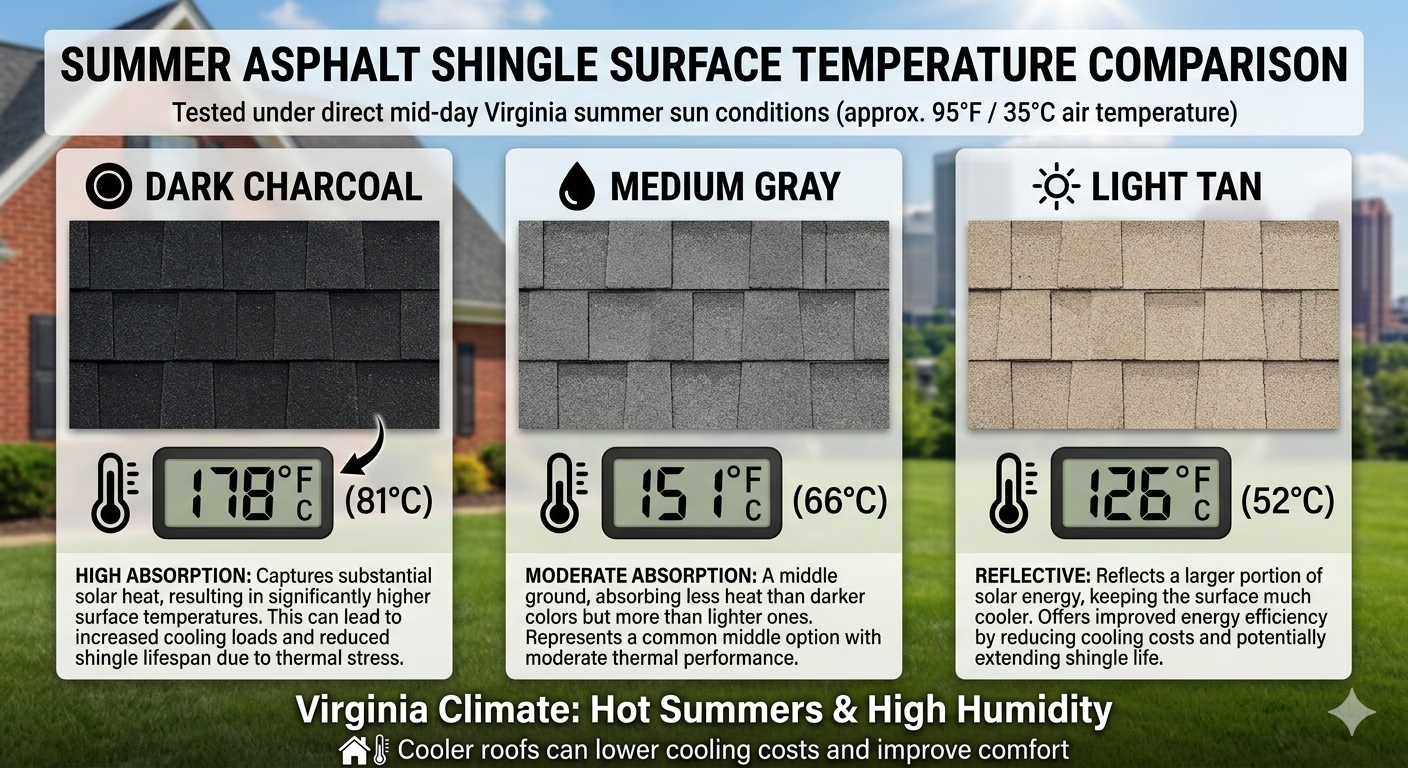
Can a New Roof Lower Your Virginia Energy Bills? What to Expect by Material and Season
Oct. 21, 2026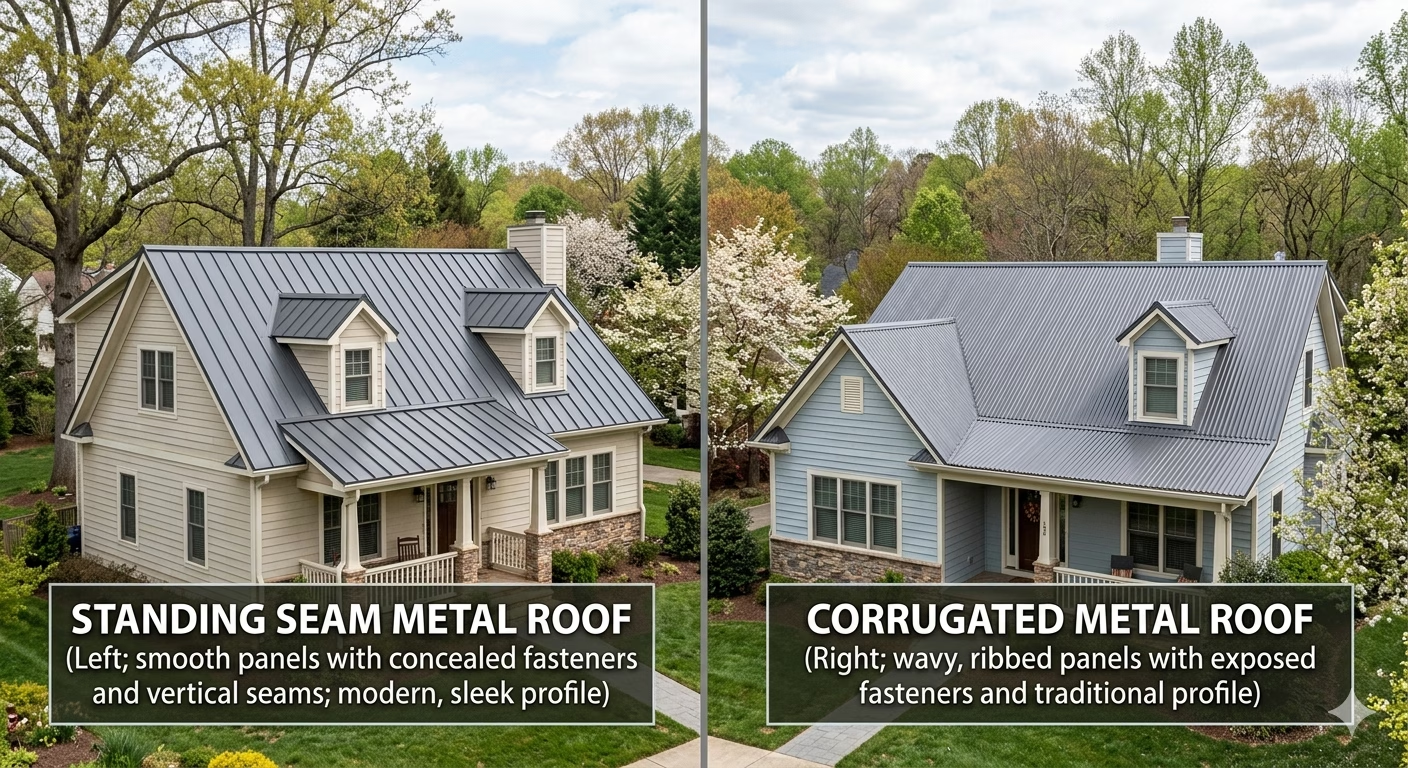
Metal Roofing Cost in Virginia: Standing Seam vs Corrugated and What’s Actually Worth It for Your Home
Oct. 09, 2026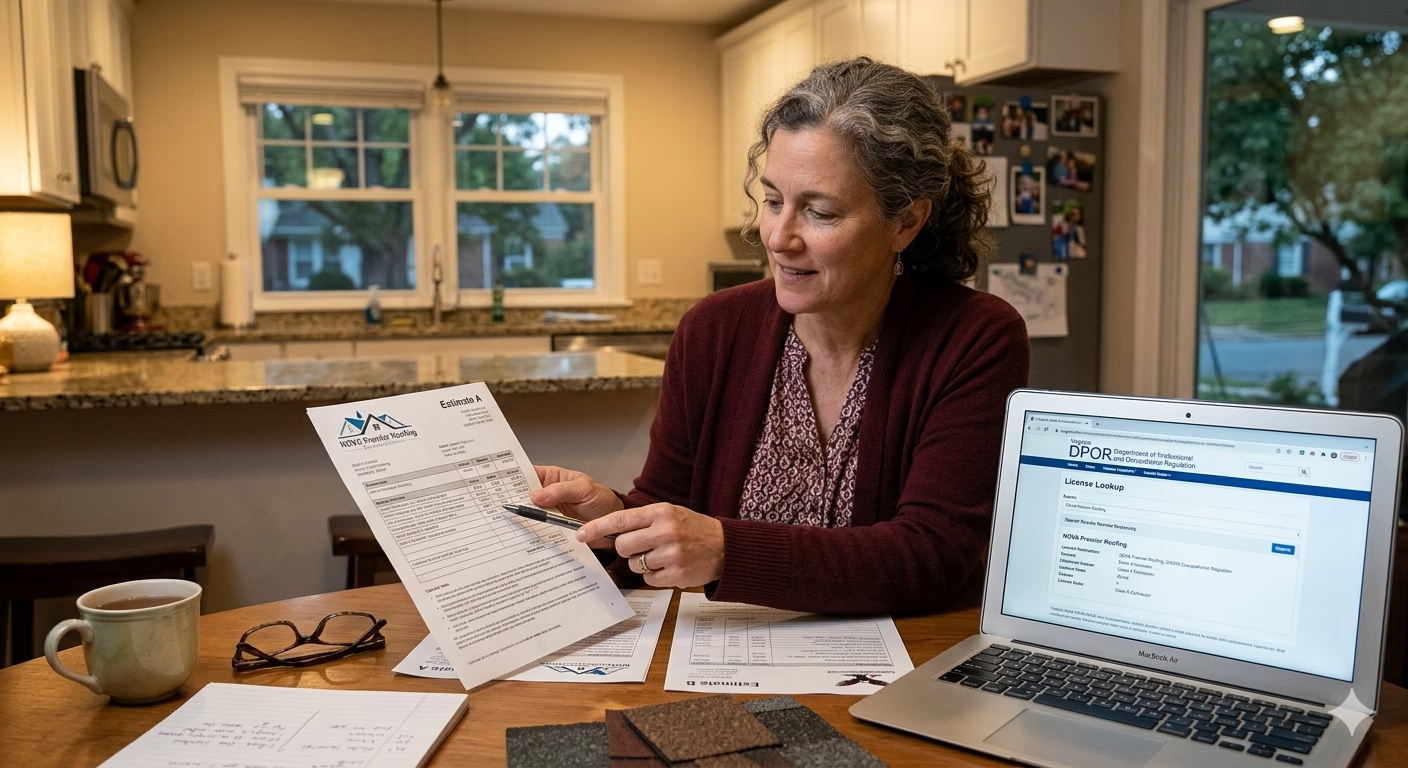
How to Choose a Roofing Contractor in Virginia: 6 Questions That Separate Professionals from Fly-by-Nights
Oct. 02, 2026
New Roof Installation in Lynchburg, VA: What Homeowners Can Expect from Estimate to Final Day
Sep. 25, 2026
Storm Damage Roofing in Central Virginia: What to Do in the First 24 Hours After Your Roof Is Hit
Sep. 23, 2026Topics
Our Services
- Gutter Services
- Storm Damage Roofing
- Commercial Roofing Service
- BRAVA Cedar Shake Roofing Tile
- Insurance Claim Assistance
- Residential Roofing Services
- Roof Inspection Services
- Roof Repair Service
- Roof Replacement Service
- Shingle Roofing Service
- Metal Roofing Service
- Emergency Roof Repair Services
- BRAVA Spanish Tile
- BRAVA Slate Tile