
Contact Us Today
Uncategorized
How Long Does a Roof Last in Virginia? Lifespan by Material in a Hot, Humid Climate
September 16, 2026
Key Takeaways
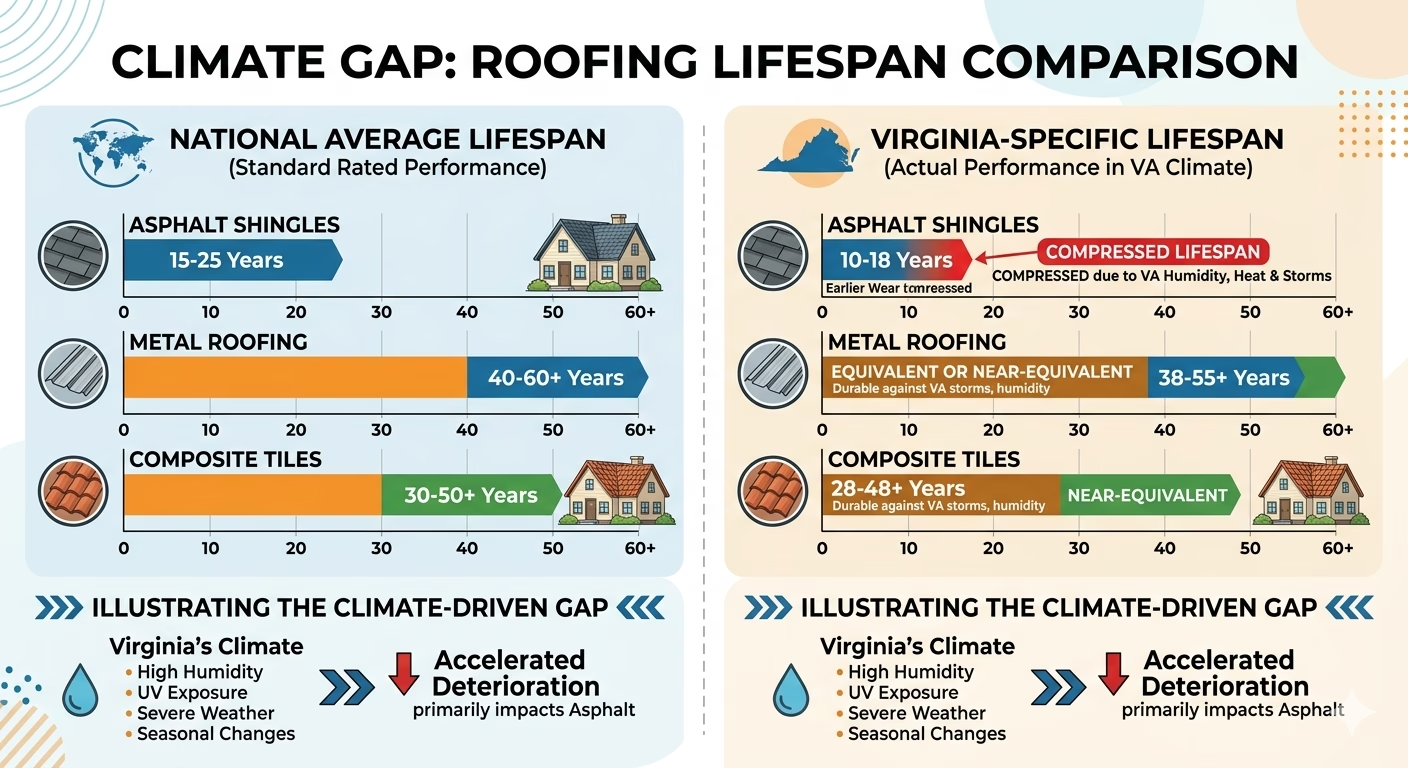
- Manufacturer-rated lifespans for roofing materials are based on standardized testing conditions, not on the specific combination of heat, humidity, UV exposure, biological growth, and storm events that Virginia roofs experience.
- Virginia’s climate consistently compresses the practical lifespan of asphalt shingles toward the lower end of their rated range. A “30-year shingle” typically delivers 18 to 24 years of functional service in this climate before requiring replacement.
- Metal roofing significantly outperforms asphalt in Virginia’s specific conditions. Standing seam metal in particular handles Virginia’s heat, humidity, wind, and biological growth challenges better than any other commonly available roofing material.
- BRAVA composite tiles offer lifespan performance closer to metal than to asphalt, delivering 50-year warranty coverage in a material that is immune to the moisture and biological degradation that limits natural wood and compresses asphalt lifespans.
- The single most controllable variable affecting any roofing material’s lifespan in Virginia is attic ventilation. Poor ventilation can reduce a properly installed shingle roof’s lifespan by 30 to 50 percent by cooking the shingles from below during Virginia’s intense summers.
- Understanding your roof’s likely remaining lifespan, based on its material, its installation date, and its current condition, is the foundation of sound planning for replacement before an emergency rather than because of one.
Why Virginia Requires Its Own Lifespan Answer
When a homeowner starts researching roofing, they quickly find numbers: 25-year shingles, 40-year shingles, metal roofs that last 50 years. These numbers create a framework that feels useful but is actually built on an assumption that may not apply to their situation.
Roofing material lifespans are rated under standardized testing conditions that include a specific set of temperature cycling, moisture exposure, and UV radiation parameters. Those parameters are designed to represent average conditions across a broad range of American climates.
Virginia’s climate is not average in the dimensions that matter most for roofing.
The combination of intense summer heat (shingle surface temperatures regularly exceeding 150 degrees Fahrenheit), high summer humidity that drives biological growth, UV exposure through an extended warm season, tropical storm remnants that deliver driving rain and sustained wind, and winter freeze-thaw cycles creates an environment that consistently stresses roofing materials more aggressively than the national average assumptions suggest.
The result is that Virginia homeowners planning based on national lifespan figures often find themselves surprised by how quickly their roof reaches end-of-life, or by the condition problems that show up well before the warranty expiration date they were planning around.
This post provides Virginia-specific lifespan guidance for each major roofing material, explains the specific factors that drive the local variation from national figures, and gives homeowners the framework to plan for roof replacement based on what their specific material and situation actually delivers.
Asphalt Shingles: The Virginia Reality
Asphalt shingles are the most common roofing material in Central Virginia and across most of the country. They are also the material whose Virginia performance diverges most significantly from the national rating.
What the Ratings Say
The most common residential shingle grades are:
- 3-tab shingles: Rated for approximately 20 to 25 years. Rarely specified anymore due to the availability of superior architectural products at a modest price difference.
- Architectural (dimensional) shingles: Rated for 25 to 30 years and are the current standard for residential installation.
- Impact-resistant architectural shingles: Rated for 30 years with better wind and impact resistance than standard architectural products.
- Designer-grade shingles: Some products carry 40 to 50-year ratings with enhanced material thickness and UV resistance.
What Virginia’s Climate Actually Delivers
For standard architectural shingles installed in Central Virginia, the realistic expectation is:
Practical service life: 18 to 24 years
This range is not a failure of the product. It is the result of a specific combination of stressors that operate simultaneously and compound each other.
Heat and UV: From May through September, Virginia’s solar intensity and ambient temperature create shingle surface temperatures that regularly reach 150 to 170 degrees Fahrenheit on south and west-facing slopes. At these temperatures, the asphalt binder softens. Granules loosen and migrate. The thermal cycling from daytime highs to nighttime temperatures stresses the fiberglass mat through repeated expansion and contraction.
Over 15 to 20 years, this accumulated thermal stress produces shingles whose asphalt has been progressively oxidized by UV (making it brittle) and whose granule adhesion has been progressively weakened by repeated softening and cooling cycles.
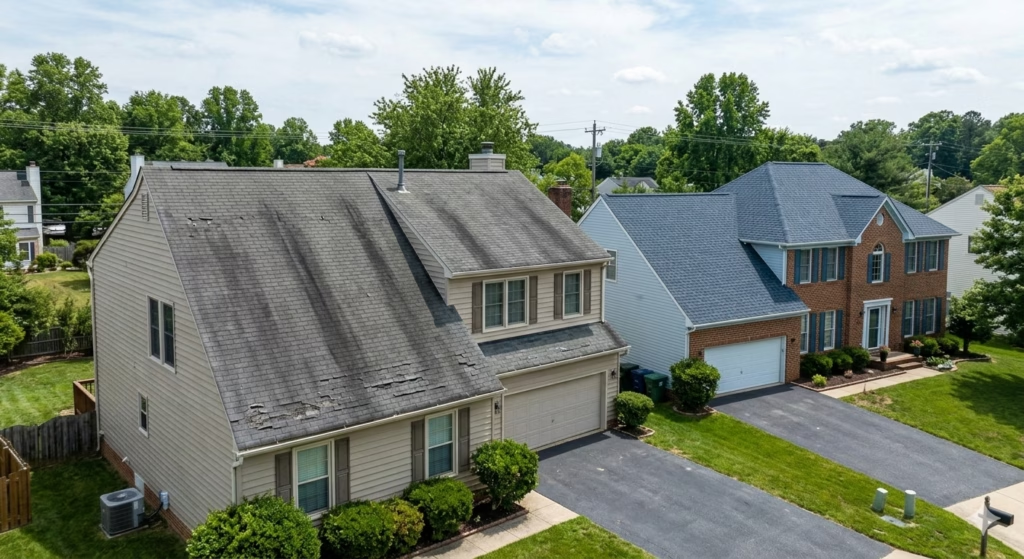
Humidity and biological growth: Virginia’s relative humidity creates ideal conditions for algae and moss colonization on shingle surfaces. Gloeocapsa magma, the cyanobacterium responsible for the dark streaking visible on older Virginia roofs, feeds on the limestone filler in asphalt shingles and colonizes actively in this climate. Moss follows algae and creates physical damage through its root structures lifting shingle edges.
Both biological agents accelerate surface degradation. A shingle with significant biological colonization is deteriorating faster than the UV and thermal stress alone would produce.
Freeze-thaw cycling: Virginia winters include enough below-freezing events to create ice dam potential and to subject any micro-fractures in the asphalt surface to the expansion-contraction of freezing water, widening small cracks into larger ones.
The Ventilation Multiplier
The single most important controllable variable in asphalt shingle lifespan in Virginia is attic ventilation. This deserves emphasis because it is both the most impactful factor and the one most commonly inadequate in older Virginia homes.
An attic that is adequately ventilated (typically 1 square foot of net free ventilation area per 150 square feet of attic floor) moves air continuously from soffit to ridge, removing heat that accumulates during the day and moisture that accumulates from interior sources.
An attic without adequate ventilation reaches temperatures of 130 to 150 degrees Fahrenheit in a Virginia summer, even without direct solar gain. At these temperatures, the shingles above the attic are being cooked from below as well as heated from above. The net effect is shingle surface temperatures that are even higher than they would be on a well-ventilated roof and a thermal environment that dramatically accelerates binder oxidation.
The practical consequence: A 30-year architectural shingle on a poorly ventilated Virginia roof may reach end-of-life in 15 to 18 years. The same shingle on a properly ventilated roof may deliver 22 to 24 years of service. The ventilation question is worth $40,000 in timing on a roof replacement.
What Extends Asphalt Shingle Lifespan in Virginia
- Algae-resistant shingles: Products with copper-granule blending (sold under various manufacturer brand names) inhibit algae colonization and prevent the biological acceleration of shingle surface degradation.
- Impact-resistant (Class 4) shingles: Thicker mat and more robust granule coverage provide better resistance to both hail impact and the cumulative surface wear from Virginia’s weather events.
- Proper ventilation: As discussed above, this is the highest-impact installation decision for shingle longevity.
- Regular inspection and maintenance: Annual inspection catches early flashing failures, pipe boot deterioration, and biological growth before they advance to the point of structural compromise.
Metal Roofing: Virginia’s Long-Term Performance Leader
Metal roofing is increasingly popular in Central Virginia for good reason: the specific performance advantages of metal align directly with the climate challenges that limit asphalt shingle lifespan.
Standing Seam Metal: The Premium Option
Standing seam metal panels are the premium residential metal roofing product. Panels interlock at raised seams, concealing all fasteners within the seam rather than exposing them to the weather on the panel face.
Virginia lifespan: 40 to 70 years
This is not a theoretical range. It is the lifespan that properly installed standing seam systems are demonstrating in Virginia’s climate, and it reflects the material’s specific resistance to the stressors that limit asphalt performance.
Why metal outlasts asphalt in Virginia:
No granule loss: Metal does not have granules. The UV protection of a metal roof comes from the Kynar (PVDF) or similar polymer coating applied to the metal surface, not from an embedded granule layer that can be physically displaced. These coatings are significantly more UV-stable than asphalt’s granule system and maintain their protective function across decades of UV exposure.
No organic substrate for biological growth: Algae and moss require an organic substrate to colonize. Metal provides no such substrate. A metal roof does not develop the biological growth that accelerates asphalt shingle deterioration, and no algae-resistance treatment is required.
Thermal performance: Metal’s high thermal conductivity means it heats and cools rapidly with changing solar conditions, but quality metal roofing with Kynar coatings reflects a higher percentage of solar radiation than dark asphalt shingles, reducing overall heat absorption. More critically, metal does not soften under heat the way asphalt does, so the granule adhesion mechanism that fails on asphalt under repeated heat cycling simply does not apply.
Wind resistance: Standing seam’s concealed fastener design distributes wind uplift forces across the panel system through the seam clips rather than concentrating them at individual exposed fastener points. This produces significantly better wind performance in storm events compared to asphalt shingles with exposed through-fastener attachment.
Freeze-thaw performance: Metal’s non-porous surface does not absorb water that can freeze and expand within the material. The continuous panel design of standing seam also provides fewer entry points for ice dam water compared to individual shingle laps.
Exposed Fastener Metal Panels
Exposed fastener systems (corrugated metal, standing rib panels) are more affordable than standing seam and are appropriate for some residential applications, particularly in agricultural and rural settings where the aesthetic fits.
Virginia lifespan: 30 to 45 years with proper installation and periodic attention to fastener sealant condition.
The limitation of exposed fastener systems is that the rubber washers at each fastener penetration are the system’s primary water management point at those locations. These washers degrade under UV over time, and a fastener that was watertight at installation may develop a small leak pathway after 15 to 20 years as the washer material hardens and loses its compression seal. Regular inspection and sealant maintenance at fastener locations extends the system’s effective performance.
Metal Shingles and Tiles
Metal shingles and tiles are metal products formed to mimic the appearance of other materials (shingles, slate, wood shake). These products typically fall between exposed fastener panels and standing seam in cost and performance.
Virginia lifespan: 30 to 50 years depending on product quality, coating type, and installation.
Metal shingles and tiles retain the UV and biological growth advantages of other metal products while offering a more traditional aesthetic for homes where standing seam’s contemporary profile is not the right fit.
Four Seasons Roofing installs metal roofing across Central Virginia, including standing seam, exposed fastener, and formed metal products for residential and light commercial applications.
BRAVA Composite Tiles: The Premium Alternative to Natural Materials
BRAVA composite tiles are a polymer-based product engineered to replicate the visual character of cedar shake, Spanish tile, and natural slate in a material that eliminates the performance limitations of the natural materials they replicate.
BRAVA in Virginia’s Climate
Virginia lifespan: 50+ years (backed by manufacturer warranty)
BRAVA’s polymer composite material is specifically engineered to resist the stressors that limit natural material performance and compress asphalt lifespan:
Non-porous construction: BRAVA tiles do not absorb water. Freeze-thaw cycling that would crack or spall natural clay tile has no comparable effect on a non-porous polymer tile. The moisture retention that accelerates biological growth on natural cedar has no equivalent in a material that does not absorb moisture.
No biological substrate: Like metal, BRAVA’s polymer composite provides no organic substrate for algae or moss. The biological growth that is one of the most significant lifespan reducers for natural cedar and a contributing factor for asphalt simply does not establish on BRAVA’s surface.
Class 4 impact resistance: BRAVA tiles are rated Class 4 by the Insurance Institute for Business and Home Safety’s impact resistance classification, the highest available. This rating reflects performance under hail impact significantly beyond what standard architectural shingles deliver.
Class A fire rating: Natural cedar shake has a Class C fire rating at best. BRAVA’s polymer composite achieves Class A, which is particularly relevant in Virginia’s wooded residential areas where ember exposure during nearby vegetation fires is a real risk.
UV stability: BRAVA uses UV-stabilized pigments blended through the material rather than surface-applied treatments that can fade or wear away. The color and material character of a BRAVA tile are stable across decades of UV exposure.
BRAVA Style Options and Their Virginia Applications
Four Seasons Roofing installs all three BRAVA profiles in Central Virginia:
BRAVA Cedar Shake: Replicates the split-wood texture of natural cedar in a non-porous composite. Natural cedar in Virginia’s climate is a maintenance-intensive product with a practical lifespan of 15 to 20 years before significant biological growth and deterioration. BRAVA Cedar Shake delivers the same aesthetic with a 50-year warranty and no maintenance cycle.
BRAVA Spanish Tile: Replicates the curved barrel profile of natural clay tile at a fraction of the weight (300 to 400 lbs per square vs. 900 to 1,200 lbs for natural clay), eliminating the structural engineering requirement that makes natural clay tile impractical for most Virginia homes built in the last 50 years.
BRAVA Slate: Replicates the flat, dimensional profile of natural slate in a material that weighs a fraction of real slate and does not require the specialized structural engineering or skilled installation labor that natural slate demands.
Natural Cedar Shake: The Virginia Performance Problem
Natural cedar shake deserves specific attention because it is a material whose reputation in drier western climates has created unrealistic expectations in Virginia.
Why Cedar Performs Well Elsewhere
Western Red Cedar contains natural oils that provide meaningful moisture and decay resistance. In the Pacific Northwest and parts of Canada where cedar has its strongest roofing tradition, the climate is cooler and drier than Virginia for much of the year, and the conditions that limit cedar’s performance in humid climates are simply less present.
Why Cedar Struggles in Virginia
Practical Virginia lifespan: 12 to 20 years
Virginia’s humidity and biological growth conditions are among the most challenging environments for natural cedar roofing. The primary failure mode is not rot from water intrusion alone but progressive biological colonization.
Algae establish first, followed by moss. Moss root structures lift individual shake edges, creating water entry points. High humidity maintains the moisture content in the wood that biological growth requires. The combination of organic substrate (wood), moisture, and Virginia’s warm growing season creates ideal conditions for aggressive biological colonization that shortens cedar’s functional life significantly compared to its rating in drier climates.
The maintenance regime required to extend cedar’s lifespan in Virginia, including biennial cleaning and fungicidal treatment, represents an ongoing cost that most homeowners do not fully account for when the material is selected.
Natural Slate: The Long-Term Benchmark
Natural slate occupies a category of its own in Virginia roofing: a genuinely exceptional performer that is financially inaccessible for most residential budgets and structurally impractical for many homes.
Virginia Lifespan: 75 to 150+ years
Properly installed natural slate in Virginia performs better than almost any other roofing material because its natural properties align well with the climate challenges others struggle with. Slate is non-porous (freeze-thaw has minimal impact), provides no biological substrate, and is inherently fire resistant.
The limitations of natural slate are not performance-related. They are:
Weight: Real slate weighs 800 to 1,500 pounds per roofing square (100 square feet). Most homes built in the last 50 years are not engineered to carry this load without significant structural modification, which adds substantially to the project cost.
Cost: Natural slate installation in Virginia typically runs $30,000 to $60,000 or more for a standard residential home, depending on slate type, quantity, and roof complexity.
Installation expertise: Slate installation requires specialized tools and skills that are rare in most markets. Finding a qualified slate installer in Central Virginia is significantly more difficult than finding a qualified shingle or metal installer.
For the homes that can accommodate it and the owners who can justify the investment, natural slate’s lifespan in Virginia is unmatched by any other material. For most Virginia homeowners, BRAVA Slate offers the visual character of natural slate with more accessible cost, no structural modification requirement, and a 50-year warranty.
The Lifespan Summary: Virginia-Specific Expectations by Material
| Roofing Material | National Rated Lifespan | Realistic Virginia Lifespan | Key Virginia Performance Factor |
|---|---|---|---|
| Standard 3-tab shingles | 20 to 25 years | 14 to 18 years | High heat + humidity + biological growth |
| Architectural shingles | 25 to 30 years | 18 to 24 years | Same factors, better granule system |
| Impact-resistant shingles | 30 years | 20 to 25 years | Better resistance to physical surface wear |
| Exposed fastener metal | 30 to 40 years | 30 to 45 years | Minimal climate compression |
| Standing seam metal | 40 to 70 years | 40 to 70 years | Best climate alignment of any material |
| BRAVA composite tiles | 50+ years | 50+ years | Non-porous, no biological vulnerability |
| Natural cedar shake | 25 to 30 years | 12 to 20 years | High biological growth vulnerability |
| Natural slate | 75 to 150+ years | 75 to 150+ years | Best natural performer; access/cost limits |
The Planning Framework: Using Lifespan Expectations Productively
Understanding your roof material’s Virginia-specific lifespan expectation is most useful when it translates into a planning timeline.
If You Know Your Roof’s Installation Date
Work backward from the installation date using the Virginia-specific range for your material:
- If your architectural shingle roof was installed in 2004 (21 years ago), you are within or past the lower end of Virginia’s realistic range. Inspection is warranted now, and replacement planning within the next one to three years is appropriate regardless of whether visible problems have appeared.
- If your architectural shingle roof was installed in 2010 (15 years ago), you are in mid-range and approaching the window where problems are increasingly likely. Annual inspection is the appropriate posture.
- If your architectural shingle roof was installed in 2016 or more recently (under 10 years ago), you are in the early-to-mid phase of the roof’s life. Inspection every one to two years and attention to ventilation adequacy are appropriate.
If You Don’t Know the Installation Date
If the installation date is unknown (common for homes purchased without full disclosure history), the roof’s current condition is the primary planning input. A professional inspection by a qualified contractor provides a condition-based estimate of remaining service life.
A free roof inspection from Four Seasons Roofing provides this assessment for Central Virginia homeowners. The inspection evaluates the specific condition of the installed material, attic ventilation, and any flashing or structural concerns that affect remaining service life.
Planning for Proactive vs. Reactive Replacement
The financial and logistical difference between planning a roof replacement proactively (before the roof has failed) versus reactively (because a storm or leak forced the issue) is significant:
Proactive replacement:
- Scheduled at a convenient time in a non-peak period
- Multiple contractors can provide competitive quotes
- Material selection can be made thoughtfully
- No emergency premium on labor
- No interior water damage to address alongside the roofing project
Reactive replacement:
- Scheduled under time pressure, often following a storm
- Contractor availability is limited in high-demand post-storm periods
- Limited ability to compare quotes under time pressure
- Potential interior water damage requiring separate remediation
- Any insurance claim processing delays affect the timeline
The cost difference between proactive and reactive replacement, when interior damage remediation is included, can be significant. The planning value of knowing where your roof is in its Virginia-specific lifespan is the ability to choose the proactive path.
The Bottom Line
Virginia’s specific climate conditions compress asphalt shingle lifespans toward the lower end of manufacturer ratings while leaving metal and composite tile performance largely unaffected. A Virginia homeowner planning around national averages may be surprised by how quickly an asphalt roof reaches end-of-life in this climate.
The practical planning guidance:
- Asphalt shingles: Expect 18 to 24 years in Virginia’s climate, with ventilation quality being the most impactful variable. Annual inspection from year 12 onward.
- Metal roofing: Expect 40 to 70 years for standing seam, 30 to 45 years for exposed fastener. Minimal climate compression from Virginia’s conditions.
- BRAVA composite: Expect 50+ years in Virginia with no biological vulnerability and non-porous freeze-thaw resistance.
- Natural cedar: Expect 12 to 20 years in Virginia’s biological growth environment. Significantly shorter than ratings suggest.
- Natural slate: Expect 75 to 150+ years where structurally feasible and financially accessible.
The most important step for any Virginia homeowner is knowing where their specific roof is in its lifespan, which requires knowing the installation date and the current condition. A professional inspection that establishes both gives you the planning foundation to make a proactive replacement decision rather than a reactive one.
Four Seasons Roofing offers free inspections across Central Virginia. Schedule yours at fourseasonsroofingva.com or call 434-390-0199.
Why Schedule a Call?
Popular Insights
How Long Does a Roof Last in Virginia? Lifespan by Material in a Hot, Humid Climate
Sep. 16, 2026
What Happens During a Professional Roof Inspection and Why Every Virginia Homeowner Should Get One Annually
Sep. 09, 2026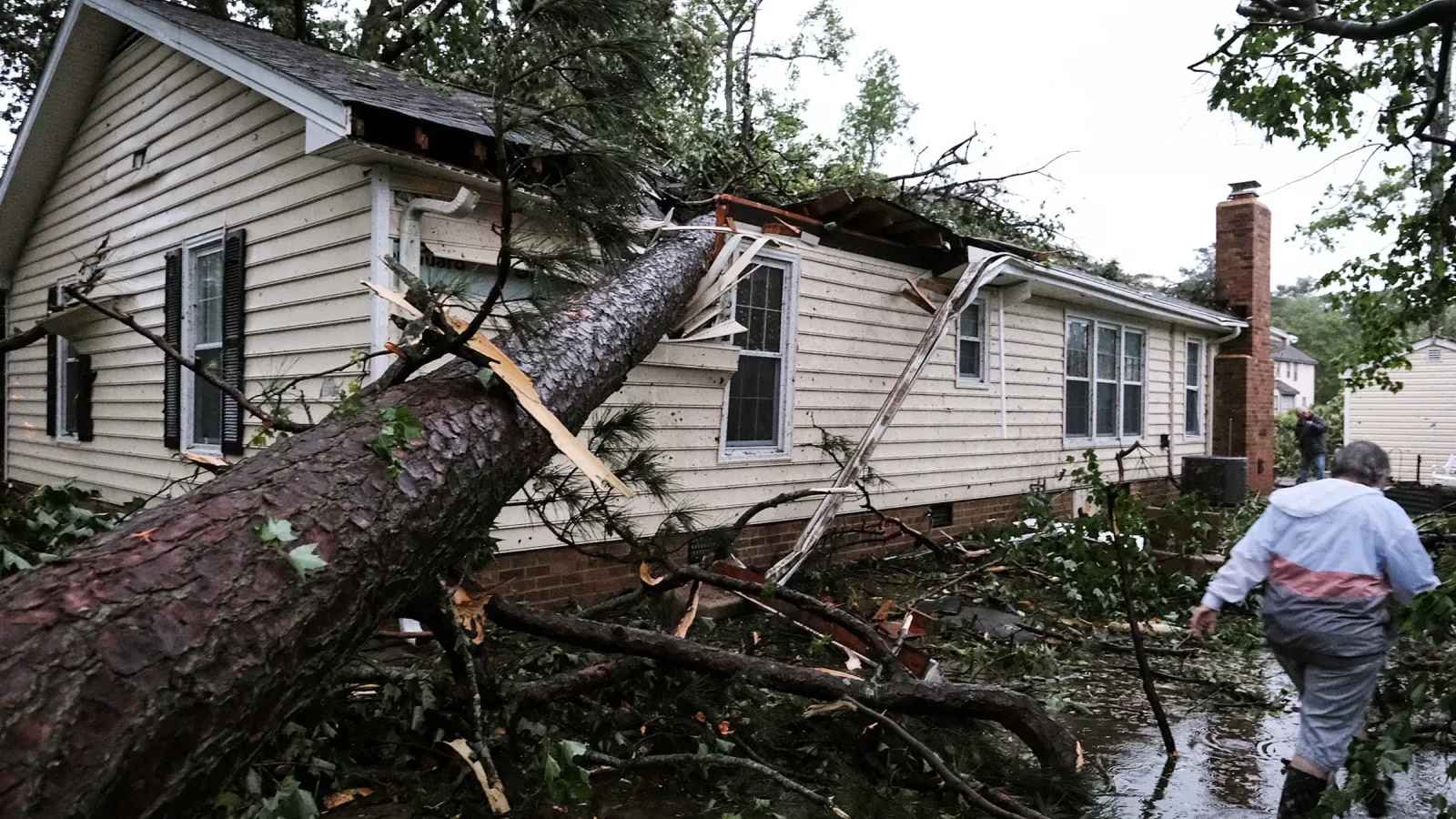
5 Signs Your Virginia Home Needs a New Roof Before Next Hurricane Season
Sep. 02, 2026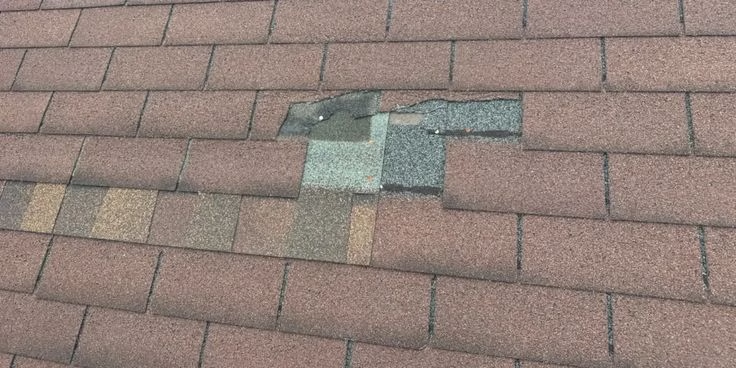
How Virginia’s Humidity and Heat Cycles Damage Asphalt Shingles Faster Than You’d Expect
Aug. 26, 2026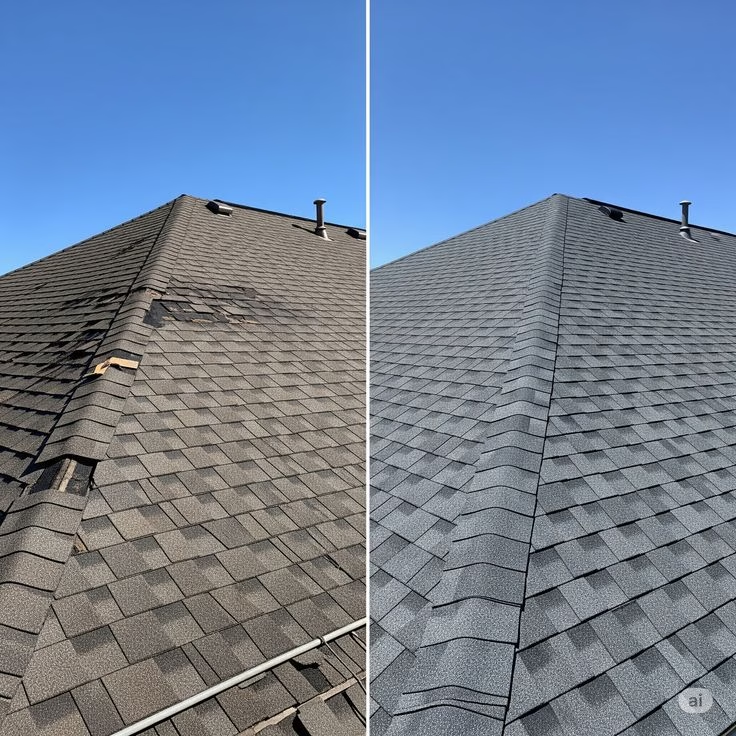
Roof Repair vs. Full Replacement: How to Know Which One Your Central Virginia Home Actually Needs
Aug. 19, 2026Topics
Our Services
- Gutter Services
- Storm Damage Roofing
- Commercial Roofing Service
- BRAVA Cedar Shake Roofing Tile
- Insurance Claim Assistance
- Residential Roofing Services
- Roof Inspection Services
- Roof Repair Service
- Roof Replacement Service
- Shingle Roofing Service
- Metal Roofing Service
- Emergency Roof Repair Services
- BRAVA Spanish Tile
- BRAVA Slate Tile