Contact Us Today
posts
Metal Roofing and Solar Panels in Virginia: A Guide
October 26, 2026
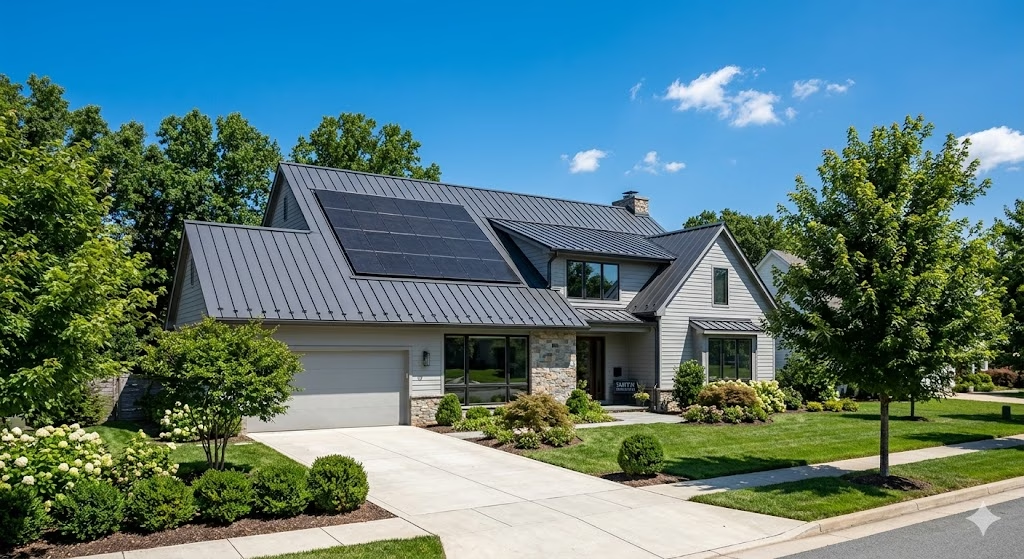
Why Virginia Homeowners Are Combining Metal Roofing and Solar
Energy costs in Virginia are not going down. According to the U.S. Energy Information
Administration, Virginia residential electricity prices have climbed steadily over the past
decade. At the same time, solar adoption is accelerating, with Virginia’s Solar Freedom law
continuing to remove barriers for homeowners generating their own power.
Metal roofing has its own momentum. More Central Virginia homeowners are making the switch
from traditional asphalt shingles to metal systems because of the durability, energy
efficiency, and longevity benefits. When these two technologies intersect, the result can
be an exceptionally efficient, long-lasting, and cost-effective home energy system.
But combining them is not as simple as calling two separate contractors and hoping for the
best. There are compatibility considerations, installation sequencing decisions, and warranty
implications that every homeowner in Virginia needs to understand upfront.
Are Metal Roofs and Solar Panels Actually Compatible?
Yes, and in many ways metal roofs are the preferred substrate for solar installations.
Here is why.
Lifespan Alignment
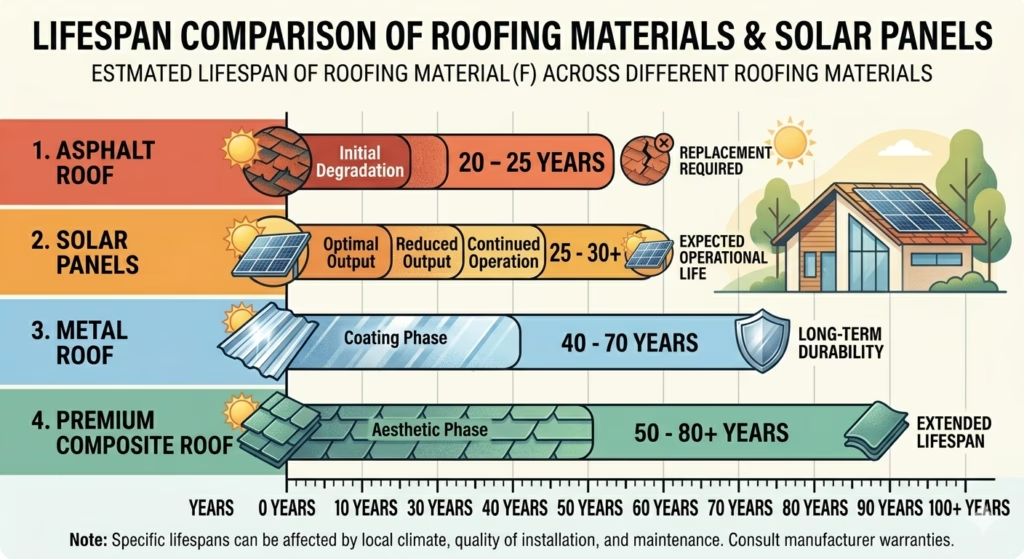
One of the most overlooked problems with putting solar panels on an asphalt shingle roof is
lifespan mismatch. A quality asphalt roof lasts 20 to 25 years. A solar panel system is
designed to last 25 to 30 years. That means, statistically, you will need to tear off your
roof and temporarily remove your solar panels sometime in the middle of your panels’
productive life, which adds thousands of dollars in unexpected costs.
A metal roof, by contrast, typically lasts 40 to 70 years depending on the material and
installation quality. That means your roof and your solar system can age together, with no
mid-life disruption.
Structural Strength
Metal roofs are structurally robust. They handle the additional point loads from solar
racking systems without concern, provided the underlying structure is sound. This is an
important detail because solar panels are not light. A typical residential solar array can
add anywhere from 2 to 4 pounds per square foot to your roof load.
Heat and Energy Efficiency Synergy
Metal roofs are natural heat reflectors. They emit absorbed solar radiation far more
efficiently than asphalt, which keeps attic temperatures lower. Cooler roofs mean cooler
solar panels, and cooler solar panels are more efficient. Research from the National
Renewable Energy Laboratory (NREL) confirms that solar panel efficiency decreases as
panel temperature increases. A metal roof underneath your array can contribute to modestly
better solar energy output compared to a dark asphalt substrate.
The Two Types of Metal Roofs and How They Affect Solar Installation
Not all metal roofs are installed the same way, and the type of metal roof you have or
are planning to install directly affects how solar panels will be mounted.
Standing Seam Metal Roofs
This is the premium option for solar compatibility. Standing seam roofs have raised vertical
seams that run continuously from the eave to the ridge. Solar mounting clamps attach directly
to these seams with no drilling, no holes, and no roof penetrations whatsoever.
Why this matters:
- Zero penetrations means zero leak risk from the solar installation itself.
- No holes means no warranty complications from the roofing side.
- Installation is faster and cleaner.
- Future panel removal or repositioning is simple.
If you are planning to install a new metal roof and you know solar is in your future within
the next few years, a standing seam metal roof installation
is the smartest long-term investment you can make.
Corrugated and Exposed Fastener Metal Panels
These systems are common on agricultural buildings and older residential structures. Solar
racking on this type of roof requires drilling and lag bolting through the metal panels into
the structural framing below. Each penetration point must be properly flashed and sealed.
While this is a workable approach, it does introduce penetration points that require careful
installation and periodic inspection. The quality of the flashing and sealant used at each
penetration point is critical to long-term leak prevention.
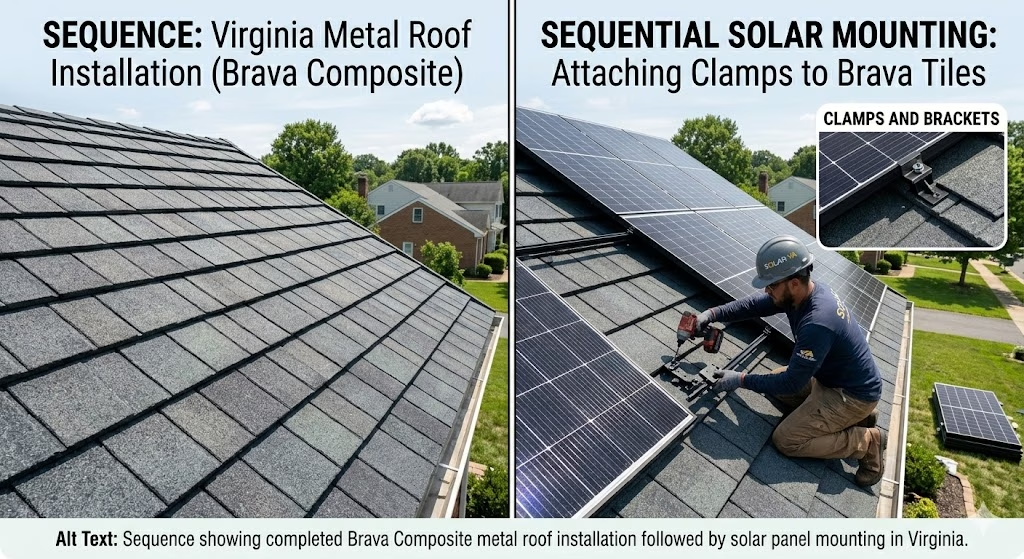
What Comes First: The Metal Roof or the Solar Panels?
This is a question that trips up many homeowners, especially when they are trying to manage
budget and timing. The general answer is straightforward: install the metal roof first.
Here is why the sequence matters:
Warranty protection. Most metal roofing manufacturers void their warranty if penetrations
are made by non-authorized parties, including solar installers. Getting your roof fully
installed and warranted before any solar contractor touches it keeps your coverage intact.
Inspection access. Once solar panels are on a roof, large portions of that roof surface
become difficult or impossible to inspect visually. A professional roof inspection
before solar installation documents the baseline condition of your roof, which protects you
if any disputes arise later about damage attribution.
Structural confidence. A complete roof installation means your roofing contractor has
already assessed the underlying decking, rafters, and structural integrity. Your solar
installer can then proceed with full confidence in what they are attaching to.
Cleaner installation. Solar racking is designed to work with a finished roof surface.
Trying to coordinate both trades simultaneously creates scheduling conflicts and quality
control problems.
Virginia-Specific Considerations You Cannot Ignore
The Climate Factor
Virginia’s climate spans a wide range. The Blue Ridge Mountains see heavy snow loads and
ice events. The Piedmont and Central Virginia regions experience significant summer heat,
humidity, and periodic severe storms. The Tidewater area deals with coastal wind exposure.
What this means for metal roof and solar combinations:
- Snow and ice: Metal roofs shed snow faster than asphalt, which is actually a
consideration for solar panels too. Rapid snow shedding can put stress on lower-mounted
panel edges. Installers should account for this in racking design. - Wind: Virginia sees occasional severe wind events, including tropical systems moving
inland. Solar racking systems should be engineered to local wind load requirements per
Virginia’s Uniform Statewide Building Code. - Storm damage: Metal roofs significantly outperform asphalt in hail and wind events.
If you are currently dealing with storm damage to your existing roof,
this is actually an ideal time to evaluate replacing it with metal before your solar
installation, rather than putting panels on a damaged or aging substrate.
Permits and HOA Rules
Virginia municipalities require building permits for both metal roof replacements and solar
installations. In some localities, solar installations also require an electrical permit
and utility interconnection approval. If your home is in an HOA, check the governing
documents. Virginia’s Solar Rights Act (Va. Code SS 55.1-2821) limits but does not
completely eliminate an HOA’s ability to restrict solar installations.
Utility Interconnection and Net Metering
Virginia’s net metering law allows residential solar customers to receive credits on their
utility bill for excess power sent back to the grid. Dominion Energy Virginia and
Appalachian Power Company both offer net metering programs, though the specific rates and
terms have evolved with recent legislation. Confirm current net metering terms with your
utility before finalizing your solar system size.
Financial Incentives for Virginia Homeowners in 2026-2027
Combining metal roofing and solar is a significant upfront investment. Understanding the
available incentives makes the numbers more manageable.
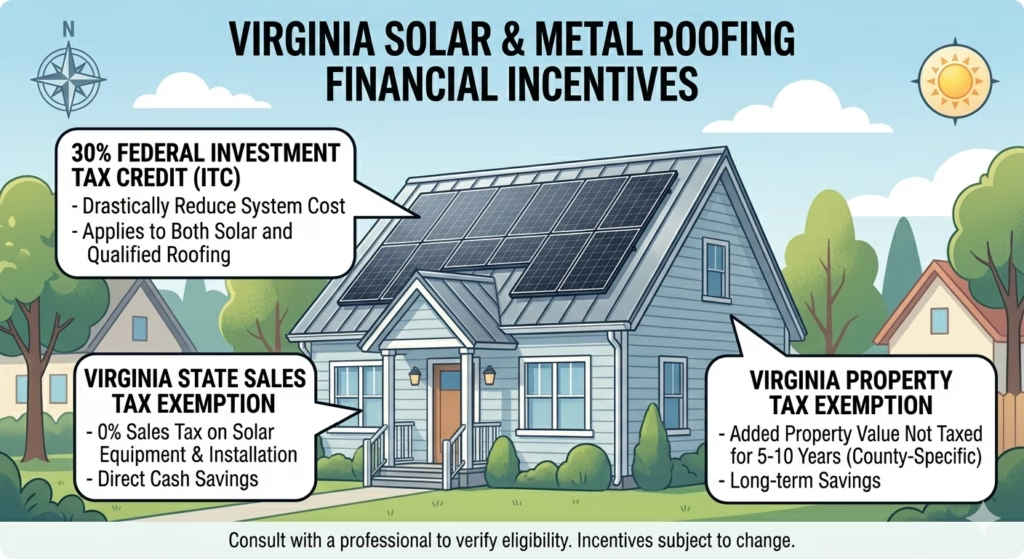
Federal Investment Tax Credit (ITC)
The Inflation Reduction Act extended and increased the federal solar ITC to 30% of the
total system cost through 2032. This applies to the solar panels, inverter, racking,
wiring, and installation labor. If your metal roof installation is part of a new build or
required specifically to support the solar system, a portion of that cost may also qualify.
Consult a tax professional for your specific situation.
Virginia Sales Tax Exemption
Solar energy equipment in Virginia is exempt from the state’s 5.3% sales tax. This
exemption applies to solar panels, inverters, and related equipment.
Property Tax Exemption
Virginia provides a property tax exemption for the added value that a solar installation
brings to your home. Localities may opt into this program, so check with your local
assessor’s office.
Manufacturer and Utility Rebates
Both solar equipment manufacturers and Virginia utilities occasionally offer rebates or
financing programs. These change frequently, so verify current offerings at the time of
your purchase.
Questions to Ask Before You Sign Any Contract
Whether you are talking to a roofer, a solar installer, or both, these are the questions
that separate a smooth project from a costly mistake.
For your roofing contractor:
- Does the metal roof system you are recommending support solar mounting without penetrations?
- What is the manufacturer warranty, and does solar installation affect it?
- Will you coordinate with the solar installer on structural load documentation?
- Do you offer a roof inspection report
that I can share with my solar installer?
For your solar installer:
- Are you experienced with standing seam metal roof clamp systems?
- How will penetrations (if any) be flashed and warranted?
- What happens to my solar warranty if I need roof repairs in the future?
- How does the racking system perform under Virginia’s local snow and wind load requirements?
Common Mistakes Virginia Homeowners Make
Installing solar on an aging roof. If your metal roof is more than 20 years old, have
it professionally inspected before committing to solar. Removing and reinstalling panels
for a roof repair 3 years after installation is an expensive lesson.
Choosing a solar installer with no metal roof experience. Not every solar company
installs on metal. Inexperienced crews may use drilling methods on standing seam roofs
that are unnecessary, potentially damaging, and may void your roofing warranty.
Ignoring the attic. Proper attic ventilation is important for both metal roofing
performance and solar panel efficiency. Solar panels reduce airflow to the roof surface
below them. Make sure your ventilation strategy accounts for this.
Underestimating shading. Virginia’s mature tree canopy is beautiful. It is also a
significant source of solar shading that can meaningfully reduce system output. A proper
solar site analysis accounts for seasonal shading from both trees and neighboring structures.
How Four Seasons Roofing Can Help
At Four Seasons Roofing, we have spent over 14 years working on Virginia homes across
every season and every roof condition. We understand the specific demands of Central
Virginia’s climate, and we know what a quality metal roof installation looks like from
the decking up.
If you are planning a solar installation and want to make sure your roof is truly solar-ready,
we offer professional roof inspections and metal roofing installations designed to last
decades. We work transparently, document our work thoroughly, and communicate every step
of the process so there are no surprises.
Whether you need a complete metal roof installation
before your solar project begins, a detailed roof inspection
to establish baseline documentation, or residential roofing services
for your Central Virginia home, our team is ready to help you build a roof that is ready
for the future.
Call us at 434-390-0199 or schedule your free inspection at fourseasonsroofingva.com.
Frequently Asked Questions
Can I install solar panels on any metal roof?
Yes, but the method varies. Standing seam metal roofs allow clamp-based, no-penetration
installation. Corrugated or exposed-fastener metal panels require drilled penetrations that
must be carefully flashed and sealed.
Will solar panels damage my metal roof?
Not if installed correctly by an experienced contractor. Improper installation, such as
unnecessary drilling on a standing seam system or poor flashing on a corrugated system,
can create leak points over time.
Does a metal roof increase my solar production?
Indirectly, yes. Metal roofs keep the surface below the panels cooler than asphalt, which
helps panels operate at higher efficiency during hot Virginia summers.
How long should I wait after a new metal roof before installing solar?
Most roofing professionals recommend allowing the roof to settle and confirming there are
no installation issues, typically 90 days, before adding solar panel loads. However, this
can vary by manufacturer and product type.
Will my homeowner’s insurance cover both systems?
Most standard homeowner’s policies cover permanently attached solar systems as part of the
dwelling. Confirm with your insurer before installation and update your coverage accordingly
to reflect the added value.
Why Schedule a Call?
Popular Insights
Roof Financing in Virginia: How to Pay for a Replacement When You’re Not Ready to Pay Cash
Nov. 06, 2026
Metal Roofing and Solar Panels in Virginia: A Guide for Homeowners
Oct. 30, 2026Metal Roofing and Solar Panels in Virginia: What You Need to Know Before Installing Both
Oct. 26, 2026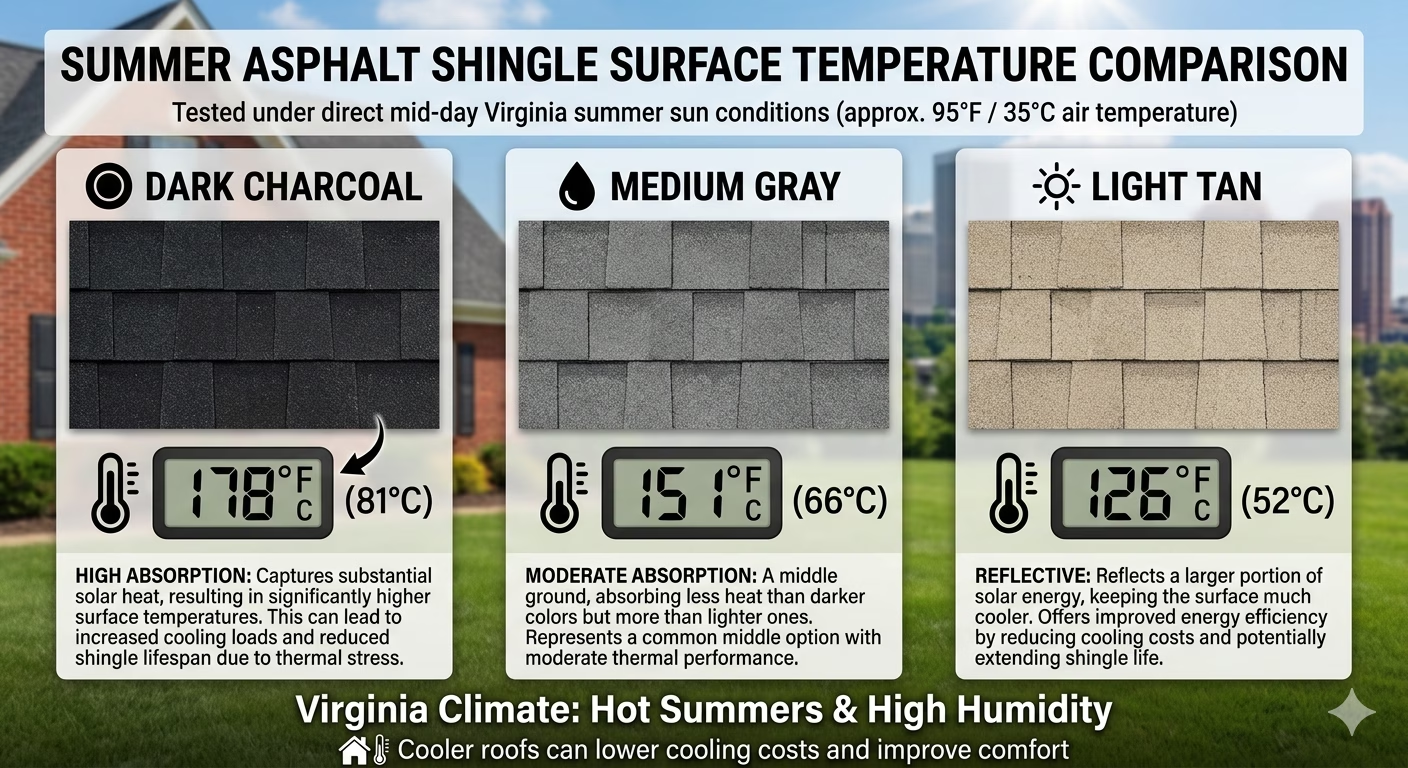
Can a New Roof Lower Your Virginia Energy Bills? What to Expect by Material and Season
Oct. 21, 2026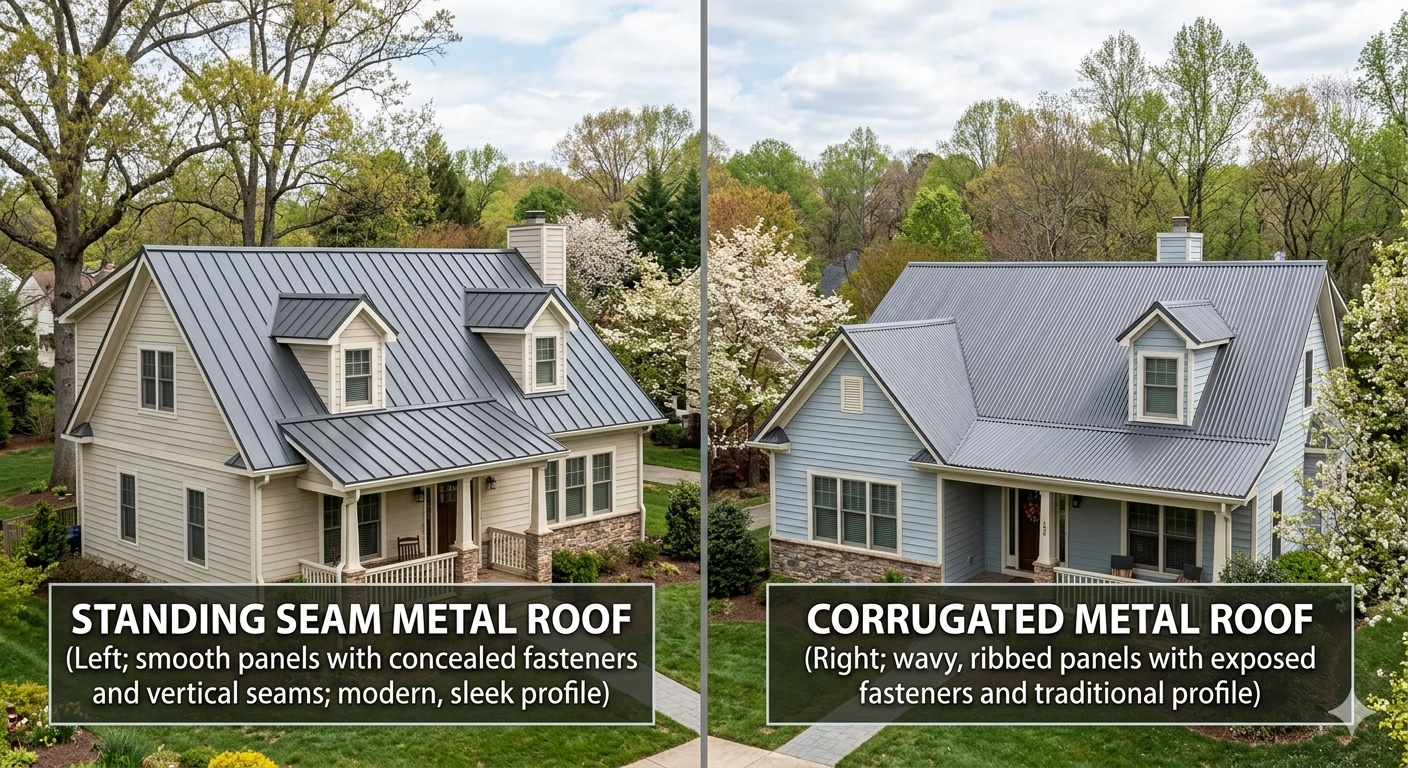
Metal Roofing Cost in Virginia: Standing Seam vs Corrugated and What’s Actually Worth It for Your Home
Oct. 09, 2026Topics
Our Services
- Gutter Services
- Storm Damage Roofing
- Commercial Roofing Service
- BRAVA Cedar Shake Roofing Tile
- Insurance Claim Assistance
- Residential Roofing Services
- Roof Inspection Services
- Roof Repair Service
- Roof Replacement Service
- Shingle Roofing Service
- Metal Roofing Service
- Emergency Roof Repair Services
- BRAVA Spanish Tile
- BRAVA Slate Tile