Contact Us Today
Uncategorized
5 Signs Your Virginia Home Needs a New Roof Before Next Hurricane Season
September 2, 2026
Key Takeaways
- Virginia is not immune to hurricane and tropical storm impacts. The Atlantic coast and the Piedmont inland routing regularly bring sustained winds, torrential rain, and flood conditions to Central Virginia and beyond.
- A roof that is showing early or mid-stage failure signs before storm season becomes a liability the moment a significant weather event arrives. What was a manageable problem before the storm becomes a structural crisis during it.
- The five warning signs covered in this post are specific and observable by a homeowner from the ground or from a careful attic inspection. None requires a professional inspection to identify, though a professional inspection remains the best way to assess the full picture.
- Age is one of the most reliable predictors of storm vulnerability. A shingle roof approaching 20 years in Virginia’s climate is a roof that has absorbed significant cumulative stress from heat, humidity, UV, and freeze-thaw cycles and may not have the structural reserve to handle a significant storm event.
- The consequences of ignoring these signs before hurricane season are not limited to roof damage. A compromised roof that fails during a storm creates water intrusion damage that extends throughout the structure, including insulation, drywall, framing, and personal property.
- A professional roof inspection is free through Four Seasons Roofing and takes less than an hour. That hour before storm season is significantly less expensive than the consequences of storm season catching a failing roof unprepared.
Why Virginia Homeowners Need to Think About Hurricane Season
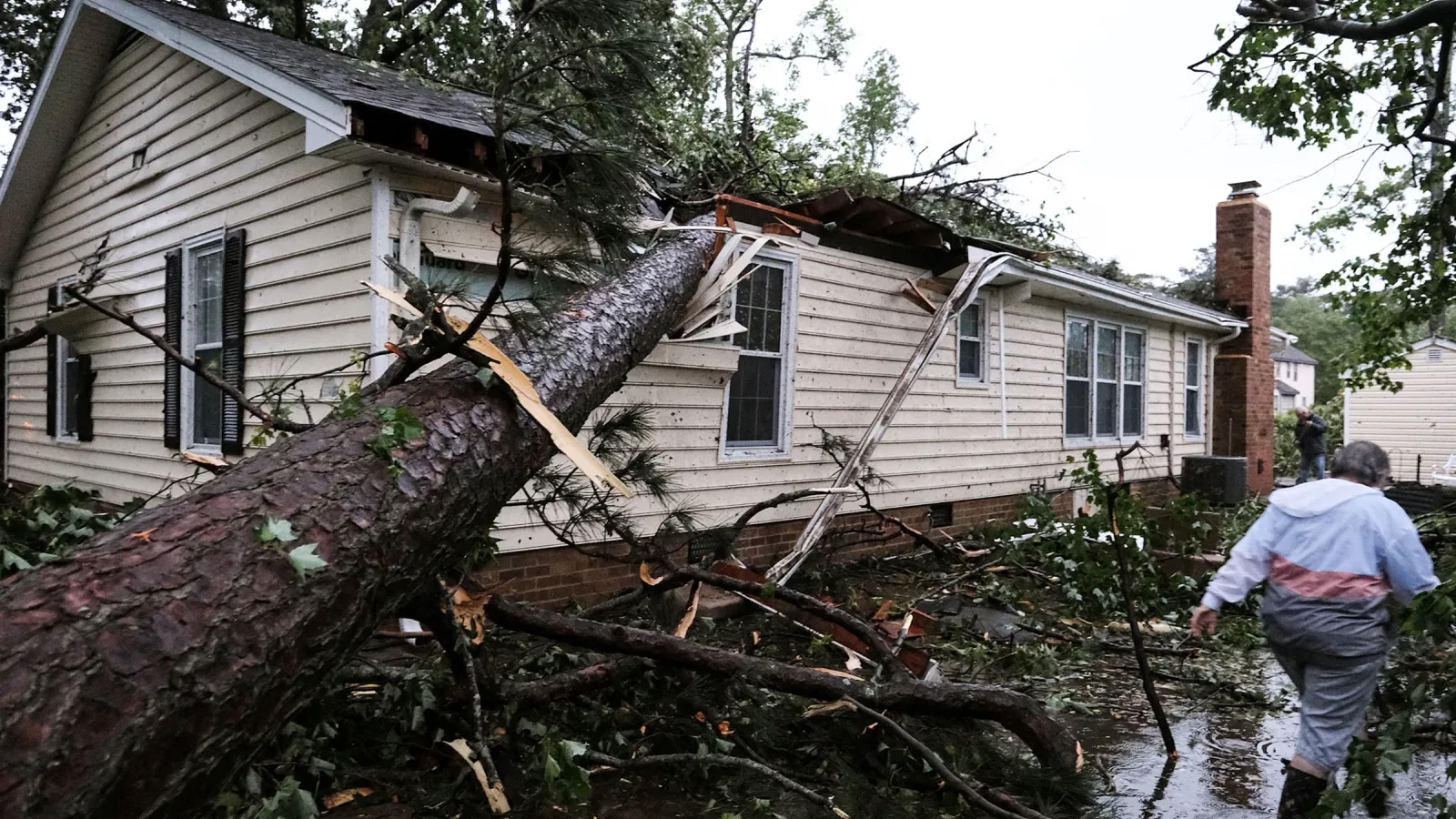
Hurricane season runs officially from June 1 through November 30, and Virginia falls well within the zone of meaningful impact. While direct landfalls on Virginia’s shoreline are less common than in the Carolinas or Florida, tropical systems that make landfall further south track regularly through Virginia on their inland path, delivering sustained winds in the 40 to 70 mph range, rainfall measured in inches per hour, and weather events that test every component of a home’s exterior envelope.
The storms that most damage Virginia homes are often not the ones with dramatic news coverage. They are the remnants of systems that have weakened to tropical storm or post-tropical cyclone status but still carry enough energy to expose every weakness in a roof that was already showing its age.
A roof that has been performing adequately for the past several years of routine weather may have accumulated enough deferred failure that a serious storm event becomes the trigger for catastrophic failure rather than a manageable leak.
The five signs below are the specific indicators that a Virginia roof has crossed from “routine aging” into the territory where storm season represents a genuine structural risk.
Sign 1: Your Roof Is 18 Years Old or Older
Age is not the most glamorous diagnostic criterion, but it is among the most reliable ones for Virginia homes specifically.
Architectural asphalt shingles are rated for 25 to 30 years under standard testing conditions. Virginia’s climate compresses that rating significantly in practice. The combination of summer heat intensity (shingle surface temperatures of 150 to 170 degrees Fahrenheit on a hot day), sustained humidity that supports biological growth, meaningful UV exposure through an extended warm season, and the freeze-thaw cycling of Virginia winters creates a cumulative stress environment that puts most Virginia shingle roofs toward the bottom half of their rated lifespan range.
A shingle roof that is 18 to 22 years old in Virginia has absorbed a significant portion of its total useful life. The granule layer that protects the asphalt underneath has thinned. The asphalt binder has undergone years of UV photo-oxidation that has made it progressively more brittle. The shingle edges have experienced years of thermal cycling that has affected their dimensional stability and their ability to lay flat against the decking.
What this means for storm season: A shingle’s ability to resist wind uplift depends on the performance of the adhesive strip that bonds each shingle to the one below it. Shingles that have been through years of heat cycling have adhesive strips that have partially softened and reformed over time, potentially losing some of the adhesive strength of a newer installation. In a wind event that would cause no damage to a younger roof, an older roof’s shingles may lift and detach at the adhesive strip, creating the opening for water intrusion.
The honest assessment: If your roof was installed 18 or more years ago, it should be professionally inspected before hurricane season, not after. The inspection will confirm whether the roof has enough remaining structural integrity to handle storm season or whether it should be replaced proactively.
A free roof inspection from Four Seasons Roofing provides the specific condition assessment that tells you where your roof actually stands before storm season tests it.
Sign 2: You Find Significant Granule Accumulation in Your Gutters
Granule accumulation in gutters is one of the most reliable and most overlooked indicators of advancing shingle deterioration in Virginia homes.
What Granules Are and Why They Matter
Asphalt shingles are manufactured with a mineral granule surface layer pressed into the asphalt during production. These granules serve a specific function: they are the UV protection layer for the asphalt beneath them. The granules absorb and reflect solar radiation before it reaches the asphalt binder, slowing the photo-oxidation process that makes asphalt progressively more brittle over time.
When granules are lost from the shingle surface, the asphalt beneath them is directly exposed to UV. Once direct UV exposure begins, the degradation of that area accelerates. The process is self-compounding: heat softens the binder, granules loosen and migrate to the gutter, more asphalt is exposed to UV, UV hardens and cracks the asphalt, more granules fall off.
The Difference Between Normal and Concerning
Some granule displacement is normal in the first year after a new roof installation as loose granules from the manufacturing process work their way off. It is also normal to see a small amount of granule displacement after a significant hail or wind event that physically dislodges surface granules.
What is not normal is consistent, significant granule accumulation in gutters throughout the year, particularly when it occurs from multiple locations on the roof rather than from one isolated area.
How to assess your own gutters:
Clean the gutters in early spring and again in late summer. If the gutter cleaning reveals a significant accumulation of roofing granules (they look like coarse sand or fine gravel in colors matching your roof’s color) between cleanings, and if this pattern repeats each cleaning cycle, the granule loss is actively occurring at a rate that warrants professional assessment.
What This Means for Storm Season
A shingle with significant granule loss has reduced UV protection, which means its asphalt is degrading faster than an intact shingle. It has also lost some of its surface mass, which can affect how the shingle lies flat under wind and whether the adhesive strip is functioning correctly.
Going into storm season with significant granule loss on a meaningful portion of the roof is going in with a weaker roof than the one that was installed, with diminished ability to resist both wind uplift and the heavy driving rain that tropical systems deliver.
Sign 3: Shingles Are Curling, Cupping, or Lifting at the Edges
Visual inspection from the ground or from a safe vantage point (a window overlooking the roof) can reveal shingle deformation that is a direct indicator of storm vulnerability.
The Two Types of Shingle Deformation
Cupping: The edges of individual shingles curl upward while the center remains relatively flat. This is typically caused by moisture imbalance between the top and bottom surfaces of the shingle, often related to inadequate attic ventilation that allows excessive heat and moisture to affect the underside of the shingle material.
Clawing: The edges of shingles remain flat while the center or “tabs” of the shingle curl upward, creating a raised center with flat edges. This pattern is associated with adhesion failure between layers in a multi-layer shingle, or with granule loss from the top surface that allows the exposed asphalt to shrink more than the protected undersurface.
Both patterns produce shingles whose edges or centers are raised above the plane of the roof surface. In normal weather, this is an aesthetic problem and a potential pathway for slow water infiltration. In a significant wind event, it becomes a structural vulnerability.
Why Deformed Shingles Are a Storm-Season Emergency
When a wind gust creates uplift pressure on a section of roof, the shingles in that section experience a lifting force that the adhesive strip is designed to resist. A flat shingle that is fully bonded presents a relatively small area to the wind’s lifting action.
A shingle that is already curled or cupped presents a leading edge to the wind. That leading edge becomes a lever point: the wind gets underneath the raised edge, the uplift force is applied at the edge rather than distributed across the shingle face, and the adhesive strip at the bottom of the shingle experiences a peel force rather than the distributed pull it was designed to resist.
The result is that a wind event that a flat, properly bonded shingle would survive causes a curled or cupped shingle to detach and become either a projectile or an opening in the roof surface that allows water intrusion.
How to identify this from the ground:
Look at the roof from a position where you can see along the slope in raking light (early morning or late afternoon sun at a low angle). Curled or cupped shingles will cast small shadows that make them visible as dimensional variations against the otherwise flat surface. Binoculars are helpful for a more detailed assessment without requiring you to be on the roof.
If you see widespread cupping or curling across multiple sections of the roof, this is a sign that warrants immediate professional assessment before storm season.
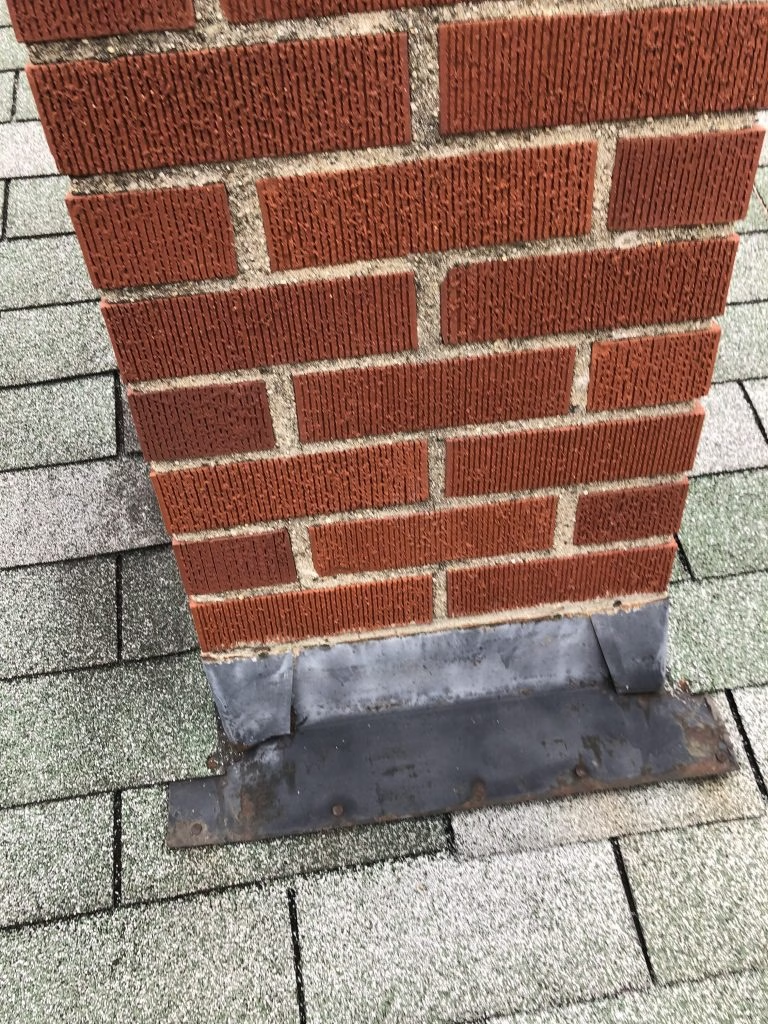
Sign 4: You Have Visible Damage at Flashings or Penetrations
The flashings are the metal components installed at every point where the roof surface intersects with a vertical surface or a penetration: chimney bases, dormer walls, pipe boots, skylight curbs, and valley intersections. These are statistically the most common locations for roof leaks, and they are also among the most storm-vulnerable locations on any roof.
Why Flashings Fail and Why It Matters
Flashings are typically made from galvanized steel, aluminum, or lead-coated copper. They function as a sealed bridge between the roofing material and the vertical surface it meets, directing water away from the interface and preventing infiltration at what is otherwise an inherently vulnerable joint.
Flashing failure happens through several mechanisms:
Sealant deterioration: Most flashings are sealed with roofing caulk or mastic at their edges. This sealant has a finite service life and cracks, shrinks, and pulls away from the surfaces it bonds over years of thermal cycling. Once the sealant fails, water can enter behind the flashing rather than being directed away from it.
Metal corrosion: Galvanized flashings corrode over time, particularly in Virginia’s humid climate. Rust at the base of a chimney flashing or at a step flashing along a dormer wall is a sign of metal that has lost its ability to function as a sealed water barrier.
Physical lifting or separation: Wind events can lift flashings away from the surfaces they are sealed against, creating gaps that may close again after the storm but remain structurally compromised as a water entry point.
Why Compromised Flashings Are a Hurricane Season Priority
Tropical systems and significant storm events deliver not just heavy rainfall but driving rain: rain that is carried by wind at an angle rather than falling vertically. This driving rain reaches places that vertically falling rain never contacts, including up under flashing laps, behind chimney flashing edges, and into any gap between the roofing material and a penetration.
A flashing that works adequately during normal rainfall may fail completely during a storm that drives rain against every vertical surface and forces water uphill under every lap.
What to look for without going on the roof:
From the ground, with binoculars, examine:
- The base of any chimney for visible gaps between the step flashing and the chimney masonry
- The collar around any plumbing vent stack for cracking, splitting, or lifting at the rubber boot
- Any visible rust staining below metal flashing locations on the siding or exterior wall
- Any staining on the soffit below a valley intersection that might indicate water is passing through the valley
Inside the attic, look for staining on the underside of the roof decking at any penetration location: chimney, vent, skylight, or valley.
Sign 5: You Have Evidence of Water Intrusion in the Attic
The attic is the diagnostic space that reveals what the roof’s exterior does not clearly show. If the five signs above represent early and mid-stage failure indicators, evidence of water intrusion in the attic is the definitive indicator that the roof has already failed somewhere and that storm season will make it significantly worse.
What to Look for in the Attic
Inspect the attic on a dry day when there is no active precipitation. Bring a powerful flashlight and look for:
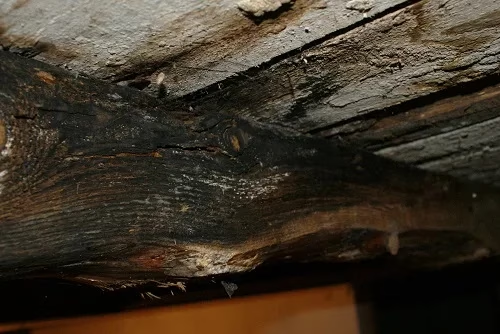
Water staining on the underside of the roof decking: Brown or gray staining on the plywood or OSB sheathing indicates that water has reached the decking surface, either from a past leak that dried out or from a slow ongoing infiltration. The staining pattern often points toward the leak source: staining near a penetration indicates flashing failure, staining in a valley indicates valley failure, staining in the middle of a field indicates shingle failure above.
Soft or deteriorated decking: Push against the underside of the decking in areas where staining is visible. Sound, dry decking is firm and resists pressure. Decking that has absorbed significant moisture becomes soft and spongy, indicating structural deterioration that goes beyond a surface stain.
Active mold or fungal growth: Dark discoloration with a textured or fuzzy appearance on the underside of the decking or on attic framing indicates mold or fungal growth driven by persistent moisture. This is a sign that the moisture infiltration has been ongoing long enough for biological growth to establish.
Daylight visible through the decking: In a darkened attic during daylight hours, any visible light coming through the decking indicates a physical gap in the roof surface that has not been sealed.
Why Attic Evidence Changes the Urgency
Finding evidence of water intrusion in the attic before storm season changes the urgency calculation significantly. The roof is not potentially at risk from storm season. It is already failing, and storm season will accelerate that failure from a gradual infiltration problem to a catastrophic one.
A tropical storm that delivers two to four inches of rain in an hour against a roof that already has active water pathways into the structure does not produce a small additional leak. It produces water intrusion at a rate that can damage insulation, ceiling materials, drywall, electrical systems, and structural framing in hours.
What to do if you find attic water evidence:
This is not a situation that waits for a convenient scheduling window. Contact a qualified roofing contractor for an emergency assessment before the next rain event, and certainly before storm season ramps up in June.
Four Seasons Roofing provides both roof inspection services and storm damage assessment for Central Virginia homeowners. If your attic inspection reveals evidence of active water intrusion, the professional assessment will identify the source and scope of the problem so you can make an informed decision about repair or replacement before storm season arrives.
When to Repair and When to Replace Before Storm Season
Finding one or more of these warning signs raises the question that most homeowners face before storm season: is a repair sufficient to get through the season, or does the roof need to be replaced?
The honest answer depends on the specific condition of the roof, the age of the material, and the scope of the problems identified.
Repair is appropriate when:
- The roof is under 15 years old and the problems are isolated and clearly caused by a specific event or component failure
- The overall shingle condition is good and the problem is limited to flashing failure, a pipe boot, or a small area of damaged shingles
- The cost of repair is well under half the cost of replacement
Replacement is appropriate when:
- The roof is 18 or more years old and showing widespread signs of deterioration
- Multiple problems are present simultaneously (granule loss, curling, and flashing failure rather than one of these alone)
- The attic inspection reveals active water intrusion with decking deterioration
- A repair would be addressing symptoms while the underlying material continues to fail
A professional inspection is the most reliable basis for this decision. The inspector can assess the overall condition of the material beyond the visible warning signs and give an honest recommendation about whether repair or replacement better serves your interest before storm season.
The residential roofing services provided by Four Seasons Roofing cover both targeted repairs for roofs that are otherwise sound and full replacement for roofs that have reached the end of their serviceable life before storm season creates the emergency version of that need.
How Virginia Storm Season Changes the Risk Calculation
For a homeowner evaluating whether to address a borderline roof now or wait until next year, understanding the Virginia storm season risk profile matters.
Tropical cyclone activity affecting Virginia typically peaks in August and September. By that point, a roof that was showing marginal performance signs in spring has been through another summer of Virginia heat, UV stress, and humidity. The marginal roof of June is a more deteriorated roof by August.
A tropical storm that tracks through Central Virginia can deliver:
- Sustained winds of 40 to 60 mph with gusts above 70 mph in stronger systems
- Two to five or more inches of rain over 24 to 48 hours
- Driving rain that reaches areas that normal rainfall does not
These conditions expose every weakness in a roofing system. They also create the conditions under which insurance claims are filed and disputed, contractor schedules are overbooked, and homeowners discover that the affordable preventive action of spring has become the expensive emergency of September.
The most cost-effective time to address a roof that is showing warning signs is before storm season, not after it.
The Bottom Line
The five warning signs in this post: a roof approaching or past 20 years of age, significant granule accumulation in gutters, shingles that are curling or cupping, visible damage at flashings or penetrations, and evidence of water intrusion in the attic are not theoretical risk factors. They are the specific conditions that make a Virginia roof vulnerable to the storm events that will arrive between June and November.
Identifying any of these signs before storm season and getting a professional assessment of what they mean for your specific roof is the action that separates homeowners who manage this risk proactively from those who discover the problem during a storm.
Four Seasons Roofing provides free roof inspections across Central Virginia, including Charlottesville, Buckingham, Nelson, Fluvanna, and the surrounding region. Schedule your free inspection before storm season and get a clear, honest assessment of where your roof stands.
Call 434-390-0199 to schedule. The inspection costs nothing. Finding out your roof has a problem during the next storm costs significantly more.
Why Schedule a Call?
Popular Insights
Roofing Experts in Virginia: Reliable Solutions for Every Property
Sep. 21, 2026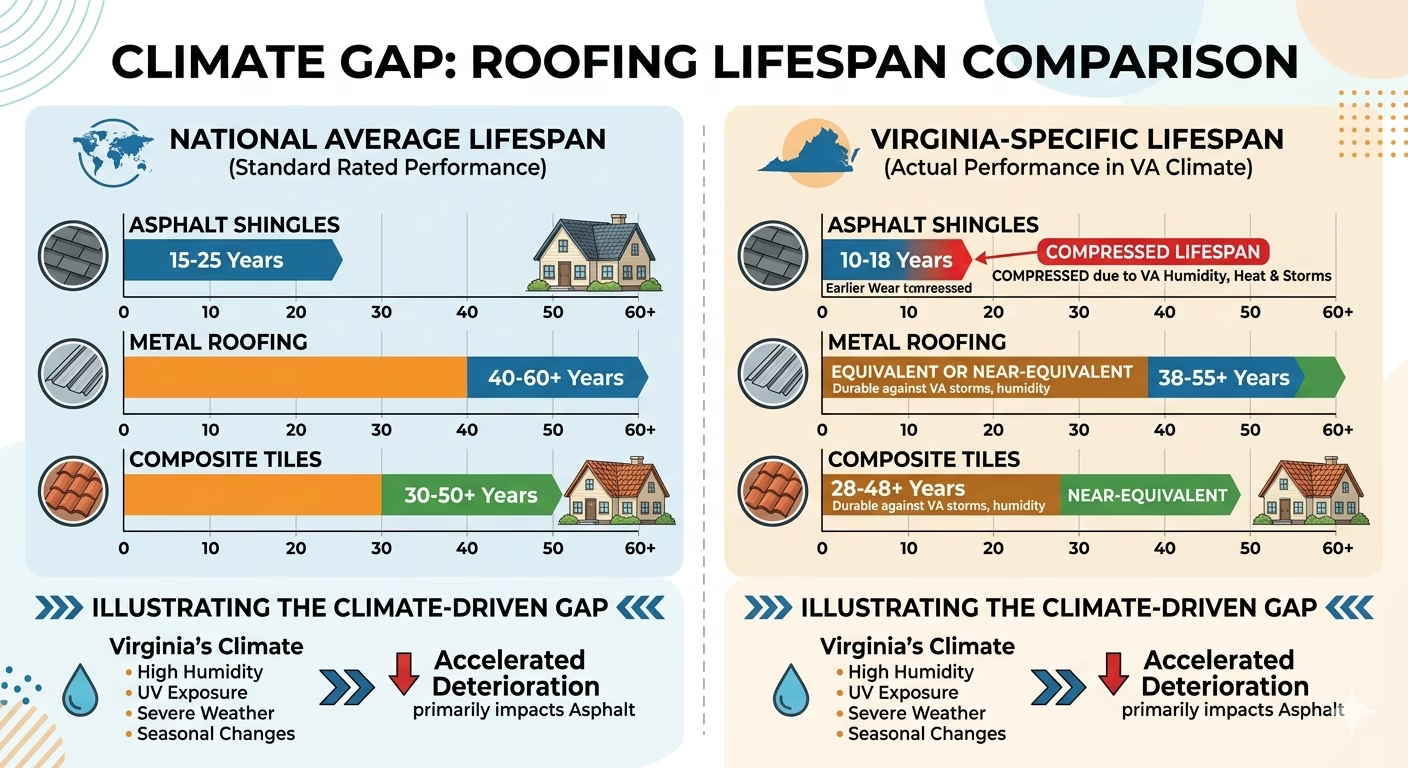
How Long Does a Roof Last in Virginia? Lifespan by Material in a Hot, Humid Climate
Sep. 16, 2026
What Happens During a Professional Roof Inspection and Why Every Virginia Homeowner Should Get One Annually
Sep. 09, 20265 Signs Your Virginia Home Needs a New Roof Before Next Hurricane Season
Sep. 02, 2026
How Virginia’s Humidity and Heat Cycles Damage Asphalt Shingles Faster Than You’d Expect
Aug. 26, 2026Topics
Our Services
- Gutter Services
- Storm Damage Roofing
- Commercial Roofing Service
- BRAVA Cedar Shake Roofing Tile
- Insurance Claim Assistance
- Residential Roofing Services
- Roof Inspection Services
- Roof Repair Service
- Roof Replacement Service
- Shingle Roofing Service
- Metal Roofing Service
- Emergency Roof Repair Services
- BRAVA Spanish Tile
- BRAVA Slate Tile