
Contact Us Today
Uncategorized
Common Causes of Roof Leaks: 3 Hidden Issues Beyond Shingles
June 10, 2026
Key Takeaways
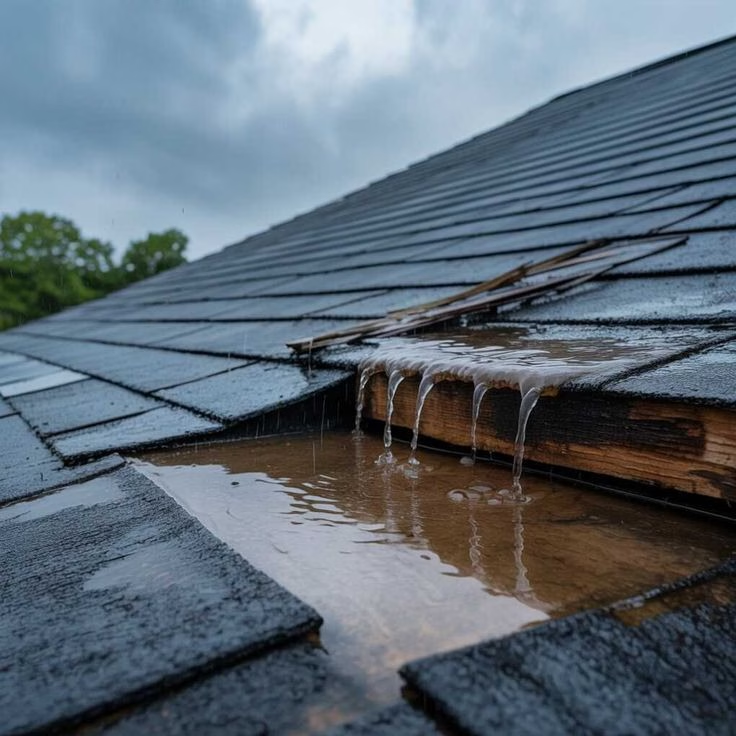
- The “Stealth” Leak: Most interior water damage isn’t caused by a hole in a shingle, but by failure in the “connective tissue” of your roof.
- Flashing Fatigue: Chimneys, skylights, and vents are the #1 zones for seal failure in the Virginia humidity.
- Wicking and Capillary Action: How water “climbs” upward under your roof’s edge due to clogged gutters.
- Proactive Defense: Why a professional roof repair focuses on the “underlayment and metalwork” rather than just the surface.
The Mystery of the Dry Shingle
It’s a common frustration for homeowners in Richmond and Charlottesville: you look up at your roof from the yard, and the shingles look perfect. Yet, there is a brown water stain spreading across your living room ceiling.
In Central Virginia, our intense summer heat and rapid freeze-thaw cycles in winter put immense stress on the non-shingle components of your roof. At Four Seasons Roofing, we’ve found that the “anatomy of a leak” usually involves one of three “hidden” culprits.
1. Flashing Failure: The “Joint” Problem
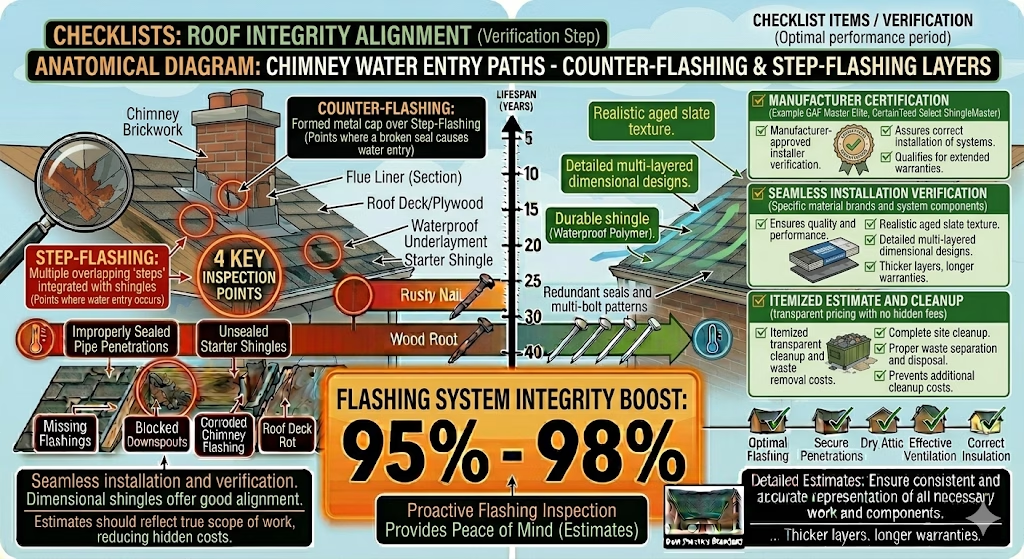
Shingles are great for flat surfaces, but they can’t turn corners. Everywhere your roof meets a vertical surface—a chimney, a dormer wall, or a pipe boot—we install flashing.
- The Problem: In the humid Virginia climate, the sealants used to bond flashing to brick or wood can dry out and crack.
- The Result: Water flows down the side of your chimney and slips behind the shingles, bypassing your roof’s primary defense entirely.
2. Capillary Action: When Water “Climbs”
Physics can be a roof’s worst enemy. “Capillary action” is a phenomenon where water travels upward or sideways through tight spaces.
This most commonly happens at the “eaves” (the edge of your roof). If your gutter system is full of pine needles or debris, water pools at the edge. Because it has nowhere else to go, the water “wicks” backward under the bottom layer of shingles.
Information Gain Tip: This is why we prioritize the installation of a Drip Edge and Ice and Water Shield. These components act as a waterproof “gasket” that prevents wicking, even when the Virginia storms overwhelm your gutters.
3. The “Breezeway” Leak: Failed Pipe Boots
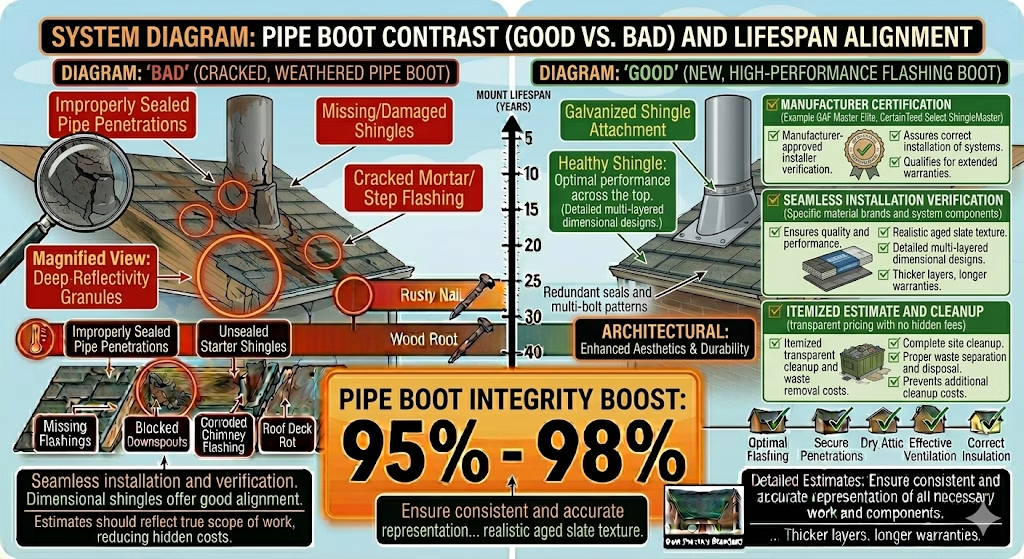
Every home has several “vent stacks” poking through the roof to allow plumbing gases to escape. These are sealed with a rubber or plastic “boot.”
- The Issue: The intense UV radiation in Central Virginia “cooks” the rubber on these boots. Over 10–12 years, the rubber becomes brittle and develops tiny “alligator cracks.”
- The Stealth Factor: Because these boots are often located on the back of the house or high up on the ridge, homeowners rarely see the cracks until the insulation in the attic is already soaked.
Why a “Patch” Isn’t Always the Answer
When water enters through one of these secondary points, simply slapping some roofing cement on a shingle won’t fix it.
Effective leak prevention requires a deep understanding of how air and water move together. If your roof is reaching the end of its lifespan and these leaks are becoming frequent, it may be time for a residential roof replacement. A new system ensures that the flashing, underlayment, and shingles all work in a “closed-loop” of protection.
How to Spot Trouble Before the Rain Starts
You don’t have to wait for a storm to find a leak. Keep an eye out for these “Early Warning” signs:
- Rusty Nail Heads: Check your attic; if nails sticking through the wood are orange, you have high humidity or a slow “seep.”
- Peeling Paint: Look at the wood trim (fascia) near your gutters. If the paint is bubbling, water is likely wicking behind it.
- The “Crunchy” Boot: If you can safely see your roof vents, look for rubber that looks grey or cracked instead of smooth and black.
Protect Your Home’s Integrity
At Four Seasons Roofing, we combine Amish-quality heritage with modern diagnostic tools to find the leaks that others miss. Whether it’s a simple pipe boot replacement or a complex chimney flashing restoration, we treat your home like our own.
Is your roof hiding a secret? Don’t let a “hidden” leak turn into a major structural repair.
Contact Four Seasons Roofing for a Professional Leak Detection Inspection
Why Schedule a Call?
Popular Insights
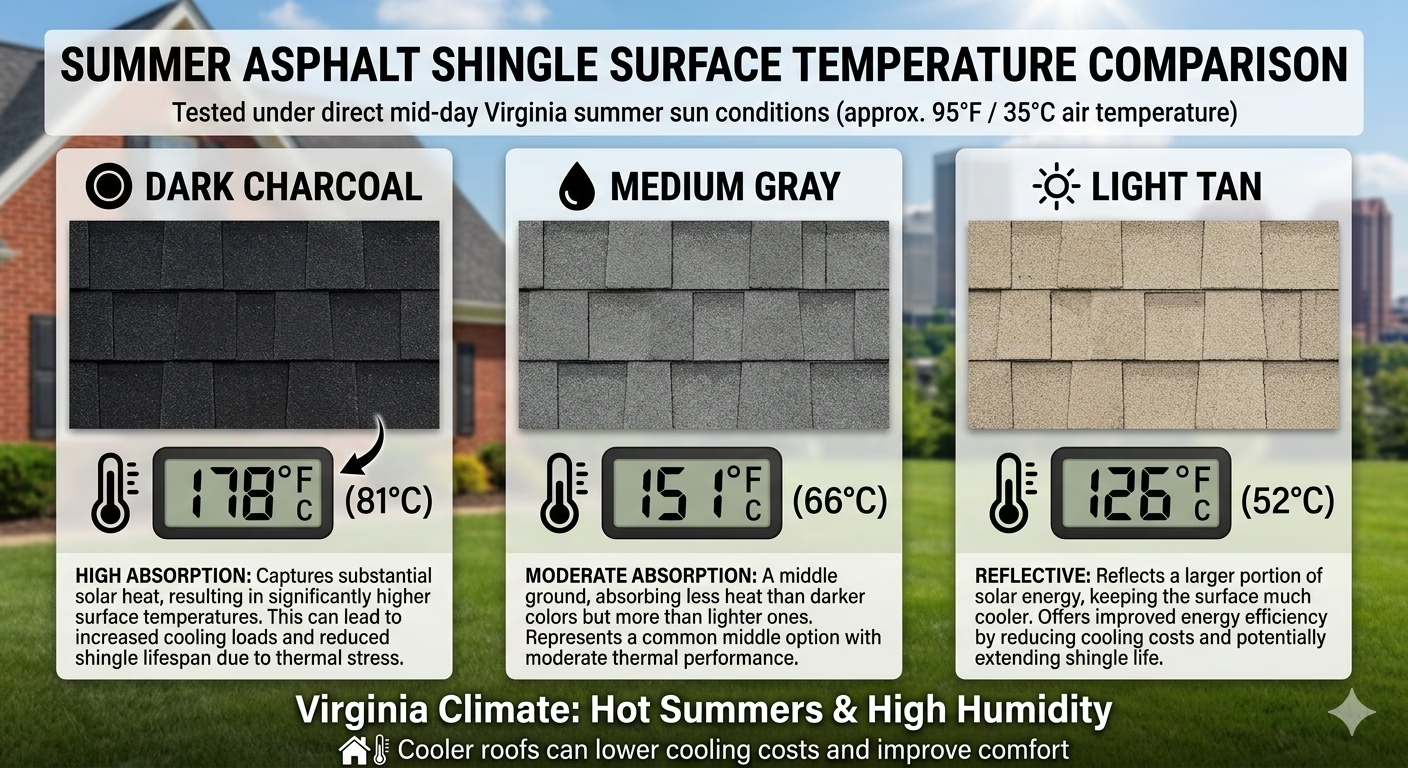
Can a New Roof Lower Your Virginia Energy Bills? What to Expect by Material and Season
Oct. 21, 2026
Repair or Replacement: Choosing the Right Solution for Your Roof
Oct. 09, 2026
How to Choose a Roofing Contractor in Virginia: 6 Questions That Separate Professionals from Fly-by-Nights
Oct. 02, 2026
New Roof Installation in Lynchburg, VA: What Homeowners Can Expect from Estimate to Final Day
Sep. 25, 2026
Storm Damage Roofing in Central Virginia: What to Do in the First 24 Hours After Your Roof Is Hit
Sep. 23, 2026Topics
Our Services
- Gutter Services
- Storm Damage Roofing
- Commercial Roofing Service
- BRAVA Cedar Shake Roofing Tile
- Insurance Claim Assistance
- Residential Roofing Services
- Roof Inspection Services
- Roof Repair Service
- Roof Replacement Service
- Shingle Roofing Service
- Metal Roofing Service
- Emergency Roof Repair Services
- BRAVA Spanish Tile
- BRAVA Slate Tile