Contact Us Today
Uncategorized
New Construction Roofing in Central Virginia: What to Specify
October 30, 2026
Why New Construction Roofing Decisions Are Different
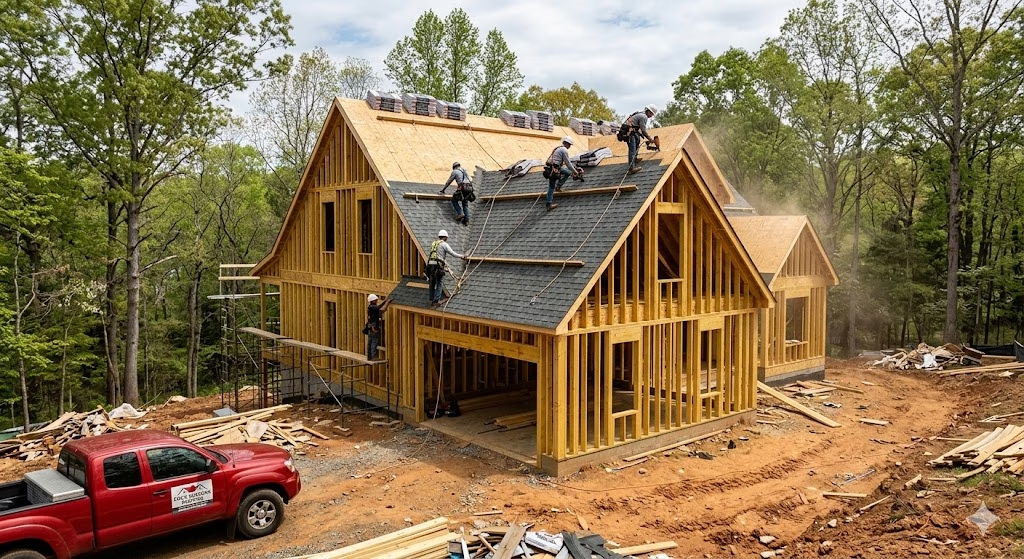
When a homeowner replaces an existing roof, the choices are constrained by what is already there. The pitch is fixed. The decking is set. The ventilation pathways exist or they do not. The conversation is about materials and craftsmanship within a defined structure.
New construction is different. Every decision is on the table from the beginning, which means the opportunity to get it right is real, and so is the opportunity to lock in a problem that will cost money to fix ten years from now.
The most common new construction roofing mistakes are not made by the roofing crew. They are made earlier, at the design and spec stage, when choices that seem like minor line items turn out to matter more than anyone expected. Inadequate ventilation rough-in. Skimping on underlayment to hit a budget number. Selecting a material based on the sample in the showroom without accounting for how Central Virginia humidity and UV exposure affect it over time.
This post is written for builders who want to spec a roof that performs the way their clients expect, and for homeowners who want to understand what they are paying for before the framing crew leaves the site.
Understanding Central Virginia’s Climate Demands on a New Roof
Before discussing materials and specs, it is worth being specific about what the Central Virginia climate actually does to a roof.
Summer heat and UV exposure. The Piedmont and Foothills regions of Central Virginia see sustained summer temperatures in the upper 80s and 90s, with high humidity that holds heat at the roof surface. UV degradation of roofing materials is a real long-term factor that varies significantly by product type and color.
Precipitation volume. Central Virginia receives approximately 44 to 48 inches of rainfall annually, distributed fairly evenly across the year. Proper drainage and waterproofing are not optional amenities in this climate. They are baseline requirements.
Ice and freeze-thaw events. While Central Virginia does not experience the sustained ice loads of northern climates, it gets enough ice events to make proper ice-and-water shield installation at the eaves and valleys a non-negotiable spec item. Ice damming is possible in any winter with freeze-thaw cycling, which happens here regularly.
Wind events. Severe thunderstorms, occasional remnants of coastal storm systems, and strong cold fronts all put wind stress on roofs in this region. Material wind ratings and proper fastening patterns matter for a long-term installation.
Biological growth. Central Virginia’s humid climate supports algae and moss growth on roofing materials, particularly on north-facing and shaded roof sections. Algae-resistant shingle options and correct ridge ventilation that keeps the roof surface drier are both relevant spec considerations.
A roof designed for this climate handles all of those variables by design. A roof speced without this climate in mind handles some of them adequately and fails on others over time.
The Five Core Spec Decisions for New Construction Roofing
1. Primary Roofing Material
This is the most visible decision and often the one that gets the most discussion. It is worth spending the time to match material selection to the project’s performance requirements, budget, and aesthetic intent rather than defaulting to the first option on the list.
Architectural (Laminated) Shingles
Architectural shingles are the most common new construction roofing choice in Central Virginia residential projects. They offer a substantial step up in durability and dimensional appearance over basic 3-tab shingles, with manufacturer-rated lifespans of 30 years and real-world performance of 25 to 35 years with proper installation and maintenance.
For new construction, architectural shingles make sense when:
- The project budget is cost-conscious and a 25 to 35-year lifespan fits the owner’s horizon
- The home’s design calls for a traditional residential aesthetic
- The roof pitch is between 4:12 and 12:12, the standard range for asphalt shingle performance
- The homeowner understands that periodic maintenance and eventual replacement are part of the ownership equation
Four Seasons Roofing’s shingle roofing services cover a full range of architectural shingle products, including algae-resistant options that are worth speccing for Central Virginia’s humid climate.
Metal Roofing
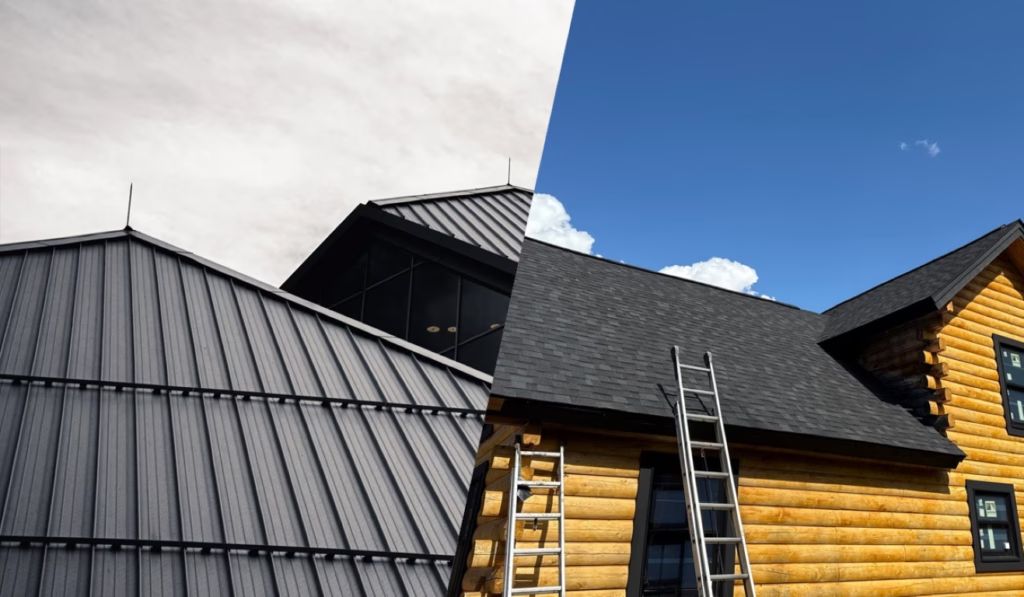
Metal roofing — particularly standing seam metal — has become an increasingly common new construction spec in Central Virginia, particularly for custom homes, rural properties, and projects where the owner intends to be in the home for decades.
The performance case for metal on new construction is strong:
- Manufacturer-rated lifespans of 40 to 70 years with minimal maintenance
- Excellent wind resistance compared to shingle systems
- Superior performance in rain and ice events when installed with proper underlayment
- No algae or moss susceptibility
- Energy efficiency benefits from reflective coatings available on many metal products
The cost premium over architectural shingles is real. Metal roofing typically runs 2 to 3 times the material and labor cost of an equivalent shingle installation. On new construction where the owner is paying once and planning for the long term, that math often works in metal’s favor.
Four Seasons Roofing’s metal roofing services include both standing seam and exposed-fastener metal systems, with product options suited to residential and commercial new construction projects across Central Virginia.
BRAVA Synthetic Tile Products
For homeowners who want the aesthetic of cedar shake, natural slate, or Spanish tile without the maintenance demands and weight concerns of those natural materials, BRAVA synthetic roofing tiles are a new construction option worth knowing about.
BRAVA products are manufactured from recycled materials and engineered to replicate the appearance of premium natural roofing with significantly better longevity, impact resistance, and installation weight profiles. They carry Class A fire ratings and Class 4 impact ratings, the highest available in each category.
For new construction projects in Central Virginia where the architectural design calls for a distinctive roof material, BRAVA cedar shake, slate, and Spanish tile options deliver that character without the maintenance burden of the natural materials they replicate. Four Seasons Roofing is an authorized BRAVA installer, offering BRAVA Cedar Shake, BRAVA Spanish Tile, and BRAVA Slate Tile as part of their new construction product lineup.
2. Underlayment
Underlayment is the layer installed directly over the roof decking, beneath the primary roofing material. On new construction, it is one of the most important spec decisions on the list, and it is one of the most commonly underspecified.
The two underlayment categories relevant to new construction in Central Virginia are:
Synthetic underlayment. A significant performance upgrade over traditional felt paper. Synthetic underlayment is tear-resistant, water-resistant during the construction window before the primary material is installed, and more dimensionally stable in heat than traditional felt. For new construction where the decking may be exposed for weeks before the roofing material is installed, synthetic underlayment is the right spec.
Ice-and-water shield. A self-adhering waterproofing membrane that goes on before the standard underlayment at the eaves, valleys, and around penetrations. In Central Virginia’s climate, ice-and-water shield at the eaves is a minimum spec item. For roofs with complex geometry, valleys, dormers, and multiple penetrations, extending ice-and-water shield coverage to those areas is a worthwhile upgrade.
Speccing felt paper as the sole underlayment product on a new construction project in this climate is a cost reduction that creates real long-term risk. The cost difference between felt and synthetic is modest per square. The performance difference over the roof’s lifespan is not.
3. Ventilation
Ventilation is the spec item that has the most downstream impact on roofing longevity and the least visible presence in a finished home. It is also one of the most frequently underspecified elements in new construction, particularly when the general contractor is coordinating the roofing package without specific input from a roofing professional.
Proper ventilation in a new construction roof requires balanced intake and exhaust. The standard approach uses soffit vents for intake at the eaves and ridge vents for exhaust at the peak. The two must be sized proportionally to move air effectively through the attic cavity.
What happens when ventilation is underspecified:
- Heat buildup in summer accelerates shingle degradation from the underside, shortening effective lifespan
- Moisture accumulation in winter leads to condensation on the underside of the decking, which causes rot, mold, and structural damage over time
- Ice dams become more likely because uneven roof surface temperatures drive freeze-thaw cycling at the eaves
For new construction, the ventilation design should be reviewed by the roofing contractor before the framing is closed in. Adding or correcting ventilation after drywall is up is expensive. Getting it right during framing is a straightforward coordination step.
4. Flashing
Flashing is the metal work installed at every transition point in the roof: where the roof meets walls, chimneys, skylights, dormers, and valleys. It is also the most common source of roof leaks in homes of any age.
On new construction, there is no excuse for inadequate flashing. The work is done once, on a new structure, by a crew with full access to every transition point before interior finishes are complete. Proper flashing at new construction is a permanent installation that should last the life of the primary roofing material.
New construction flashing spec checklist:
- Step flashing at all wall-to-roof intersections, not just caulk or surface-applied metal
- Counter flashing over step flashing at chimney bases
- Valley flashing: woven shingle valleys are acceptable on lower pitches, but open metal valleys with sealed edges perform better in high-rainfall climates
- Kickout flashing at the bottom of wall-to-roof intersections where water runs parallel to a wall — one of the most commonly missed items
- Proper flashing at all skylight and vent penetrations
Kickout flashing deserves specific attention. Its absence is one of the leading causes of water intrusion into wall cavities in new construction homes. It is a small piece of metal. It costs very little. It prevents water from running behind the siding at the point where a roof slope meets a vertical wall. It is missed on a remarkable number of new construction projects.
5. Gutter Integration
Gutters are often treated as a separate line item from the roofing system. In terms of function, they are the last component of the roof’s water management system, and how they are integrated with the roofing installation matters.
On new construction, the gutter spec should be coordinated with the roofing contractor before installation begins. The relevant considerations are:
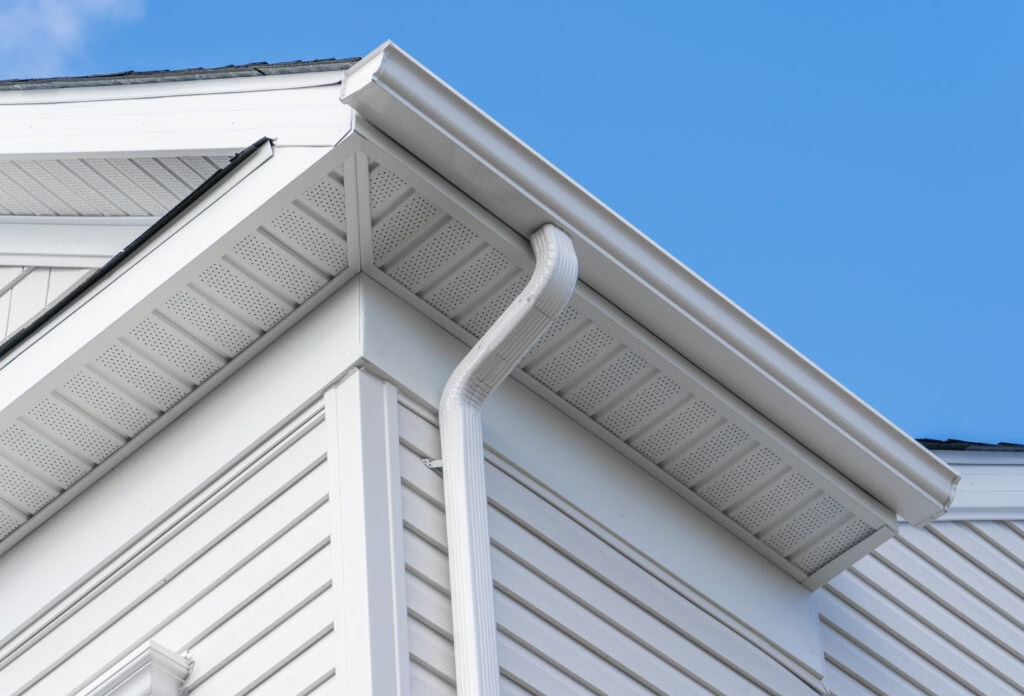
Drip edge profile. The drip edge installed at the eaves and rakes of the roof determines how water transitions from the roof surface to the gutter. The correct drip edge profile directs water into the gutter rather than behind it, where it can cause fascia rot and soffit damage over time.
Gutter sizing. Standard 5-inch gutters are adequate for most residential applications. In Central Virginia, where intense summer storms can deliver high rainfall rates in short periods, moving to 6-inch gutters on larger roof areas is worth considering on new construction where the choice is being made from scratch.
Downspout placement and extension. Downspouts need to be placed and sized to handle the drainage volume from each gutter run. Extensions need to direct water away from the foundation. On new construction, this is a design decision, not an afterthought. Poor downspout placement on a new home contributes to foundation moisture problems that are expensive and time-consuming to correct.
Four Seasons Roofing’s gutter installation services are integrated with their roofing work, which matters on new construction where the gutter installation is most effective when coordinated with the roofing crew rather than handled as a separate contract.
Common New Construction Roofing Mistakes and How to Avoid Them
The list of what goes wrong at the spec stage is shorter than you might expect. Most problems trace back to a small number of recurring decisions.
Skipping ice-and-water shield to reduce cost. The savings on a new construction project are measured in hundreds of dollars. The repair cost when ice damming causes water intrusion into the wall assembly is measured in thousands, and it is rarely covered by the builder’s warranty or the homeowner’s insurance.
Underspecifying ventilation. This is the most invisible problem at installation and the most consequential over time. Confirm the ventilation design with the roofing contractor before framing is complete.
Omitting kickout flashing. It is small. It is cheap. It is consistently missed. Put it in the spec explicitly and confirm it is installed before drywall begins.
Selecting roofing material based on sample appearance alone. The sample in the showroom does not convey how a product performs after 10 years of Central Virginia UV, humidity, and biological exposure. Ask specifically about algae resistance, wind ratings, and manufacturer warranty terms.
Coordinating gutters as an afterthought. Gutter sizing, drip edge profile, and downspout placement are most effectively decided during the roofing design phase, not after the roof is complete.
Working With Four Seasons Roofing on New Construction Projects
Four Seasons Roofing is a family-owned Central Virginia roofing company with over 14 years of experience across residential, commercial, and specialty roofing projects. The company’s Amish craftsmanship roots inform an approach to every job that prioritizes quality of work and attention to detail over speed and volume.
For new construction projects, Four Seasons works directly with builders and homeowners at the spec stage to ensure that material selection, underlayment, ventilation, flashing, and gutter integration are all addressed correctly before work begins. That conversation is part of the value of working with a contractor who will stand behind the finished installation.
The company’s service menu covers every element of a new construction roofing spec: shingle roofing, metal roofing, BRAVA synthetic tile systems, gutter installation, and the full range of residential roofing services that support both custom home builds and production construction projects across Central Virginia.
Frequently Asked Questions About New Construction Roofing in Central Virginia
When should I bring a roofing contractor into a new construction project?
As early as the design phase. A roofing contractor can review the roof geometry, pitch, and ventilation rough-in plan before framing begins and identify any spec decisions that will affect the finished installation. Waiting until the decking is on limits the options and may lock in ventilation or flashing details that are difficult to correct later.
Does metal roofing make sense for new construction in Central Virginia?
For homeowners planning to stay in the home for 20 or more years, metal roofing frequently makes financial sense when the total cost of ownership is compared to multiple shingle replacements over the same period. It also performs exceptionally well in Central Virginia’s precipitation and wind environment. The right answer depends on the specific project budget and the owner’s long-term plans.
What does a BRAVA synthetic tile roof cost compared to natural slate or cedar shake?
BRAVA synthetic products are generally priced higher than standard architectural shingles and in a similar range to, or somewhat below, natural slate and cedar shake when total installed cost is considered. The ongoing maintenance cost advantage over natural materials is significant, particularly for cedar shake, which requires periodic treatment and has a shorter effective lifespan in humid climates.
Are there specific building code requirements for new construction roofing in Central Virginia?
Yes. Virginia Residential Code requirements apply to new construction, including minimum underlayment specifications, fastening patterns, and flashing details. Local jurisdictions may have additional requirements. A licensed roofing contractor familiar with Central Virginia jurisdictions handles code compliance as part of the installation.
What warranty should I expect on a new construction roof?
Manufacturer warranties on architectural shingles typically cover 30 years for materials and may include workmanship coverage when installed by an authorized contractor. Metal roofing warranties vary by product but commonly cover 40 years or more for materials. BRAVA products carry a 50-year limited warranty. Contractor workmanship warranties vary. Ask for specifics before signing a contract.
Ready to Spec Your New Construction Roof?
Whether you are a builder coordinating a residential spec or a homeowner planning a custom build, the roofing decisions you make now determine the performance of the finished home for decades. Getting those decisions right is straightforward when you are working with a contractor who understands what the spec stage requires.
Four Seasons Roofing is available to consult on new construction projects across Central Virginia. The conversation starts with a free inspection and assessment of your specific project.
Contact Four Seasons Roofing to schedule your consultation or call directly at 434-390-0199.
Roofing is their tradition. Quality is their passion. For new construction in Central Virginia, that combination is exactly what the spec stage requires.
Why Schedule a Call?
Popular Insights

Roof Financing in Virginia: How to Pay for a Replacement When You’re Not Ready to Pay Cash
Nov. 06, 2026New Construction Roofing in Central Virginia: What Builders and Homeowners Should Spec from Day One
Oct. 30, 2026
Metal Roofing and Solar Panels in Virginia: What You Need to Know Before Installing Both
Oct. 26, 2026
Can a New Roof Lower Your Virginia Energy Bills? What to Expect by Material and Season
Oct. 21, 2026
Metal Roofing Cost in Virginia: Standing Seam vs Corrugated and What’s Actually Worth It for Your Home
Oct. 09, 2026Topics
Our Services
- Gutter Services
- Storm Damage Roofing
- Commercial Roofing Service
- BRAVA Cedar Shake Roofing Tile
- Insurance Claim Assistance
- Residential Roofing Services
- Roof Inspection Services
- Roof Repair Service
- Roof Replacement Service
- Shingle Roofing Service
- Metal Roofing Service
- Emergency Roof Repair Services
- BRAVA Spanish Tile
- BRAVA Slate Tile