Contact Us Today
Uncategorized
Roof Repair vs. Replacement: A Guide for Virginia Homeowners
August 19, 2026
Repairing vs. Replacing Your Roof: Key Decision Factors
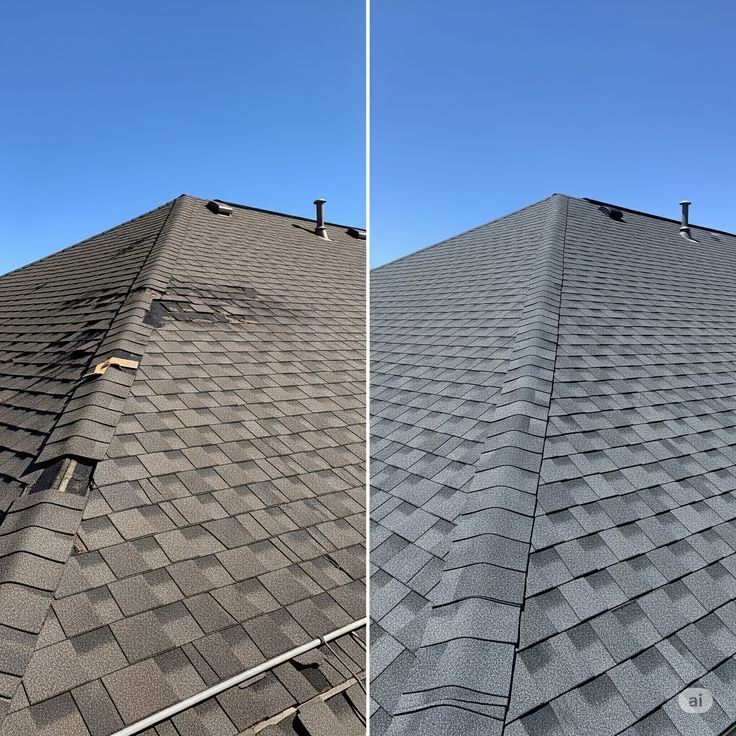
- Roof repair is appropriate when damage is localized, the surrounding material is in good condition, and the roof has meaningful remaining service life. Full replacement is the right answer when damage is widespread, the roof is near or past its expected lifespan, or repeated repairs are costing more than a replacement would over the same period.
- The decision should never be made based on the visible surface of the roof alone. What’s happening in the attic and at the decking level determines whether a repair is a genuine solution or a temporary delay.
- A roof that is 20 or more years old and begins to show problems is almost always a replacement candidate. The problem you can see is rarely the only problem present.
- Localized storm damage on an otherwise sound roof (a section of missing shingles, a damaged flashing, a small penetration) is the clearest case for repair over replacement.
- The most expensive roofing mistake Central Virginia homeowners make is repairing a roof that needed to be replaced. The repair cost is real, the underlying deterioration continues, and the replacement happens anyway a few years later.
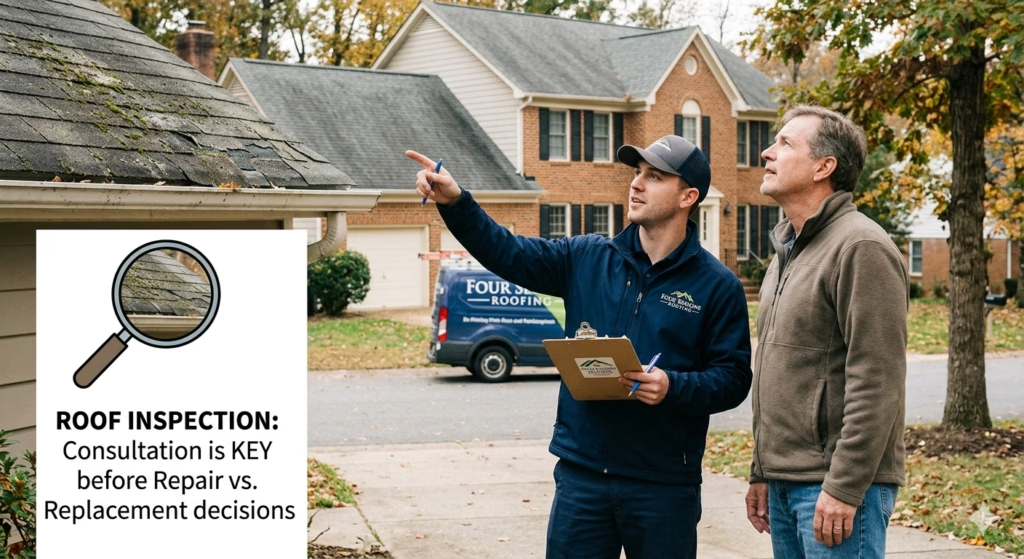
- A professional inspection is the only reliable basis for this decision. The diagnostic conclusions a trained eye reaches from inside and outside the structure are not replicable from a ground-level visual.
The Question That Comes Up After Every Storm Season
After a hail event, a wind event, or a summer of watching stains spread across the attic ceiling, most homeowners arrive at the same decision point: repair or replace?
The instinct is usually to repair. A full replacement feels like a big, expensive commitment, and if the roof is still “mostly okay,” repair seems like the reasonable and proportionate response.
Sometimes that instinct is right. A localized repair on a sound roof is absolutely the correct choice in the right circumstances, and a contractor who tells every homeowner they need a full replacement regardless of the actual condition is not serving your interests.
But the instinct to repair is also how homeowners end up spending $1,500 on a patch job in year 17 of a shingle roof’s life, then $2,200 on another repair two years later, and then a full replacement at year 21 anyway, having spent $3,700 on repairs that didn’t change the underlying trajectory.
The right answer to “repair or replace” depends on specific diagnostic information that only a professional roof inspection can reliably provide. This post explains what that diagnostic process looks like, what the key factors are in the decision, and how to think through the choice clearly so you’re not making a $10,000 decision based on incomplete information.
The Factors That Drive the Decision
The repair vs. replacement question isn’t a single calculation. It’s the result of several factors evaluated together. Here’s what matters and why.
Factor 1: The Age of the Roof
The single most predictive factor in the repair vs. replacement decision is the age of the existing roofing material.
Architectural asphalt shingles are rated for 25 to 30 years under normal conditions, but Virginia’s climate tends to put that toward the lower end. In Central Virginia’s heat, humidity, and UV exposure, shingles installed 18 to 22 years ago are often showing the effects of their age even when they appear intact from the ground.
The logic of repair changes significantly based on age:
Under 10 years: A well-installed roof in its early years has plenty of remaining service life. Localized damage from a storm or installation defect is worth repairing because the surrounding material has years of function left.
10 to 17 years: Evaluate the overall condition alongside the specific damage. If the rest of the roof is in good shape, a repair may be appropriate. If the roof is showing widespread granule loss, cracking, curling, or biological growth across most surfaces, the specific damage is a signal rather than the core problem.
17 to 22 years: This is the range where most repairs are deferring rather than solving. A roof in this age range that is developing problems is typically doing so because the material has reached the end of its functional life. Addressing individual symptoms doesn’t change the underlying reality. Replacement is usually the economically sound choice.
Over 22 years: In most cases, replacement. The question is when, not whether.
Factor 2: The Extent of the Damage
Damage that is genuinely localized (a specific section of shingles from a fallen branch, a piece of flashing that failed at a single penetration, a small area of wind-lifted shingles from a specific storm event) is a repair situation when the surrounding material is in good condition.
Damage that is distributed across the roof surface, with multiple areas showing similar deterioration, is a replacement situation. Distributed deterioration is a sign of material aging or system-wide failure rather than a specific event.
Repair indicators:
- Damage limited to a clearly defined section with a specific cause (impact, wind, one failed flashing)
- Surrounding shingles are intact, well-bonded, and show no cracking, curling, or significant granule loss
- The cause of the damage is identifiable and addressable
Replacement indicators:
- Multiple areas of damage with no single identified cause
- Granule loss visible across most of the roof surface (granules in gutters from every section)
- Widespread cracking, curling, or brittleness in the shingles
- Visible daylight through the roof from the attic
- Widespread biological growth (algae, moss) across most roof sections
Factor 3: The Condition of the Attic and Decking
This is the factor most homeowners can’t assess themselves and the one that most frequently changes the repair vs. replacement conclusion.
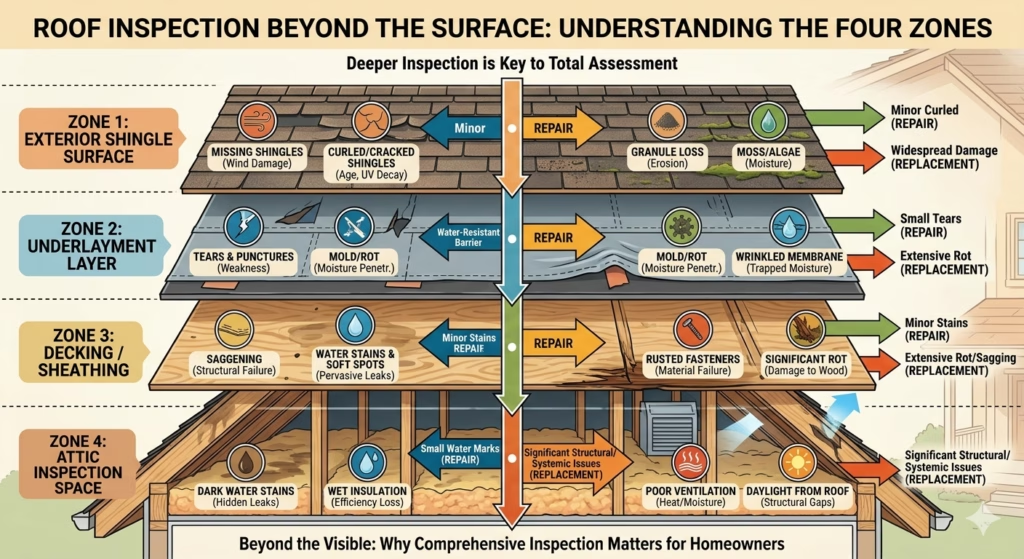
The shingles are the top layer of a roofing system. Beneath them is the underlayment, and beneath that is the roof decking (sheathing). The decking is what the shingles are attached to, and its condition determines whether any surface work is building on a sound foundation.
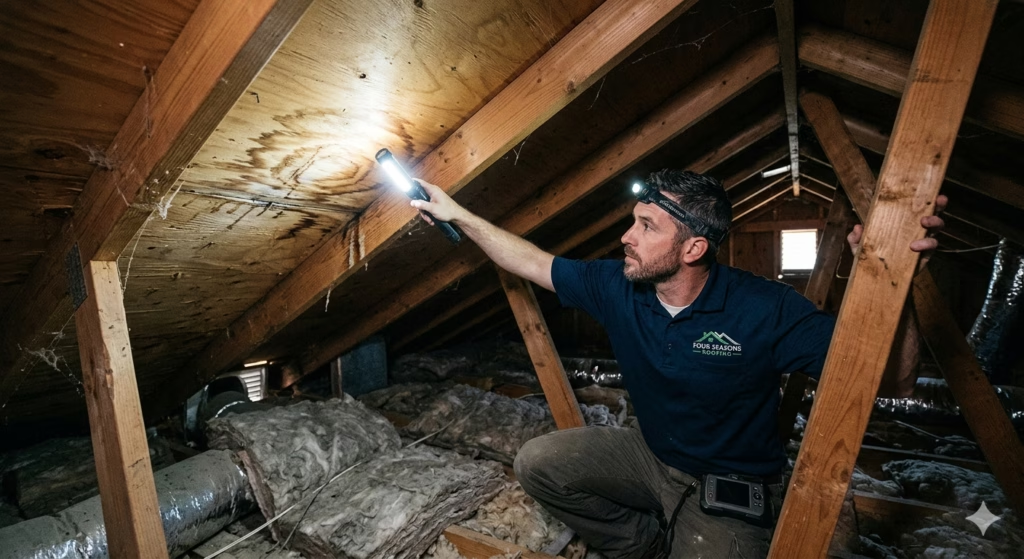
Attic inspection reveals things the exterior inspection doesn’t. Signs of moisture intrusion (dark staining on the underside of the decking, soft spots when pressed, active or dried mold on the attic framing) indicate that water has been reaching the deck for some period of time. If moisture has reached the decking, the scope of any repair has to account for that, and often the deck condition makes full replacement the only viable option.
What attic inspection looks for:
- Daylight visible through the decking (clear indication of through-failure)
- Water staining on decking boards or plywood panels
- Soft or spongy areas in the decking when pressed from below
- Active mold or historical mold evidence on rafters and sheathing
- Condensation patterns that indicate inadequate ventilation driving moisture into the structure
A contractor who recommends repair or replacement without accessing the attic space as part of the inspection is not giving you a complete picture of what you’re deciding between.
Factor 4: The Repair Cost vs. Replacement Cost Ratio
There is a useful rule of thumb in roofing: when a repair costs more than 50 percent of the cost of a full replacement, the replacement is almost always the better financial decision.
This threshold accounts for the fact that a significant repair on an aging roof doesn’t extend the roof’s life by a proportional amount. Spending $4,000 on a repair for a roof that will need to be replaced in three to five years for $12,000 means spending $16,000 total. Doing the replacement now for $12,000 eliminates the $4,000 repair cost and resets the clock on the roof’s service life.
The 50 percent threshold isn’t a hard rule and doesn’t apply to all situations, but it’s a useful frame for the conversation. When you have a repair estimate in hand, ask your contractor directly: what is the expected remaining service life of the roof if this repair is completed successfully? The answer gives you the information you need to evaluate the ratio correctly.
Factor 5: Insurance Coverage and Its Scope
Storm damage that qualifies for an insurance claim changes the economics of both repair and replacement significantly.
If the damage was caused by a covered weather event (hail, wind, falling trees), the insurance settlement may cover partial repair or full replacement depending on the scope of damage, the age of the roof, and your policy terms. In some cases, a claim that would support a repair may also support a full replacement if the surrounding material is also documented as storm-damaged.
The scope of the insurance claim is determined in part by how the damage is documented and presented. A professional inspection that captures all affected areas, including secondary damage to gutters, flashing, and soft metals, creates the most complete basis for a claim.
This is where working with a contractor experienced in insurance claims adds value. Four Seasons Roofing provides insurance claim assistance to Central Virginia homeowners, which means they can help document the full scope of storm damage and ensure the claim reflects what your roof actually sustained rather than only what a quick adjuster visit might identify.
The Situations That Almost Always Mean Replacement
These are the conditions where the repair vs. replacement question has a clear answer.
Age Plus Multiple Problems
A roof that is 18 or more years old and presenting with more than one problem simultaneously (granule loss AND a flashing failure AND biological growth, for example) is telling you that the system has reached the end of its service life. Individual repairs address individual symptoms while the overall condition continues to decline.
Active Leaks with No Identifiable Single Cause
A roof that is actively leaking in multiple locations, or a location where the source of the leak cannot be traced to a single identifiable failed component, is almost always a sign of widespread system failure. Single-point failures are repairable. Distributed water intrusion requires replacement.
Decking Deterioration
When the inspection reveals soft spots, rot, or significant staining across multiple areas of the decking, the repair scope expands beyond the shingles to include structural work on the deck itself. At that point, the full cost of the repair becomes comparable to replacement, and replacement is usually the better value because it addresses the complete system rather than the immediate manifestation of a broader failure.
Two or More Layers Already Present
Many older homes have had a second layer of shingles installed over the first without a tear-off, which was common practice for decades. Most manufacturers specify their products for single-layer installation, and building codes in most Virginia jurisdictions now prohibit a third layer. If your roof currently has two layers, any repair involves working on top of the lower layer (which may also have deterioration that can’t be assessed without removal), and the next replacement requires a full tear-off of both layers.
In this situation, a repair may be physically possible but leaves the lower layer unexamined and the structural issues it might contain unresolved. Replacement is the cleaner choice.
The “Just Sell It” Scenario Where It Isn’t Actually That Simple
Homeowners planning to sell sometimes reason that a repair is sufficient to get through the transaction. This can be true if the roof is in good overall condition and the repair addresses a clearly defined, recently caused problem.
It becomes problematic when buyers commission their own inspection, which is standard practice. A buyer’s inspector who identifies widespread granule loss, shingle cracking, and age-related deterioration on a roof that received a visible patch repair is likely to flag the entire roof as needing replacement, which comes back to the seller as a negotiation item. Spending $2,000 on a repair to avoid a $12,000 discussion in the sale negotiation often doesn’t work as intended.
The Situations That Are Genuinely Repair Situations
Repairs are the right answer in specific, clearly defined circumstances.
Recent Storm Damage on a Sound, Younger Roof
A roof that is 8 to 12 years old, in otherwise good condition, with no attic staining, no granule loss across the general surface, and no biological growth, that sustained localized damage from a specific storm event is a repair situation. The surrounding material has service life remaining. The damage has a specific cause. Repair addresses the actual problem without replacing material that’s still functioning correctly.
A Single Failed Component
A chimney flashing that failed due to sealant age. A pipe boot (the rubber collar around a plumbing vent) that cracked. A small section of ridge cap that lifted in a wind event. These are component failures on an otherwise intact system. Repair is exactly what they require.
Damage Where the Insurance Claim Supports Only Repair
If the storm damage is limited enough that the insurance scope supports repair rather than replacement, and the roof is young enough that the repair result is a genuine long-term solution, the claim-funded repair is the right approach. The insurance evaluation of the scope is one input into the decision, not the only one.
A Specific Area of New Construction or Addition Flashing
Work done on a roof after the initial installation (adding a skylight, modifying an HVAC penetration, attaching a porch or addition) sometimes creates flashing failures at the interface between old and new work. These failures are genuinely localized and genuinely addressable as repairs without requiring engagement with the broader roof surface.
What a Professional Inspection Actually Examines
A homeowner looking at their roof from the backyard can see granule loss, obvious shingle damage, and visible biological growth. This is maybe 20 percent of the diagnostic information a professional inspection generates.
A complete professional inspection includes:
Exterior:
- Full surface examination of every section of the roof, not just the visible front slopes
- Condition assessment of every flashing installation (chimneys, dormers, skylights, vents, roof-to-wall interfaces)
- Gutter condition and evidence of excessive granule accumulation
- Ridge cap condition and integrity
- Soffit and fascia condition, which reveals moisture intrusion patterns
- Any visible evidence of prior repair work and its current condition
Interior (attic):
- Underside of roof decking for moisture staining, soft spots, and mold
- Rafter and sheathing condition
- Ventilation adequacy (inadequate ventilation significantly shortens shingle life and can cause or worsen moisture problems)
- Evidence of daylight penetration through the deck
Documentation:
- Photographs of all identified conditions
- Age assessment based on visible material condition and any available installation records
- Square footage calculation for accurate cost estimation
- Clear written description of findings and recommendation
Four Seasons Roofing’s free roof inspections cover all of these areas. The inspection is the same whether the outcome is a repair recommendation or a replacement recommendation. The goal is an accurate picture of the actual condition, not a predetermined conclusion. Schedule a free inspection to get that picture for your specific home.
The Hidden Cost of the “Just Repair It” Decision
The most expensive roofing outcome isn’t replacement. It’s repeated repairs on a roof that needed to be replaced.
Here’s a realistic scenario for a Central Virginia home:
A homeowner with a 17-year-old shingle roof calls a roofer after noticing a water stain on the ceiling. The contractor finds a failed flashing and repairs it for $850. Problem apparently solved.
Eighteen months later, another stain appears in a different location. Another repair: $1,100. The stain from repair one comes back at a lower level. Another visit, another repair: $1,400.
At year 20, during a wind event, a section of shingles lifts. This time the repair estimate comes with a note: the deck beneath the lifted section has soft spots. The repair cost is now $3,200 and won’t address the surrounding material. The contractor recommends full replacement.
Total spent on repairs before the unavoidable replacement: $6,550. The replacement could have been done at year 17 for $12,000. The three years of repairs added $6,550 and produced a roof that was deteriorating throughout that period.
This scenario isn’t hypothetical. It’s representative of how many older-roof repair cycles play out, particularly when the initial repair addresses the visible symptom without full diagnostic assessment of the underlying condition.
The way to avoid this scenario is a complete inspection that establishes the actual condition of the full system, not just the visible problem, before any repair decision is made.
Questions to Ask Any Contractor Before the Work Starts
Whether you receive a repair recommendation or a replacement recommendation, these questions help you evaluate whether the recommendation is based on thorough assessment.
Did you access the attic as part of the inspection? If the answer is no, the inspection is incomplete. Attic condition is a critical factor in the repair vs. replacement decision.
What is the expected remaining service life of the roof if this repair is completed? A contractor who can’t answer this question with a specific range hasn’t done the assessment necessary to give you an honest recommendation.
Is this damage covered by my homeowner’s insurance? If the damage has a weather-related cause, an insurance evaluation is worth pursuing before paying out of pocket for either a repair or a replacement.
What would change your recommendation from repair to replacement? The answer tells you what the contractor looked for and what they’d be looking for if circumstances were different. It’s a useful diagnostic of how thoroughly they’ve thought through your specific situation.
What does the repair warranty cover and for how long? A repair with no workmanship warranty is a repair that the contractor isn’t fully standing behind. Get the warranty terms in writing.
The Repair and Replacement Services Four Seasons Roofing Provides
Four Seasons Roofing serves Central Virginia homeowners across the full range of roof service needs, from targeted repairs to complete installations.
Their roof repair service addresses localized damage, failed flashings, missing shingles, and specific penetration failures with the same craft-first approach they bring to full installations. A repair completed at the same quality standard as a replacement is a repair that actually solves the problem rather than delaying it.
Their residential roofing installation and replacement service covers full tear-off and replacement in asphalt shingles, metal roofing, and BRAVA composite tiles. The recommendation for which material is right for a specific home is based on the homeowner’s priorities, budget, and ownership timeline, not on which product has the highest margin.
For storm-related damage, their inspection and insurance claim assistance process helps homeowners understand both what happened and what they’re entitled to under their coverage before any work begins.
The Bottom Line
Repair or replace? The honest answer for most Central Virginia homeowners is:
Repair if the roof is under 17 years old, the damage is clearly localized with an identifiable cause, the surrounding material and decking are sound, and the repair cost is well below 50 percent of replacement cost.
Replace if the roof is 17 or more years old, multiple problems are present, the attic inspection reveals moisture damage or deteriorated decking, or the repair cost is approaching or exceeding half the replacement cost.
Get an inspection first in either case. The decision that feels clear from the ground often looks different when someone has actually been on the roof and in the attic.
Four Seasons Roofing provides free inspections across Central Virginia with no commitment and no pressure. You get the actual condition of your roof, a clear explanation of what they found, and an honest recommendation for what your home actually needs.
Schedule your free roof inspection or call 434-390-0199 to get started.
Why Schedule a Call?
Popular Insights
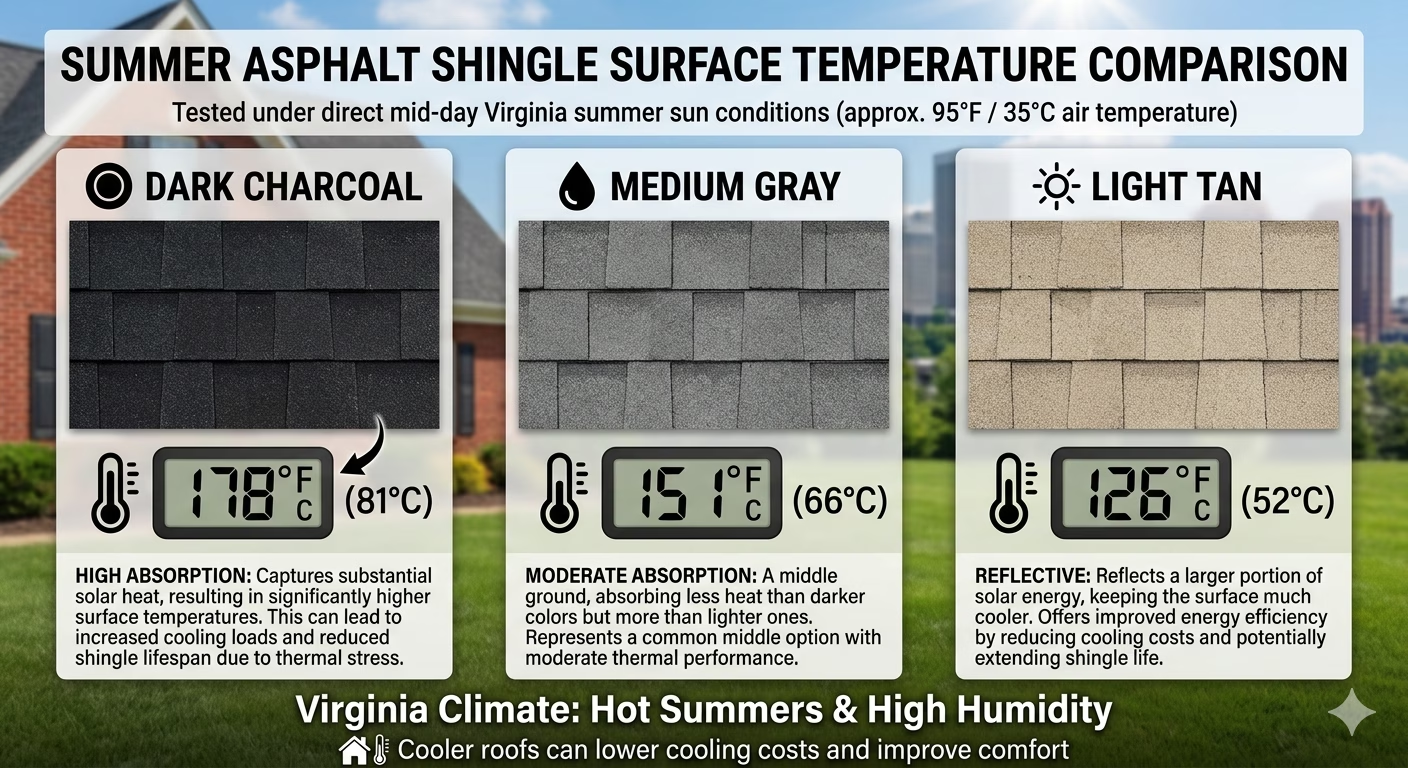
Can a New Roof Lower Your Virginia Energy Bills? What to Expect by Material and Season
Oct. 21, 2026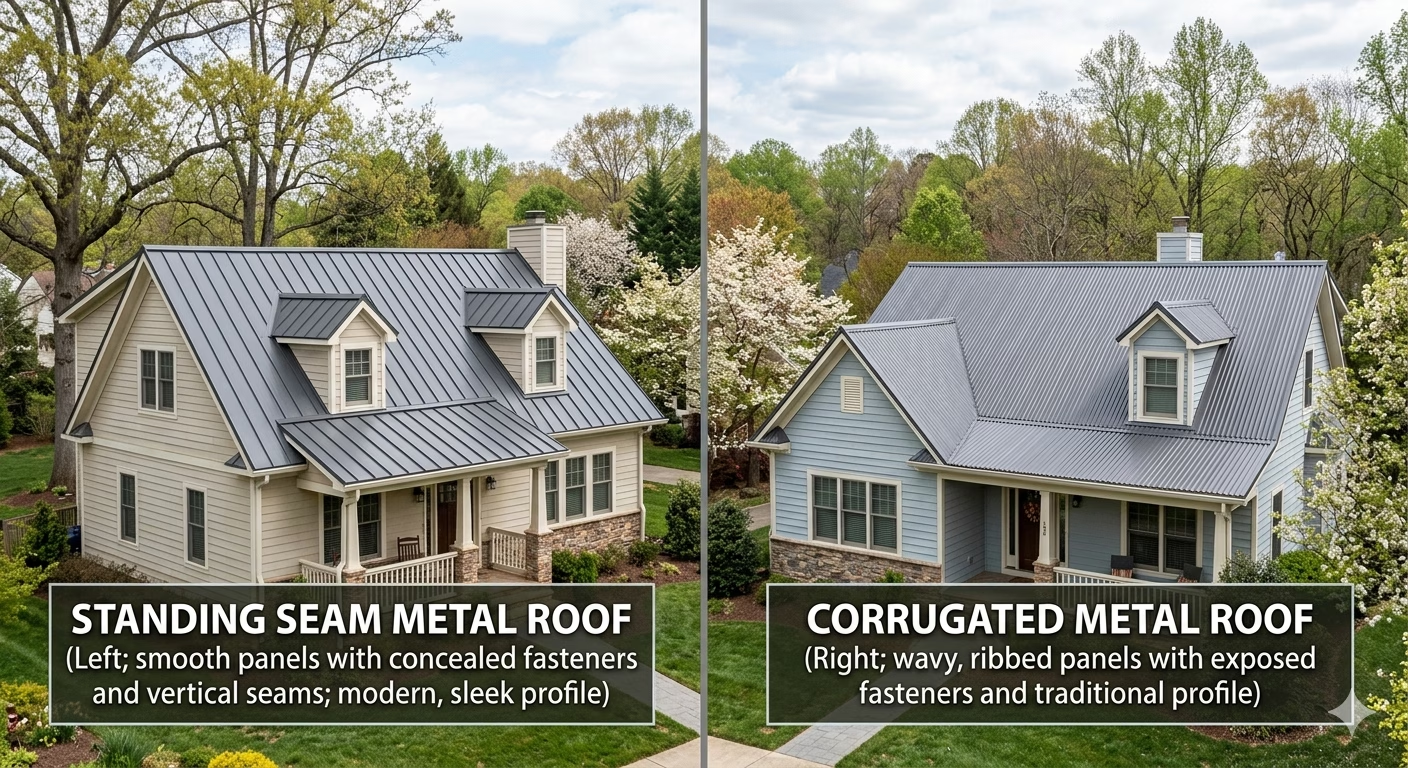
Metal Roofing Cost in Virginia: Standing Seam vs Corrugated and What’s Actually Worth It for Your Home
Oct. 09, 2026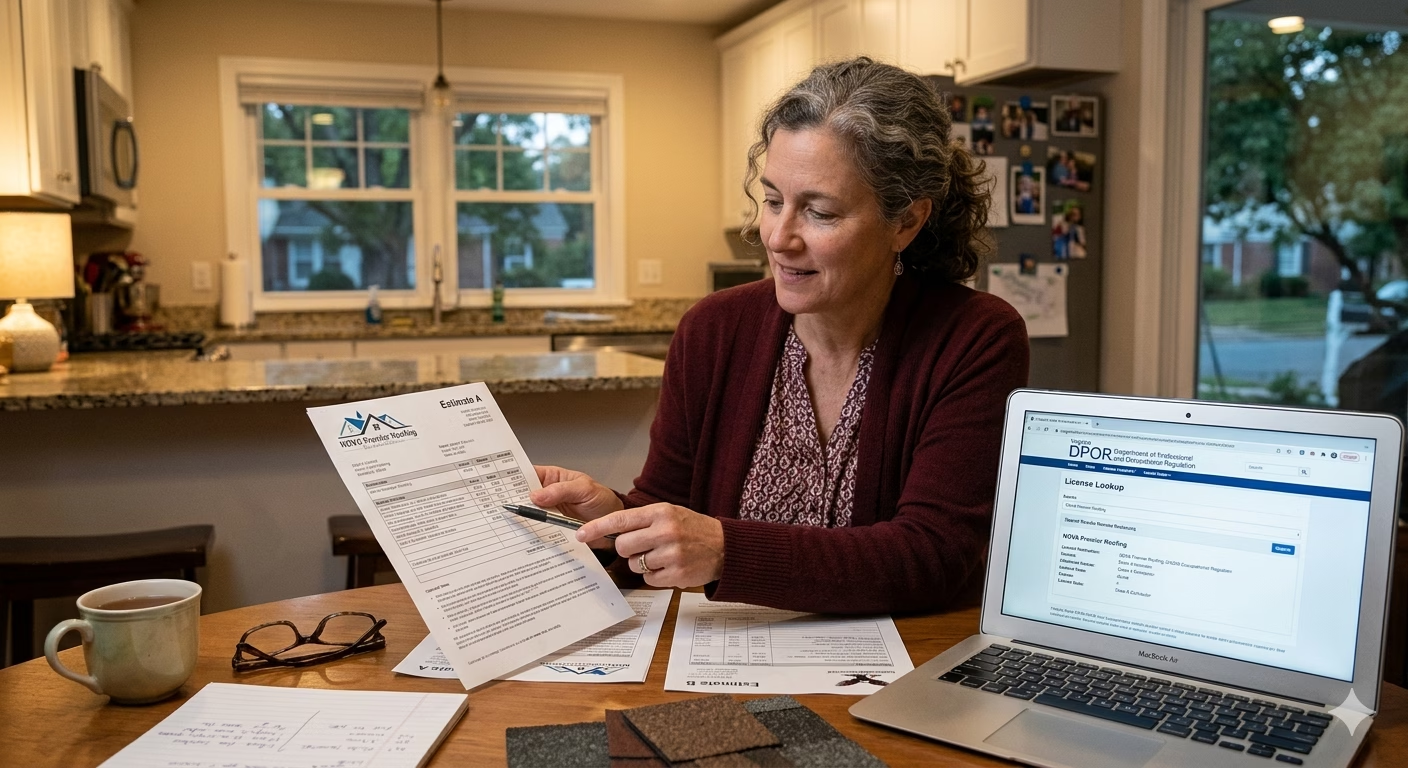
How to Choose a Roofing Contractor in Virginia: 6 Questions That Separate Professionals from Fly-by-Nights
Oct. 02, 2026
New Roof Installation in Lynchburg, VA: What Homeowners Can Expect from Estimate to Final Day
Sep. 25, 2026
Storm Damage Roofing in Central Virginia: What to Do in the First 24 Hours After Your Roof Is Hit
Sep. 23, 2026Topics
Our Services
- Gutter Services
- Storm Damage Roofing
- Commercial Roofing Service
- BRAVA Cedar Shake Roofing Tile
- Insurance Claim Assistance
- Residential Roofing Services
- Roof Inspection Services
- Roof Repair Service
- Roof Replacement Service
- Shingle Roofing Service
- Metal Roofing Service
- Emergency Roof Repair Services
- BRAVA Spanish Tile
- BRAVA Slate Tile