Contact Us Today
Uncategorized
BRAVA Composite vs. Natural Cedar Shake: A Virginia Homeowner’s Guide
August 12, 2026
Natural Cedar Shake vs BRAVA: Key Performance Realities
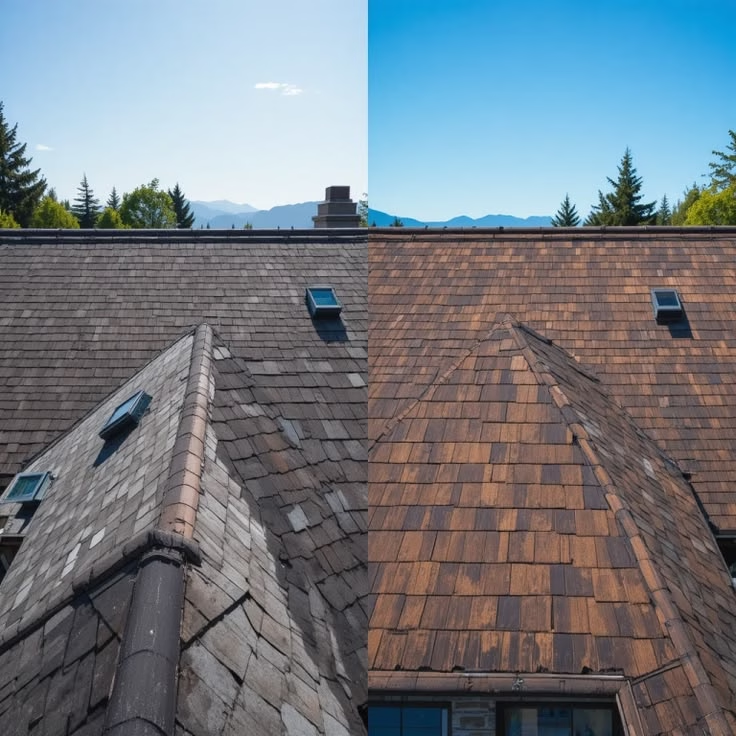
- Natural cedar shake is a genuinely beautiful roofing material with a long heritage in residential architecture, but its real-world lifespan in Virginia’s humid, wooded climate is typically 15 to 20 years, well short of its theoretical 30-year rating.
- Virginia’s combination of summer humidity, biological growth conditions, and seasonal moisture cycling creates an environment where cedar shake degrades faster than in drier western climates where much of the category’s reputation was built.
- BRAVA Cedar Shake composite tiles replicate the split-wood texture and dimensional character of natural cedar in a non-porous polymer product that does not rot, does not support moss and algae growth, and carries a Class A fire rating that natural cedar cannot achieve.
- The upfront cost difference between natural cedar shake and BRAVA is smaller than most homeowners expect, and the lifetime cost comparison shifts significantly when maintenance, early replacement, and treatment costs are factored in.
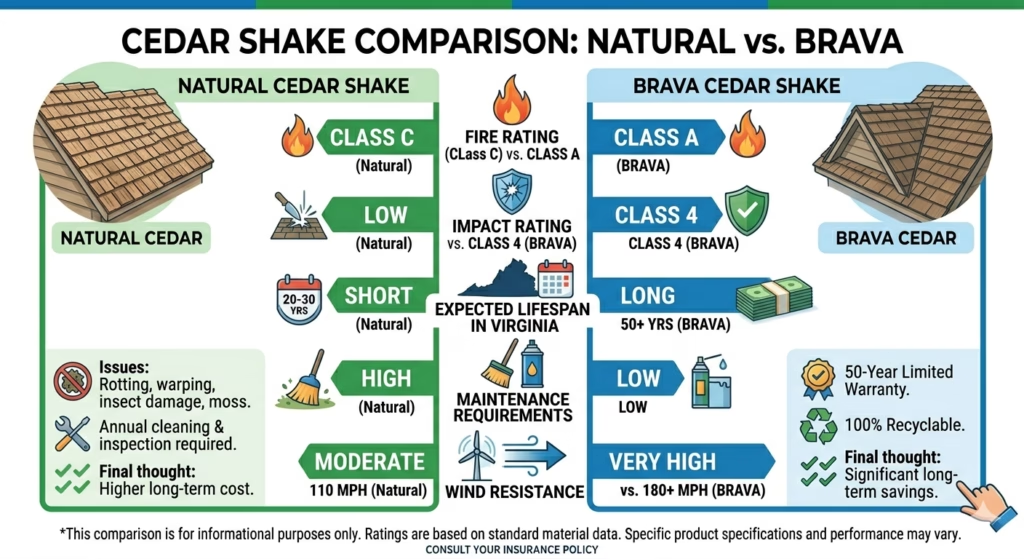
- Natural cedar carries a Class C fire rating at best. In Virginia’s wooded residential areas, where ember exposure from neighboring property fires is a real risk, the difference between Class C and Class A fire resistance is meaningful and, in some jurisdictions, relevant to insurance.
- The right choice depends on your priorities: if authentic natural wood character matters above all else and you’re committed to the maintenance it requires, cedar has a legitimate place. If you want the cedar aesthetic with a 50-year warranty and no maintenance cycle, BRAVA is the more practical answer for most Virginia homes.
Why This Comparison Matters More in Virginia Than in Other States
Cedar shake has a strong reputation in residential roofing, but that reputation was largely built in the Pacific Northwest and parts of Canada, where cedar grows natively, where the climate is cool and relatively dry much of the year, and where the conditions are simply more favorable for wood roofing systems.
Virginia is not the Pacific Northwest.
Central Virginia’s climate includes sustained summer heat and humidity, freeze-thaw events in winter, significant UV exposure through most of the year, and the kind of lush wooded residential settings that create ideal conditions for the biological growth that is cedar shake’s primary enemy.
When homeowners in the Charlottesville area, Buckingham County, Nelson County, or the Blue Ridge foothills ask about cedar shake roofing, the honest answer has to account for what those conditions actually do to natural wood over a decade or two.
This post provides that honest comparison, material to material, performance factor to performance factor, so you can make a decision based on what these products actually do in the Virginia environment rather than on their general industry reputations.
What Natural Cedar Shake Actually Is
Cedar shake is a roofing material made from split or sawn pieces of Western Red Cedar, typically sourced from the Pacific Northwest. The splitting process creates the irregular, textured surface that gives cedar shake its distinctive appearance: dimensional, rough-sawn, and visually different from the uniform surface of a machine-made product.
Natural cedar shake has genuine properties that make it a legitimate roofing material:
- The wood fiber of Western Red Cedar contains natural oils that provide some inherent resistance to moisture and decay
- Cedar is a dimensionally stable wood that handles thermal cycling better than many other wood species
- The material is biodegradable and comes from a renewable resource
- A well-maintained cedar shake roof in a favorable climate can genuinely reach 25 to 30 years of service
These are real advantages. They’re also the basis of cedar shake’s reputation, which is why the material continues to be specified and installed.
The problem is that “well-maintained” and “favorable climate” are doing a lot of work in that last sentence, and Virginia’s environment tests both of those conditions consistently.
What Virginia’s Climate Does to Natural Cedar
Humidity and Moisture Cycling
Western Red Cedar’s natural oils provide meaningful protection against moisture when the wood is relatively young and the oils are present in the fiber. As the wood ages and weathers, those oils migrate out of the surface cells, and the wood’s moisture resistance gradually decreases.
In a climate with Virginia’s humidity, moisture cycling, and rainfall patterns, cedar shake goes through repeated wet-dry cycles across every season. Each cycle causes the wood to expand and contract slightly. Over years, this cycling causes the surface to check (develop small cracks), the edges of individual shakes to curl, and the overall surface to become progressively more permeable.
Once permeability increases, water retention increases. Water retained in the shake material accelerates the biological growth that defines the next phase of cedar degradation in humid climates.
Biological Growth: The Primary Failure Mode in Virginia
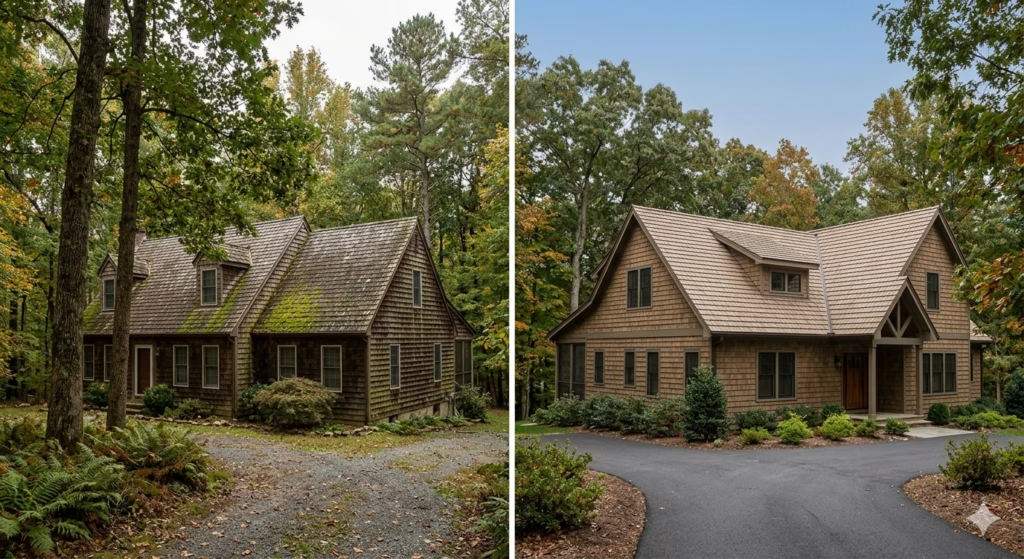
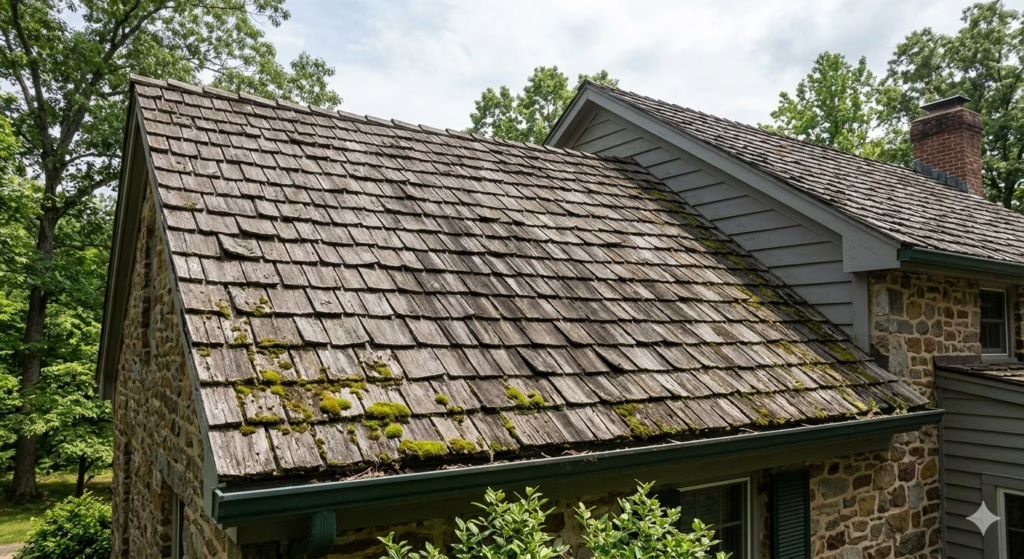
In Virginia, the primary failure mode for natural cedar shake is not rot from water intrusion (though that occurs too). It is the progressive colonization of the shake surface by moss, algae, and lichens.
The combination of shade from Virginia’s wooded lots, organic debris accumulation, and sustained humidity creates ideal conditions for biological growth. Here’s how the progression typically works:
- Algae establish on the shake surface, often appearing first as dark streaking and discoloration
- Moss follows, establishing in the seams between shakes and at the lower edges where moisture is retained longest
- Moss growth lifts the edges of individual shakes, creating entry points for water
- Water intrusion under raised shake edges accelerates decay of the wood fiber
- Individual shakes fail and require replacement; widespread failure leads to full replacement
This progression doesn’t take 30 years in Virginia. In heavily shaded, wooded areas, the first significant biological growth is often visible within 5 to 7 years. By year 10 to 15, a cedar shake roof in a typical Central Virginia wooded setting may require either significant intervention (cleaning, retreatment, partial replacement) or full replacement.
Fire Risk in Wooded Settings
Natural cedar shake has a Class C fire rating under ASTM E108 testing, which is the minimum acceptable rating for residential roofing under most codes. Some pressure-treated cedar products can achieve a Class B rating, but no natural cedar product achieves Class A without significant chemical treatment that compromises the natural character of the material and adds maintenance requirements.
In Virginia’s wooded residential areas, where properties border woodlands and neighboring structures are surrounded by mature trees, the difference between Class C and Class A fire resistance is not theoretical. Ember exposure during fires in adjacent vegetation or neighboring properties is the mechanism by which roof fires start on homes that are not directly in the fire path.
A Class C roof ignites from ember exposure more readily than a Class A roof. This distinction affects both fire safety and, in many cases, homeowner’s insurance premiums.
What BRAVA Cedar Shake Actually Is
BRAVA Cedar Shake is a composite roofing tile manufactured from a proprietary polymer blend that incorporates recycled content. The manufacturing process creates individual tiles that replicate the surface texture, irregular grain character, and dimensional depth of hand-split natural cedar shake.
The key engineering difference is in the base material. Where natural cedar is wood (a biological material that responds to moisture, supports biological growth, and has inherent fire vulnerability), BRAVA’s polymer composite is:
- Non-porous at the material level: water doesn’t penetrate the tile body
- Non-organic: there’s no substrate that moss, algae, or fungi can feed on
- Dimensionally stable across temperature and humidity variations
- Non-combustible in the sense relevant to fire ratings
The result is a product that captures the visual character of cedar shake while being made of something that cannot rot, cannot be colonized by biological growth, and cannot ignite from ember exposure.
BRAVA’s Manufacturing Approach to Authenticity
One of the common concerns about composite roofing products is that they look artificial, either too uniform in texture or too perfect in color to be convincing.
BRAVA addresses this through a manufacturing process that intentionally introduces the variation that makes natural cedar convincing. Individual tiles within the same production run have different surface textures, slightly different color tones, and different degrees of the grain character associated with hand-split wood.
When installed on a roof, a BRAVA Cedar Shake field reads as genuinely textured and dimensional rather than as a repetitive pattern. This is the result of deliberate manufacturing variation rather than the natural randomness of real wood, but the visual outcome is similar.
The Direct Comparison: Factor by Factor
Appearance
Natural cedar shake: The genuine article. Real wood grain, authentic aging character, the tactile and visual depth that comes from a natural material. Cedar shake looks different from every other roofing product because it is a different category of material. For homeowners for whom authentic natural material matters as a value in itself, this is the decisive factor.
BRAVA Cedar Shake: A very close visual approximation. The texture, dimensionality, and color variation of BRAVA tiles are convincing to most observers, including people who know cedar. Side-by-side comparison reveals differences, particularly in the way natural cedar’s color evolves with weathering. BRAVA’s color is more stable over time, which is a performance advantage but means it won’t develop the silvery patina that weathered natural cedar acquires over years.
Practical reality: From the ground, which is where most observers and passersby see a roof, BRAVA Cedar Shake is indistinguishable from natural cedar for most people. The distinction matters in close inspection and for owners for whom the authenticity of the natural material is the point.
Lifespan
Natural cedar shake in Virginia: 15 to 20 years in the typical Central Virginia conditions described above: wooded lots, humidity, biological growth pressure. With rigorous maintenance (regular cleaning, fungicidal treatment, periodic shake replacement), this can extend toward 25 years. Without maintenance, deterioration begins noticeably in year 8 to 12 in most cases.
BRAVA Cedar Shake: 50-year limited warranty from the manufacturer. The polymer composite is not subject to the biological and moisture-related failure modes that shorten natural cedar’s lifespan in Virginia. The limiting factors for BRAVA’s lifespan are UV degradation of the polymer matrix (mitigated by UV stabilizers in the material), mechanical damage from impact events, and fastener performance over time.
The practical gap: Even if BRAVA only delivers 35 to 40 years of service in practice rather than its full warranted 50, a Virginia homeowner installing BRAVA avoids at least one full roof replacement compared to natural cedar over the same period.
Fire Rating
Natural cedar shake: Class C. Minimum acceptable for residential use under most codes. Not suitable for homes in high fire risk zones. Can ignite from ember exposure.
BRAVA Cedar Shake: Class A. Highest available fire resistance classification. Will not ignite from ember exposure in the way Class C material can.
Why this matters in Virginia: The wooded character of much of Central Virginia’s residential landscape makes this distinction real rather than theoretical. Homes in Albemarle, Nelson, Buckingham, and other counties with significant woodland adjacency are in environments where ember exposure during wildland-urban interface fire events is a genuine risk factor.
Maintenance Requirements
Natural cedar shake: Regular maintenance is not optional in Virginia. The maintenance calendar for cedar shake in this climate includes:
- Annual inspection for biological growth and individual shake failure
- Cleaning treatment every 2 to 3 years to address algae and moss before they establish
- Fungicidal and/or preservative treatment on the same cycle
- Individual shake replacement as needed (typically beginning in years 8 to 12)
- Potential re-treatment with fire retardant in some cases
This maintenance program has real cost over a roof’s service life. Professional cedar shake cleaning and treatment runs $500 to $1,500 per application depending on roof size. Over a 15-year service life, that’s $2,500 to $7,500 in maintenance costs added to the installation cost.
BRAVA Cedar Shake: No maintenance cycle beyond periodic inspection. The non-porous composite material doesn’t require cleaning treatments, fungicidal applications, or preservative coatings. Inspection to check for storm damage and fastener condition is appropriate every few years, but the biological growth maintenance cycle doesn’t apply.
Impact and Wind Resistance
Natural cedar shake: Individual shakes can be damaged or displaced by hail events and high wind. The interlocked installation pattern provides some wind resistance, but individual shakes that have begun to check or curl are more vulnerable to wind uplift than intact ones.
BRAVA Cedar Shake: Rated Class 4 for impact resistance (the highest available classification) and rated for high wind. The polymer composite resists hail impact without cracking or fracturing the way natural wood can.
The Cost Comparison: Upfront and Lifetime
The cost comparison between natural cedar shake and BRAVA in Virginia has two components that lead to different conclusions depending on the timeframe you use.
Upfront Installation Cost
Natural cedar shake installation costs have increased significantly as sustainable sourcing requirements have tightened and specialty labor has become less common. In the Central Virginia market in 2025, natural cedar shake installation on a typical residential home typically runs:
Natural cedar shake installed: $18,000 to $28,000
BRAVA Cedar Shake installed: $20,000 to $32,000
The upfront difference is real but narrower than most homeowners expect, typically in the $2,000 to $6,000 range for comparable installations. BRAVA’s premium over natural cedar is smaller than the premium over asphalt shingles, and it’s comparable to or narrower than the difference between standard and impact-resistant architectural shingles.
Lifetime Cost at 30 Years
Over a 30-year ownership horizon, the comparison shifts.
Natural cedar shake: Installation ($18,000 to $28,000) plus maintenance ($2,500 to $7,500 over 15 years) plus replacement at year 15 to 20 ($18,000 to $28,000 at current pricing) plus maintenance on the second installation. Total range: $42,000 to $70,000+.
BRAVA Cedar Shake: Single installation ($20,000 to $32,000) with minimal maintenance cost over 30 years. Total range: $20,000 to $32,000.
At 30 years, BRAVA’s lifetime cost is roughly half of natural cedar’s total cost in most scenarios, despite a similar or slightly higher upfront number.
This is the calculation that most homeowners don’t run at the point of initial installation because the 15-year replacement feels abstract. Homeowners who have already replaced a cedar shake roof once understand this comparison viscerally.
Specific Scenarios Where Each Option Makes More Sense
When Natural Cedar Shake Makes Sense
Historic homes with specific preservation requirements: Some historic properties in Virginia have preservation covenants or architectural review requirements that specify natural materials. If your home’s historic status or HOA rules require authentic cedar shake, BRAVA may not meet those requirements.
Owners for whom natural material is a non-negotiable value: Some homeowners genuinely want a wood roof and are prepared to maintain it appropriately. If this describes you, natural cedar with a rigorous maintenance commitment can perform reasonably well in Virginia. The key word is commitment: irregular maintenance is worse than either consistent maintenance or choosing a different material.
Short ownership horizon: If you’re planning to sell the home within 10 to 15 years, a well-maintained natural cedar roof that’s still in good condition may serve the ownership period without requiring replacement. BRAVA’s longer lifetime advantage becomes most relevant for owners who will see it through multiple decades.
When BRAVA Cedar Shake Makes More Sense
Wooded, shaded lots: The more heavily wooded and shaded the lot, the more aggressively biological growth attacks natural cedar. Properties with significant shade and organic debris accumulation are among the worst environments for natural cedar and among the least challenging for BRAVA’s non-organic surface.
Long-term ownership: Anyone planning to own the home for 20 or more years should seriously consider BRAVA’s total cost advantage over multiple cedar cycles.
Homeowners who don’t want a maintenance obligation: The maintenance cycle for cedar in Virginia isn’t onerous if you commit to it, but it requires regular attention and regular cost. BRAVA eliminates that obligation almost entirely.
Fire sensitivity: Any home adjacent to woodland, in a wooded development, or in an area with documented wildland-urban interface fire history benefits meaningfully from Class A versus Class C fire ratings.
Insurance considerations: Some Virginia insurers offer premium reductions for Class A fire-rated roofing material. It’s worth a direct conversation with your insurer before making a material decision, as the premium difference may partially offset the cost gap between cedar and BRAVA.
What Installation Looks Like for Each
Natural Cedar Shake Installation
Installing natural cedar shake requires crews with specific experience in the material. Cedar shake has different moisture management requirements than other roofing materials: it needs to breathe to dry out between rain events, which means underlayment selection and installation spacing matter specifically for cedar systems.
The installation includes:
- Solid sheathing or open slat (skip) sheathing depending on the product specification and local code
- Breathable underlayment that allows moisture vapor movement
- Individual shake installation with specific spacing and exposure requirements
- Ridge cap and hip installation with specific cutting and fastening methods
The specialty nature of cedar shake installation means that fewer contractors in Central Virginia have deep current experience with the material. Finding a contractor who regularly installs cedar shake in this region is harder than finding one who installs asphalt shingles or metal.
BRAVA Cedar Shake Installation
BRAVA installation follows a different process because the composite material doesn’t require the breathability considerations of natural wood. BRAVA is installed over solid sheathing with standard synthetic underlayment, using a nailing pattern and course layout specified by the manufacturer.
The installation doesn’t require a specialty cedar crew, but it does require a contractor who is certified and trained in BRAVA’s installation specifications. BRAVA certifies contractors specifically because the warranty requires installation to manufacturer standards, and because the product’s performance depends on correct fastening patterns and flashing integration.
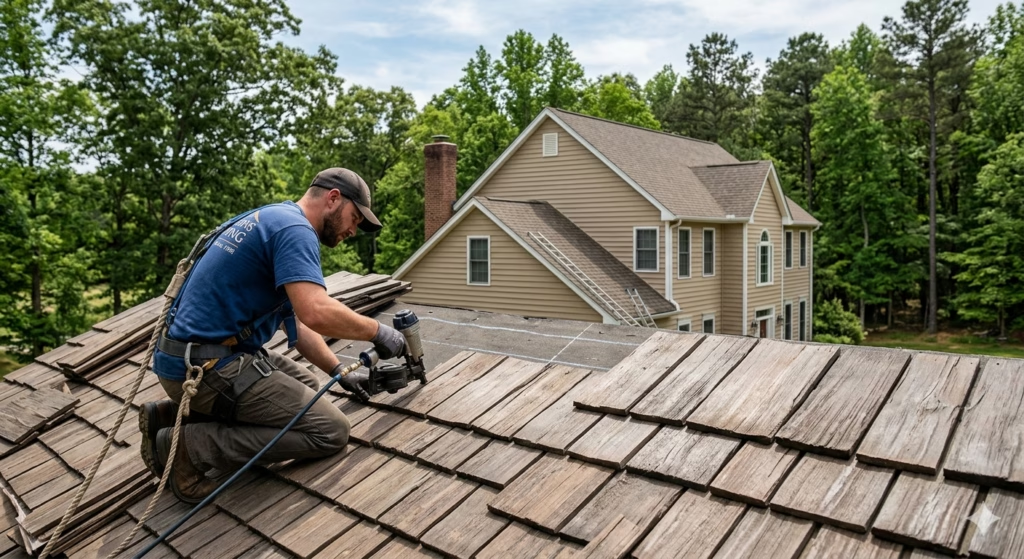
Four Seasons Roofing is a certified BRAVA installer in Central Virginia. Their BRAVA Cedar Shake roofing installation service covers the full project: inspection, tear-off, underlayment, installation, and the warranty documentation that protects the homeowner’s investment.
Getting a Quote for Your Home
The right choice between natural cedar shake and BRAVA starts with understanding what your specific roof looks like: its size, pitch, complexity, current condition, and the environmental factors specific to your property.
Both options require a professional inspection to generate an accurate estimate. Generic cost ranges are a starting point for budgeting but can’t account for your specific roof’s configuration, the current condition of the decking, the complexity of any valleys and penetrations, or the local factors that affect labor time and material quantities.
Four Seasons Roofing provides free roof inspections across Central Virginia. A free inspection gives you the specific numbers for your home, an honest assessment of what material makes most sense for your situation, and the information you need to make a decision without pressure.
If you’re considering a cedar shake roof or thinking about whether BRAVA might be a better long-term fit, schedule a free inspection or call 434-390-0199.
The Bottom Line
Natural cedar shake is a beautiful and historically significant roofing material. It’s also a material whose real-world performance in Virginia’s humid, wooded climate doesn’t match its theoretical lifespan, and whose maintenance requirements represent a genuine ongoing commitment and cost.
BRAVA Cedar Shake delivers the visual character that makes cedar appealing, in a product that is non-porous, non-combustible at Class A, rated Class 4 for impact, and backed by a 50-year warranty, without the maintenance cycle that Virginia’s climate makes necessary for the natural material.
For most Central Virginia homeowners evaluating cedar aesthetics in 2025, the honest answer is that BRAVA delivers more of what they want from a cedar roof, at a competitive lifetime cost, without asking them to fight the Virginia climate for the next 15 to 20 years.
That’s not an argument against natural cedar for every homeowner. It’s an argument for being clear-eyed about what the natural material actually requires in this specific environment before committing to it.
Why Schedule a Call?
Popular Insights
Can a New Roof Lower Your Virginia Energy Bills? What to Expect by Material and Season
Oct. 21, 2026
Metal Roofing Cost in Virginia: Standing Seam vs Corrugated and What’s Actually Worth It for Your Home
Oct. 09, 2026
How to Choose a Roofing Contractor in Virginia: 6 Questions That Separate Professionals from Fly-by-Nights
Oct. 02, 2026
New Roof Installation in Lynchburg, VA: What Homeowners Can Expect from Estimate to Final Day
Sep. 25, 2026
Storm Damage Roofing in Central Virginia: What to Do in the First 24 Hours After Your Roof Is Hit
Sep. 23, 2026Topics
Our Services
- Gutter Services
- Storm Damage Roofing
- Commercial Roofing Service
- BRAVA Cedar Shake Roofing Tile
- Insurance Claim Assistance
- Residential Roofing Services
- Roof Inspection Services
- Roof Repair Service
- Roof Replacement Service
- Shingle Roofing Service
- Metal Roofing Service
- Emergency Roof Repair Services
- BRAVA Spanish Tile
- BRAVA Slate Tile