
Contact Us Today
Uncategorized
Filing a Roof Damage Insurance Claim in Virginia: A Step-by-Step Guide
August 5, 2026
Key Takeaways
- Filing a roof damage insurance claim in Virginia follows a specific sequence, and getting the steps out of order is one of the most common reasons homeowners receive a lower payout than they’re entitled to.
- Documentation is everything. An insurance adjuster will assess your claim based on the evidence presented. A professional roof inspection before the adjuster visit significantly strengthens the documentation behind your claim.
- Virginia insurance policies vary widely in how they calculate payouts. Understanding whether your policy uses Replacement Cost Value (RCV) or Actual Cash Value (ACV) determines how much you’ll actually receive.
- Insurers have specific time windows for filing storm damage claims. Virginia does not have a universal statutory deadline for roof damage claims, but most homeowner policies have their own filing deadlines, often 12 months from the date of loss.
- A reputable roofing contractor with insurance claim experience can assist with documentation, scope of loss preparation, and communication with your adjuster without charging separately for that service.
- You have the right to dispute a claim denial or underpayment in Virginia. The process includes a formal dispute with your insurer and, if unresolved, a complaint to the Virginia State Corporation Commission’s Bureau of Insurance.
Disclaimer: This post provides general educational guidance. It is not legal or insurance advice. Your specific policy terms govern your claim. Consult your insurance agent, policy documents, or a licensed public adjuster for guidance on your specific situation.
Why the Process Matters as Much as the Damage
Most Virginia homeowners who contact their insurance company after a storm assume the process is straightforward: call the insurer, they send someone to look, they pay to fix the roof. Done.
The reality is more complicated, and the gap between what a claim should pay and what it actually pays is often determined not by the extent of the damage but by how the claim was documented, who assessed it, and how the initial scope of loss was prepared.
Understanding the process before you’re in the middle of it is one of the highest-value things a homeowner can do. This guide walks through every step in sequence, explains what happens at each stage, and flags the specific points where homeowners most commonly leave money on the table or make mistakes that complicate the claim.
Step 1: Document the Damage Before Anyone Touches the Roof
The single most important action you can take immediately after discovering roof damage is to document everything before any repairs are made or any material is removed.
Why this matters: Insurance adjusters evaluate claims based on evidence. If temporary repairs have been made or damage has been cleaned up before documentation is complete, establishing the original extent of the loss becomes significantly harder.
What to document:
- Take photographs of the damaged areas from ground level and, if it’s safe to do so, from multiple angles showing the full extent
- Photograph any secondary damage caused by the roof failure: water stains on ceilings and walls, damaged insulation, damaged personal property if water entered the home
- Note the date and nature of the weather event that caused or appears to have caused the damage
- Check local weather records to confirm storm dates, hail sizes, and wind speeds. Weather reporting services like NOAA’s storm event database and private meteorological services can provide documentation that an adjuster will recognize
Temporary protection: If the damage is severe enough to allow ongoing water intrusion, you are generally entitled to make reasonable emergency repairs to prevent further damage. Cover exposed areas with a tarp or board up damaged sections. Keep all receipts. Document the condition before the temporary repair is in place.
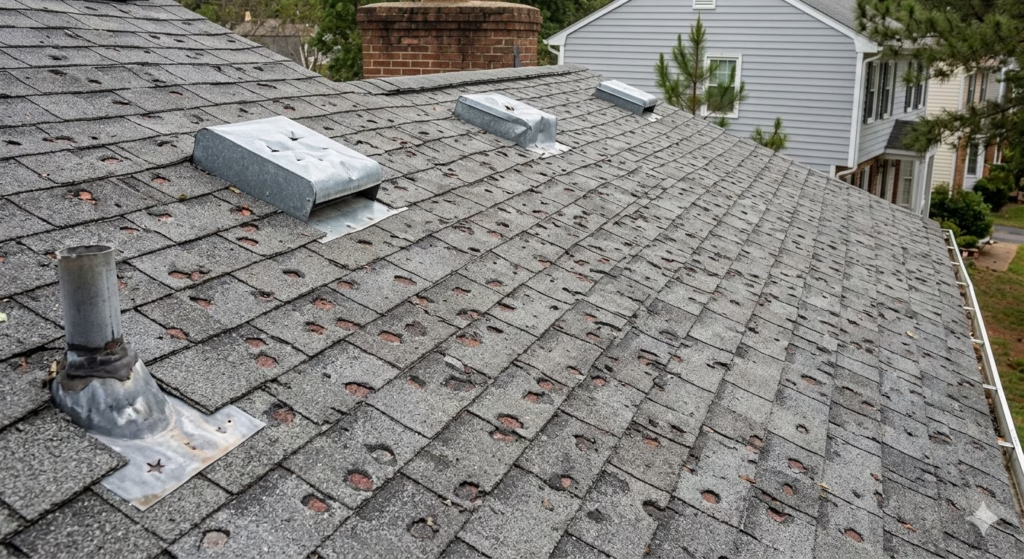
What to save: Keep any damaged shingles, flashing material, or debris that fell from the roof. Physical evidence of the damage type, particularly hail-impacted shingles showing characteristic impact marks, supports your claim.
Step 2: Review Your Policy Before You Call
Before contacting your insurance company, spend 30 minutes reviewing your homeowner’s policy. Several specific provisions affect what you will receive and what the process looks like.
Replacement Cost Value vs. Actual Cash Value
This is the most important policy distinction for roof damage claims.
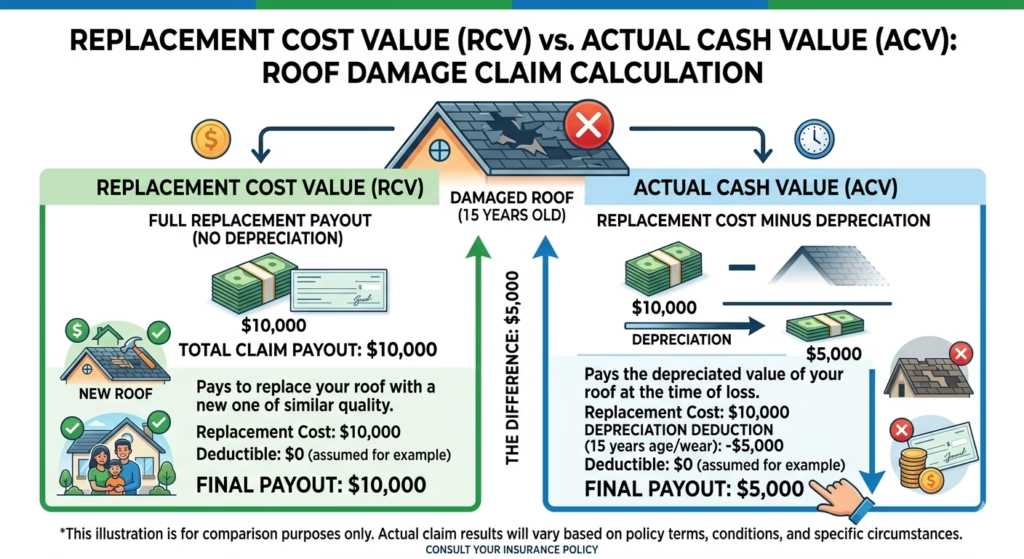
Replacement Cost Value (RCV): Pays the actual cost to replace the damaged portion of the roof at current material and labor prices, without deducting for depreciation. If your 15-year-old roof costs $14,000 to replace today, RCV coverage pays $14,000 minus your deductible.
Actual Cash Value (ACV): Pays replacement cost minus depreciation. A 15-year-old asphalt shingle roof that has a 25-year expected lifespan is approximately 60% depreciated in an insurer’s calculation. If the replacement cost is $14,000 and the depreciation deduction is $5,600, ACV pays $8,400 minus your deductible.
Many homeowners don’t know which type of coverage they have until they file a claim. Check your policy’s Coverage A or roof damage provisions now.
Note on RCV policies with holdback provisions: Some RCV policies pay ACV initially and release the remaining depreciation (the “holdback”) only after repairs are completed and the completion documentation is submitted to the insurer. This is a common structure and is normal. It does not mean the insurer is attempting to underpay: it means the final payment is contingent on the work being done.
Deductible
Your policy deductible is the amount you pay before insurance coverage begins. Standard deductibles range from $500 to $2,500. However, many Virginia policies now include a separate, higher deductible specifically for wind and hail damage, which may be expressed as a dollar amount or as a percentage of the home’s insured value (commonly 1% to 5%).
A homeowner with a $300,000 insured home and a 2% wind/hail deductible has a $6,000 deductible for storm damage claims. On a $14,000 claim, this leaves $8,000 in insurance coverage. Knowing this before you call prevents an unpleasant surprise at the settlement stage.
Exclusions
Review any exclusions related to roof condition or age. Some policies reduce or deny coverage for roofs past a certain age or in a condition assessed as below a minimum standard at the time of the damage event. Policies issued after a roof was already in deteriorated condition may have had a cosmetic exclusion added at underwriting.
Step 3: Call Your Insurance Company and Open the Claim
Once you’ve documented the damage and reviewed your policy, contact your insurance company to open the claim.
What to have ready when you call:
- Your policy number
- The date the damage occurred or was first discovered
- A description of the damage and what you believe caused it (hail, wind, falling tree, etc.)
- Your documentation (photos, weather records)
What to expect from this call:
- The insurer will assign a claim number. Write this down and keep it with your claim documentation.
- They will schedule an adjuster visit. The timing varies: during high-volume periods after a regional storm event, adjusters may be scheduling two to four weeks out.
- Some insurers use independent adjusters (third-party firms that work for multiple insurers) rather than staff adjusters. This is normal.
What to say and not say:
- Be factual and descriptive. Describe what you observed, not conclusions about coverage.
- Do not say the damage was pre-existing unless you are certain of this. Characterizing damage as pre-existing when it resulted from a covered event may harm your claim.
- Do not agree to a settlement or sign any documents during the initial call.
Step 4: Get a Professional Roof Inspection Before the Adjuster Arrives
This step is where many homeowners leave significant money on the table.
An insurance adjuster’s job is to accurately assess the claim on behalf of the insurer. A skilled and honest adjuster does this well. But adjusters see a high volume of properties, often under time pressure, and the scope they document is based on what they can observe and identify during their visit.
A professional roofing contractor who is experienced with insurance claims will assess the damage with the same thoroughness as an adjuster, but with a different orientation: identifying the full scope of damage rather than establishing the minimum scope.
What a professional inspection adds:
- Identification of damage in areas the adjuster may not access or prioritize, including interior evidence of moisture intrusion, secondary damage to gutters, soft metals, fascia, and any equipment mounted on the roof
- Documentation in the specific format that insurance adjusters recognize and work from
- A scope of loss that is complete before the adjuster’s visit, rather than assembled from scratch after
When Four Seasons Roofing conducts an inspection in advance of an adjuster visit, they provide homeowners with documentation that supports the full scope of covered damage. This is part of the insurance claim assistance service they offer to Central Virginia homeowners at no separate charge.
The adjuster meeting: Be present when the adjuster visits. Walk the property with them. Share your contractor’s inspection documentation. Ask the adjuster to explain what they’re noting and why. You are entitled to understand how the scope is being determined.
Step 5: Understand the Adjuster’s Estimate
After the adjuster’s visit, you’ll receive a written estimate of the covered damage. This document is important and worth reviewing carefully before accepting anything.
What the estimate includes:
- An itemized list of covered damages with repair or replacement cost for each
- Depreciation amounts applied to each line item (on ACV policies or in the initial RCV payment)
- The total payout calculation: covered damages minus depreciation minus deductible
- Any line items the adjuster is declining to include in the covered scope
What to compare it against:
- Your contractor’s inspection and scope of loss document
- Your policy’s coverage terms
Common discrepancies to look for:
Missing line items: Damage the adjuster didn’t identify or didn’t include in the scope. This might include interior damage, secondary damage to gutters or flashing, or areas of the roof that weren’t accessed during the visit.
Incorrect unit pricing: Adjusters use pricing databases that may not reflect current local labor and material costs in your specific market. Your contractor’s estimate for the same work may be higher due to regional cost differences.
Scope disputes: The adjuster documents what they observed. If there is damage they didn’t observe or didn’t document, it needs to be brought back to their attention with supporting evidence.
What to do if the estimate looks incomplete: Contact your claims adjuster and request a re-inspection of specific areas of concern. Provide your contractor’s documentation as supporting evidence. A reasonable adjuster will review additional evidence and adjust the scope if the evidence supports it.
Step 6: Get a Contractor Estimate and Compare to the Adjuster’s Scope
Before accepting the insurance settlement, get a written estimate from your roofing contractor for the work required to restore your roof to its pre-loss condition.
Why this matters: The insurance estimate represents the insurer’s calculation of what the repair costs. Your contractor’s estimate represents what the work actually costs in the current market. These numbers should be comparable. If they’re significantly different, the gap needs to be resolved before you accept a settlement.
If your contractor’s estimate is higher than the insurance estimate: This is common and doesn’t automatically mean either party is wrong. Material and labor costs have changed significantly in recent years, and some insurer databases lag behind current market rates.
Request a Supplemental Claim. A supplemental claim is a formal request to the insurer to review additional documentation and increase the settlement to cover the full scope of damage. Your contractor can assist in preparing the supplement documentation.
What legitimate contractors will and won’t do regarding insurance:
Legitimate roofing contractors can and routinely do help homeowners document damage, prepare scope of loss documentation, and communicate with adjusters. This is a normal part of contractor assistance with insurance claims.
What legitimate contractors will not do is waive or reduce your deductible to make a claim work, or promise you a “free roof” if you sign with them. Both practices are illegal in Virginia under insurance fraud statutes and are also a warning sign about the contractor’s overall business practices. If a contractor tells you they can make your out-of-pocket deductible disappear, walk away.
Step 7: Accept the Settlement and Hire Your Contractor
Once the scope and pricing are agreed upon and you’ve accepted the settlement terms, you’re ready to proceed with the roofing work.
Mortgage lienholder endorsement: If you have a mortgage, your insurance claim check will likely be made payable jointly to you and your mortgage servicer. Your servicer has a financial interest in the property and must co-sign the check before it can be deposited. This process varies by servicer: some require inspection documentation before endorsing, others require an inspection of the completed work. Contact your servicer early in the process to understand their requirements.
Contractor selection: The insurance settlement is based on a scope of work. Any licensed contractor can perform that work, and you are not required to use a contractor selected or recommended by your insurer. Choose a contractor based on their reputation, their familiarity with insurance work, and your confidence in their installation quality.
Material upgrades: If you want to upgrade from the material specified in the insurance scope (for example, upgrading from standard architectural shingles to a Class 4 impact-resistant product), you pay the difference between the insurance allowance and the upgrade cost. This is a legitimate and common choice, particularly for homeowners who want to reduce future claim risk.
Four Seasons Roofing handles the residential roofing installation and replacement process across Central Virginia and works regularly with homeowners navigating insurance-funded replacements. Their familiarity with the documentation and communication that insurance claims require makes the process smoother for homeowners who are going through it for the first time.
Step 8: Complete the Work and Submit Completion Documentation
Once the work is complete, there are typically two remaining claim administration steps.
Final inspection and sign-off: Review the completed work with your contractor before final payment. Confirm that everything in the scope was completed, that the job site is clean, and that you’ve received warranty documentation for both materials and workmanship.
Holdback release (RCV policies): If your policy paid ACV initially and is holding depreciation pending completion, submit the completion documentation the insurer requires: typically the final contractor invoice, proof of payment, and sometimes photographs of the completed work. The insurer will then release the depreciation holdback.
Keep all documentation: Your claim file, contractor estimate, adjuster’s estimate, settlement paperwork, warranty documents, and completion photos should all be retained. They may be relevant for future claims or for establishing the roof’s installation date and condition.
What to Do If Your Claim Is Denied or Underpaid
A claim denial or a settlement that doesn’t cover the full scope of damage is not necessarily the end of the conversation. Virginia homeowners have several options.
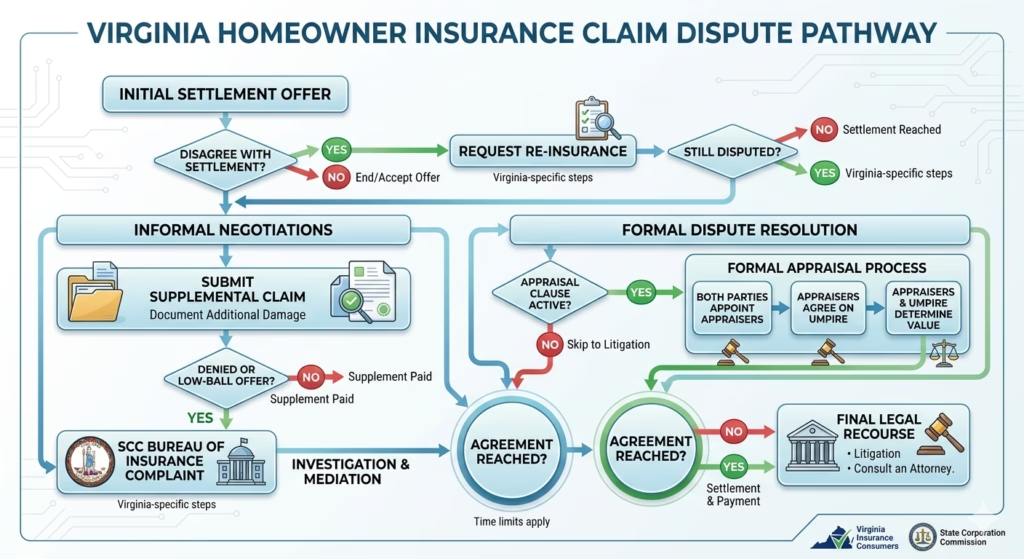
Request a Re-Inspection
Ask for a second adjuster visit with new supporting documentation. If your contractor has documented damage that the original adjuster missed, a re-inspection with that documentation in hand often results in a revised scope.
File a Supplemental Claim
As described above, a supplemental claim formally requests that the insurer review additional damage evidence or pricing information and revise the settlement upward.
Request an Appraisal
Most Virginia homeowner’s insurance policies include an appraisal clause that provides a mechanism for resolving disputes about the amount of loss. Under the appraisal process, each party (you and your insurer) appoints their own appraiser, and the two appraisers agree on an umpire. The three determine the amount of loss. This process is separate from litigation and is generally faster.
Review your policy’s appraisal clause provisions carefully. There are typically deadlines for invoking appraisal and specific procedural requirements.
File a Complaint with the Virginia SCC Bureau of Insurance
The Virginia State Corporation Commission’s Bureau of Insurance regulates insurance companies operating in Virginia. If you believe your insurer has acted in bad faith, unreasonably delayed your claim, or improperly denied coverage, a formal complaint to the Bureau puts the insurer on notice that their handling of your claim is being reviewed by the regulator.
Complaints can be filed at scc.virginia.gov. The Bureau has authority to investigate insurer conduct and can require insurers to address legitimate complaints.
Consult a Public Adjuster
A public adjuster is a licensed professional who represents homeowners in insurance claims, not the insurer. They conduct their own damage assessment, prepare scope of loss documentation, and negotiate with the insurer on your behalf. They are compensated as a percentage of the claim settlement, typically 10 to 15 percent.
Public adjusters are most valuable for complex, large, or disputed claims where the gap between the insurer’s assessment and the homeowner’s actual loss is significant.
Consult an Insurance Attorney
For denied claims or bad faith situations, a Virginia attorney who handles insurance disputes can advise on legal options. Many work on contingency for coverage disputes.
The Timing Question: When to File
Virginia does not have a single statutory deadline for residential roof damage claims, but your policy does. Most homeowner’s insurance policies require claims to be filed within 12 months of the date of loss, and some policies have shorter windows.
The practical recommendation is to file as soon as damage is confirmed, rather than waiting to see if it gets worse or hoping the problem resolves itself.
Why sooner is better:
- Weather records are freshest immediately after the storm event
- Damage is most clearly connected to the specific storm before other weather events occur
- Adjusters can see the damage in its original state before weathering, cleaning, or secondary events alter its appearance
- Delaying filing can create a question about whether the damage was caused by the named storm event or by something else
If significant time has passed since the damage occurred: Filing is still worth attempting. The insurer may request an explanation for the delay, and you’ll need to document why the claim wasn’t filed immediately. The insurer may accept or may use the delay as a basis for denial, at which point the dispute options described above become relevant.
How Four Seasons Roofing Helps Throughout This Process
Four Seasons Roofing provides insurance claim assistance as a standard part of their service to Central Virginia homeowners. If your roof has storm damage and you’re facing an insurance claim, here’s what their involvement looks like in practice.
Before the adjuster visit: They conduct a thorough inspection of your roof and document the full scope of damage, including areas and damage types that adjusters commonly miss. They provide this documentation in a format that insurance adjusters recognize and work from.
During the adjuster visit: They can be present at the inspection to ensure the adjuster has access to all areas of the roof and has the benefit of the contractor’s assessment alongside their own.
After the adjuster estimate: They review the adjuster’s scope against their own assessment and identify any gaps. If a supplemental claim is warranted, they assist in preparing the supporting documentation.
During the repair: They complete the work to manufacturer specifications, providing both materials warranty documentation and workmanship warranty coverage.
If you have a roof that may have sustained storm damage, or if you’re uncertain whether your roof’s condition warrants a claim, scheduling a free inspection is the right first step. You’ll get an honest assessment of what’s there, and if a claim is warranted, you’ll have the documentation to support it.
Call 434-390-0199 or reach out through the website to get started.
Quick Reference: The Full Process in Sequence
- Document damage before any repairs or cleanup, including photos, weather records, and physical evidence.
- Review your policy before calling: identify RCV vs ACV, your deductible (including any wind/hail deductible), and relevant exclusions.
- Call your insurer to open the claim and receive your claim number and adjuster scheduling.
- Get a professional inspection from a roofing contractor before the adjuster arrives.
- Meet the adjuster at your property with your contractor’s documentation in hand.
- Review the adjuster’s estimate against your contractor’s assessment and your policy terms.
- Get a contractor estimate for comparison and file a supplemental claim if there are significant scope or pricing gaps.
- Accept the settlement once scope and pricing are agreed upon, and navigate mortgage lienholder endorsement if applicable.
- Complete the work and submit completion documentation to release any depreciation holdback.
- Dispute if necessary through re-inspection, supplemental claim, appraisal, Bureau of Insurance complaint, or legal counsel depending on the situation.
The Bottom Line
Filing a roof damage insurance claim in Virginia is a manageable process when you know the sequence, understand your policy terms, and have professional documentation of the full scope of damage from the beginning. The homeowners who receive complete settlements are typically the ones who are prepared, present at the adjuster visit, and working with a contractor who understands what the documentation needs to look like.
Four Seasons Roofing has helped Central Virginia homeowners navigate this process across many storm events over 14 years. If your roof has been affected by recent storms or if you’re uncertain about damage you’ve noticed, a free inspection is the right starting point, and it costs nothing to find out where you stand.
Schedule your free roof inspection or call 434-390-0199.
Why Schedule a Call?
Popular Insights
Can a New Roof Lower Your Virginia Energy Bills? What to Expect by Material and Season
Oct. 21, 2026
Metal Roofing Cost in Virginia: Standing Seam vs Corrugated and What’s Actually Worth It for Your Home
Oct. 09, 2026
How to Choose a Roofing Contractor in Virginia: 6 Questions That Separate Professionals from Fly-by-Nights
Oct. 02, 2026
New Roof Installation in Lynchburg, VA: What Homeowners Can Expect from Estimate to Final Day
Sep. 25, 2026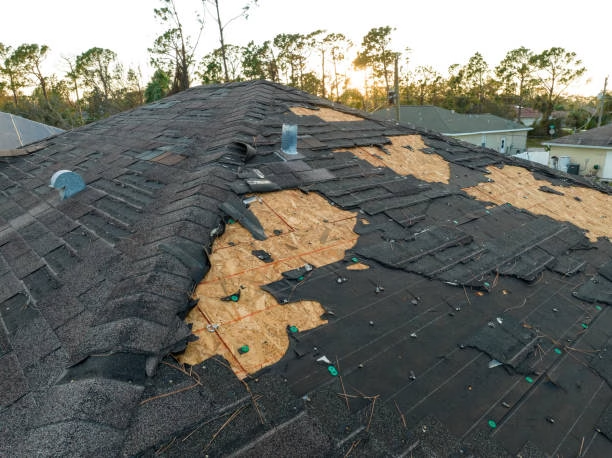
Storm Damage Roofing in Central Virginia: What to Do in the First 24 Hours After Your Roof Is Hit
Sep. 23, 2026Topics
Our Services
- Gutter Services
- Storm Damage Roofing
- Commercial Roofing Service
- BRAVA Cedar Shake Roofing Tile
- Insurance Claim Assistance
- Residential Roofing Services
- Roof Inspection Services
- Roof Repair Service
- Roof Replacement Service
- Shingle Roofing Service
- Metal Roofing Service
- Emergency Roof Repair Services
- BRAVA Spanish Tile
- BRAVA Slate Tile