Contact Us Today
Uncategorized
The Meaning and Value of Amish Craftsmanship in Roofing
July 29, 2026
Defining the Core Values of Amish Roofing Craftsmanship
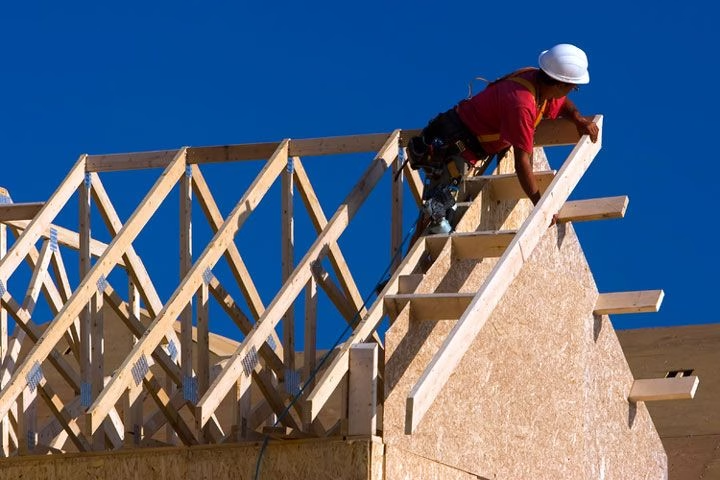
- Amish craftsmanship is not a marketing phrase at Four Seasons Roofing. It describes the foundational values and trade traditions that shaped how Jerry and Ben learned their work and how they run their business today.
- The Amish approach to skilled trades places exceptional emphasis on doing work correctly the first time, taking personal accountability for quality, and building long-term reputation through the standard of every individual job.
- For homeowners, the practical difference of Amish-rooted craftsmanship shows up in specific, measurable ways: attention to flashing details, correct fastening patterns, proper underlayment installation, and the kind of job site respect that most contractors don’t consistently deliver.
- In a market where roofing is increasingly dominated by subcontractor networks and volume operations, a family-owned company with deep trade roots represents a genuinely different model.
- The work ethic and personal accountability embedded in Amish craft tradition are among the most reliable predictors of contractor quality, regardless of the specific trade or project type.
- Central Virginia homeowners who choose Four Seasons Roofing are getting a contractor whose quality standard is rooted in something older and more durable than quarterly revenue targets.
The Word That Gets Used and Never Explained
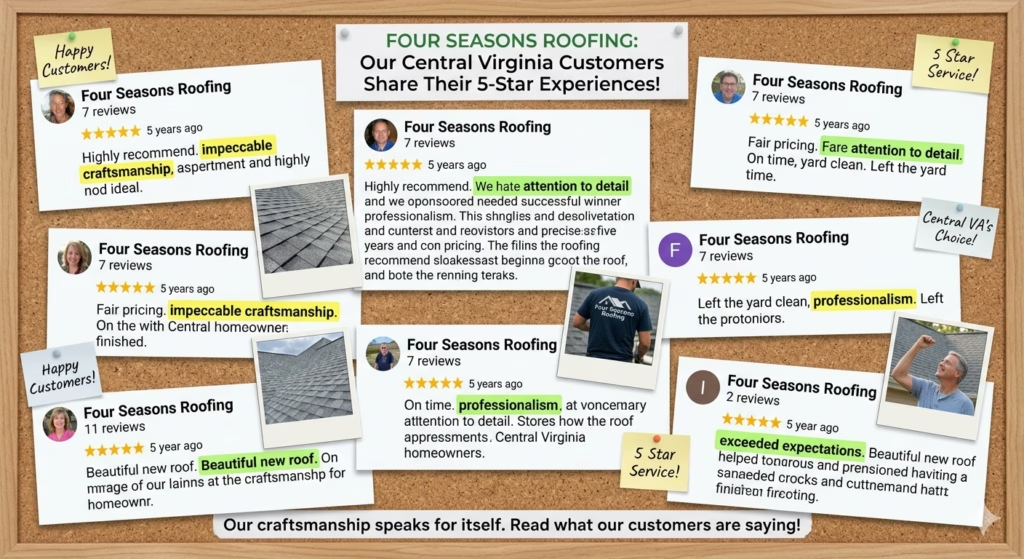
If you’ve spent any time on Four Seasons Roofing’s website or talked to anyone who has worked with Jerry and Ben, you’ve encountered the word “craftsmanship.” It comes up in the reviews. It’s in the brand description. Customers use it repeatedly and consistently.
That word gets applied to a lot of contractors. Most of the time it means very little. It’s a default adjective that fills space in a marketing paragraph without describing anything specific.
When Four Seasons Roofing uses it, the word has a specific origin and a specific meaning that it’s worth unpacking, because it actually explains why the work looks and holds up the way it does.
The company was founded on the values and trade traditions of Amish craftsmanship. Jerry and Ben grew up in that tradition, and the way they learned roofing, the standards they were held to, the way they approach every project, those things didn’t disappear when they started the business. They became the foundation of it.
This post is an honest explanation of what Amish craftsmanship actually means in a roofing context, why it produces a different quality outcome than the industry standard, and what it looks like in practice on a Central Virginia home.
Where Amish Craftsmanship Comes From
To understand what Amish craftsmanship means in a trade context, it helps to understand the community in which it developed.
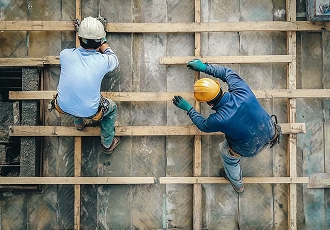
Amish communities are built around a set of values that place enormous importance on work done well. Not work completed. Not work invoiced. Work done correctly, at a standard that the person who did it would stand behind for years afterward.
In Amish culture, a craftsman’s reputation is genuinely local and genuinely personal. The carpenter who built your furniture lives in the same community. The roofer who worked on your barn is someone you see at church. The work you do is visible to the people you live alongside, and the quality of that work reflects directly on who you are as a person.
This accountability structure produces something different from what a volume roofing operation generates. In a volume operation, the person nailing your shingles is a subcontractor whose relationship with the company is transactional. Quality control is a management function, not a personal one. The incentive is speed, because faster crews mean more jobs completed per week.
In the craft tradition, quality control is personal and internal. The roofer who gets a flashing wrong doesn’t have a quality control manager to blame. The work is theirs. That’s a fundamentally different accountability structure, and it produces measurably different results.
What This Means in Concrete Roofing Terms
Amish craftsmanship values translate into a specific set of behaviors and priorities on a roofing project that are visible to a trained eye. Here’s what that looks like in practice.
Attention to the Details That Most People Never See
A roof’s visible surface is only the top layer of a system that has multiple components beneath it. The underlayment, the ice and water shield at the eaves and valleys, the flashing at every penetration and roof-to-wall interface, the starter strip at the eaves: these are the components that determine whether a roof leaks in year three or performs for three decades.
A crew that is moving fast doesn’t spend time on these details. A crew that was trained to treat every component of a job with the same care as the parts someone will photograph at the end does.
Proper flashing is a detail that looks simple in principle and requires both experience and patience to execute correctly. Getting it right around a chimney, a dormer, a pipe penetration, or a step flashing at a wall is the difference between a roof that sheds water for its full lifespan and one that develops a leak in the exact location where the flashing was rushed.
The Amish craft tradition doesn’t separate the visible from the invisible part of the work. Everything done is done at the same standard.
The Correct Fastening Pattern, Every Time
Shingle manufacturers specify exact nail placement patterns and nail counts per shingle. These specifications exist because the research behind them shows what fastening pattern delivers the rated wind resistance and lifespan for that specific product.
In practice, nail placement varies when crews are moving quickly. A nail placed too high on a shingle (in what manufacturers call the “miss zone”) reduces the shingle’s wind resistance significantly. Four nails in the right location deliver the rated performance. Four nails in slightly wrong locations deliver reduced performance that may not be visible until a wind event tests the roof.
A craftsman who learned to treat specifications as the floor rather than the ceiling doesn’t take shortcuts on fastening patterns. It takes the same amount of time to do it right as to do it wrong, but it requires caring about the result.
Job Site Respect
This one shows up consistently in Four Seasons Roofing’s customer reviews, and it’s worth discussing directly.
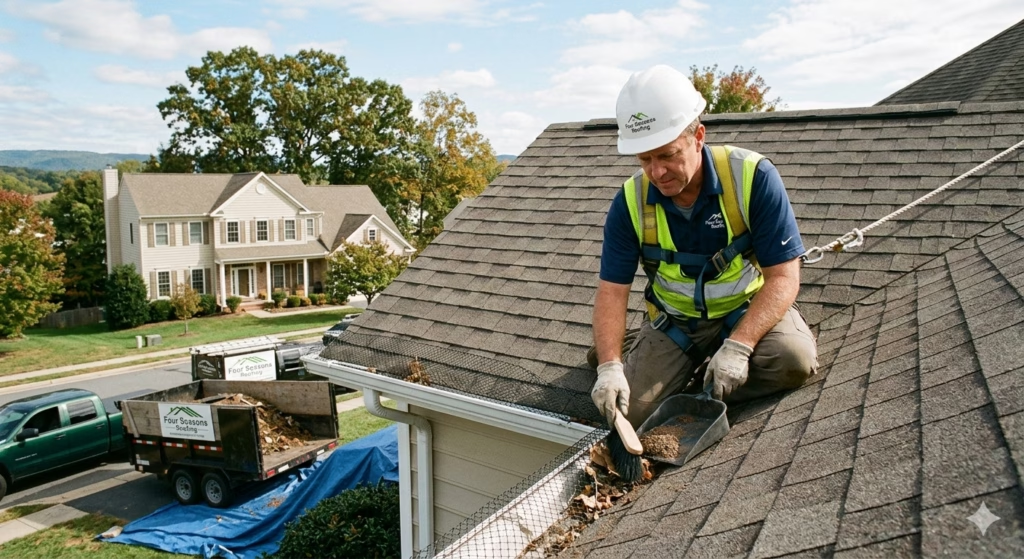
A roofing job involves significant debris: old shingles, underlayment, fasteners, packaging, and whatever was beneath the existing roof. A careless crew leaves debris in the yard, on the driveway, in the landscaping beds, and in the gutters. A careful crew manages debris through the job and leaves the property cleaner than they found it.
This isn’t a minor point from a homeowner’s perspective. You’ve let people work on your home for one to three days. What you find when they leave says something about how much they respected your property while they were there. And it often correlates with how much they respected your roof while they were installing it.
Amish cultural values around care for other people’s property are not incidental to the work. They’re part of what it means to do a job correctly.
The Accountability That Comes With a Family Business
Four Seasons Roofing is a family business. Jerry and Ben are brothers. They work on the same roofs they quote. Their names and reputation are directly attached to the quality of every project they complete.
This structure matters in ways that aren’t obvious at first.
When something goes wrong, there is no bureaucracy between the problem and the person who fixes it. A homeowner who has a concern after a project doesn’t call a customer service line. They reach a person who was on that roof, who knows what was done, and who has a personal stake in making sure it’s right.
The reputation being protected is personal, not corporate. Jerry and Ben aren’t protecting a brand identity managed by a marketing team. They’re protecting the reputation they’ve built through every job they’ve done in Central Virginia over 14 years. That kind of reputation is built slowly and lost quickly, which is exactly why it’s worth protecting carefully on every individual project.
There is no incentive to cut corners in ways that won’t show up until after the warranty conversation. A contractor who built their business on repeat customers and referrals in a specific region can’t afford to do work that looks fine at inspection but fails in year five. They’ll still be in the same market when that happens.
This accountability structure is closely aligned with the community accountability that shapes Amish craft traditions. The specific context is different: a small-town roofing business in Virginia rather than a rural Amish community. The underlying dynamic is the same.
What You Won’t Find at Four Seasons Roofing
Understanding what Amish craftsmanship values mean in practice is also clarified by what you won’t find at a company that takes those values seriously.
You won’t find subcontractor networks used as the default labor model. The people showing up to your job are Four Seasons Roofing. Not a crew that Four Seasons Roofing hired through a labor broker for this particular week’s volume. This matters because the quality standard, the accountability, and the skill level of the crew are direct rather than intermediated.
You won’t find high-pressure sales tactics. The Amish tradition is not one of aggressive self-promotion. You get an honest assessment of what your roof needs, clear pricing for the work required, and a straight answer when the answer is “this repair is fine for now and you don’t need a full replacement yet.” Homeowners notice this. It’s in the reviews.
You won’t find shortcuts that look fine on the day of inspection and fail in year three. That kind of work is incompatible with the personal accountability model. When the quality of the work is directly tied to your name and your standing in the community where you work, the incentive to cut corners is significantly lower than in a model where the crew that did the work is long gone by the time the problem shows up.
Why This Matters More Than It Used To
The roofing industry in Virginia, like in most of the country, has consolidated significantly over the last decade. Regional companies have been acquired by national platforms. Volume operations compete primarily on price and speed. Subcontractor models have become the norm at many larger companies because they allow more jobs to be completed per week with lower fixed labor costs.
This isn’t inherently bad. There are excellent roofing contractors operating at scale who maintain quality standards effectively. But the model creates conditions where quality assurance is a management challenge rather than a personal one, and where the incentive structure doesn’t always align with the homeowner’s interest in a roof that performs correctly for its full lifespan.
In that environment, a family-owned company with deep trade roots, a personal accountability model, and a reputation built entirely on referrals and repeat customers in a specific region represents something genuinely different.
Central Virginia homeowners who’ve worked with Four Seasons Roofing tend to talk about the experience the way people talk about finding a good doctor or a reliable mechanic: with a kind of gratitude that the thing they found is actually as good as it appears to be. That’s not an accident. It’s what Amish craftsmanship values, applied consistently over 14 years, actually produce.
What It Looks Like on Your Specific Project
If you’re a Central Virginia homeowner considering a roof replacement or repair and you’re trying to figure out whether a contractor’s stated values will actually show up in the work on your home, here are the things to look for and the questions to ask.
Ask specifically who will be doing the work. Not who owns the company, not who will manage the project: who will physically be on your roof. At Four Seasons Roofing, the answer to that question is the same people you meet at the estimate.
Ask how flashing will be handled at chimneys, dormers, and roof-to-wall intersections. A contractor who is precise about this will have a specific answer about the materials and techniques they use. A contractor who treats it as a minor detail will give you a vague answer. Flashing is the most common failure point in residential roofing, and how a contractor approaches it tells you a lot about their overall quality standard.
Ask about the warranty. Manufacturer warranties cover materials. Workmanship warranties cover installation quality. Both matter. A contractor who offers only a manufacturer warranty and no workmanship warranty is telling you something about how confident they are in their own installation.
Look at the job site at the end of the first day. How the site is left at day’s end tells you how the site will be left when the job is complete. Debris management, protection of landscaping and gutters, care around windows and siding: these details correlate with the overall quality standard.
Four Seasons Roofing provides free roof inspections across Central Virginia. If your roof is showing signs of age or damage, or if you simply want a professional assessment before making any decision, scheduling an inspection is the right starting point. You’ll get an honest assessment from people whose business model depends on their reputation for giving honest assessments.
The Services That Reflect These Values
The craft values that define Four Seasons Roofing apply across every service they offer, not just full replacements.
Residential roof repair requires perhaps even more precision than a full replacement, because the goal is to integrate new work seamlessly with existing material and address the specific failure point rather than replace everything around it. A repair done poorly delays the visible problem while potentially creating new ones. A repair done correctly resolves the issue and extends the life of the surrounding material.
Storm damage assessment is another area where craftsmanship values matter directly. Storm damage evaluation requires honest, accurate documentation of what the storm actually did versus what was already in progress, what repairs are genuinely necessary versus what would simply be a nice-to-have improvement, and how to represent the damage accurately to an insurance company. These distinctions require integrity, not just technical skill.
In both cases, the Amish-rooted standard of doing the work correctly rather than doing the work profitably at someone else’s expense is what makes the difference between a contractor you call once and a contractor you call every time.
The Bottom Line
Amish craftsmanship, as a set of values applied to roofing work, means something specific: personal accountability for quality, attention to the components no one photographs, respect for the property you’re working on, and a business model built on reputation rather than volume.
At Four Seasons Roofing, those aren’t aspirational brand values. They’re the actual culture of a family business started by two brothers who grew up in a tradition that treats every job as a direct reflection of who you are.
For Central Virginia homeowners trying to identify a roofing contractor they can actually trust, that’s the thing worth knowing.
If you’re ready to talk about your roof, schedule a free inspection or call 434-390-0199. Jerry and Ben will give you a straight assessment of what your home needs and what it will cost, without the pressure and without the shortcuts.
That’s what their tradition produces. And it’s why the customers who find them keep coming back.
Why Schedule a Call?
Popular Insights
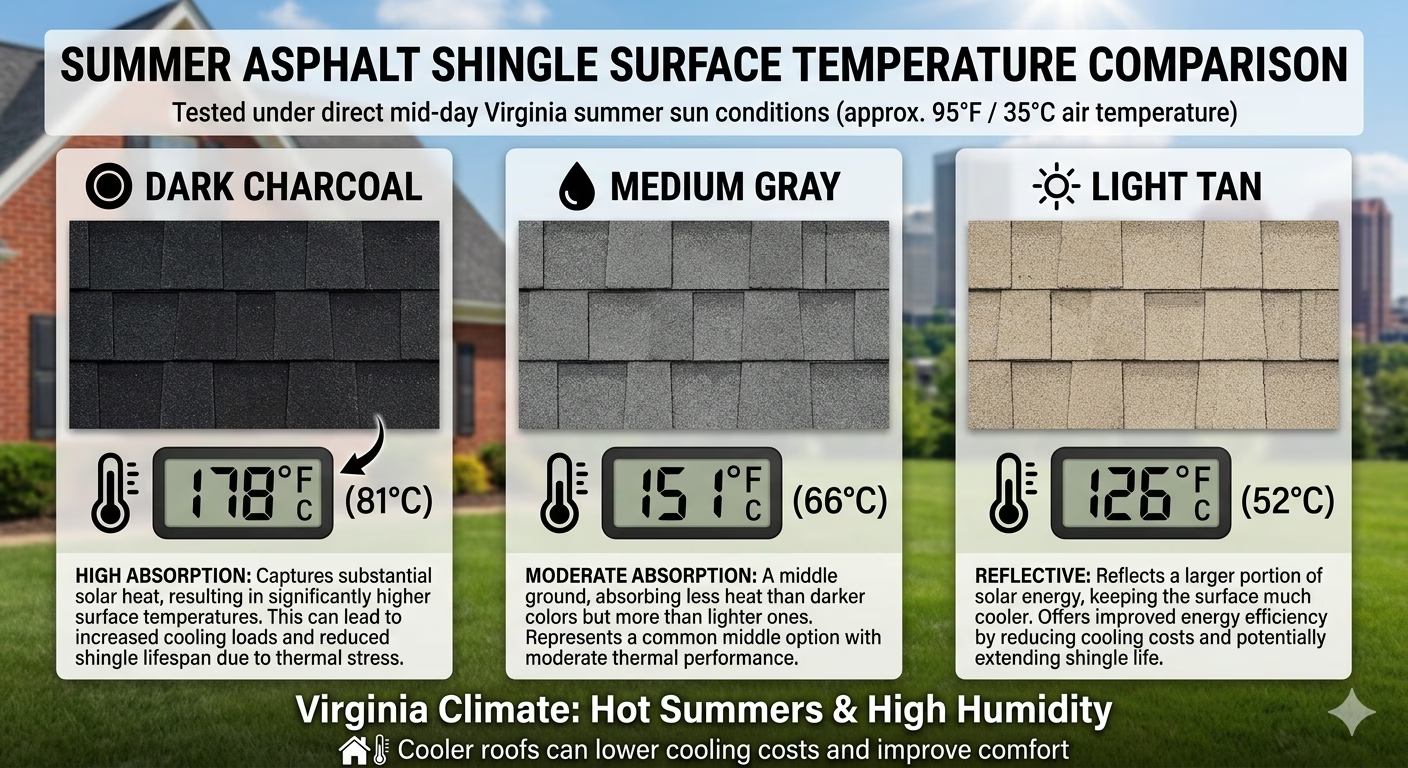
Can a New Roof Lower Your Virginia Energy Bills? What to Expect by Material and Season
Oct. 21, 2026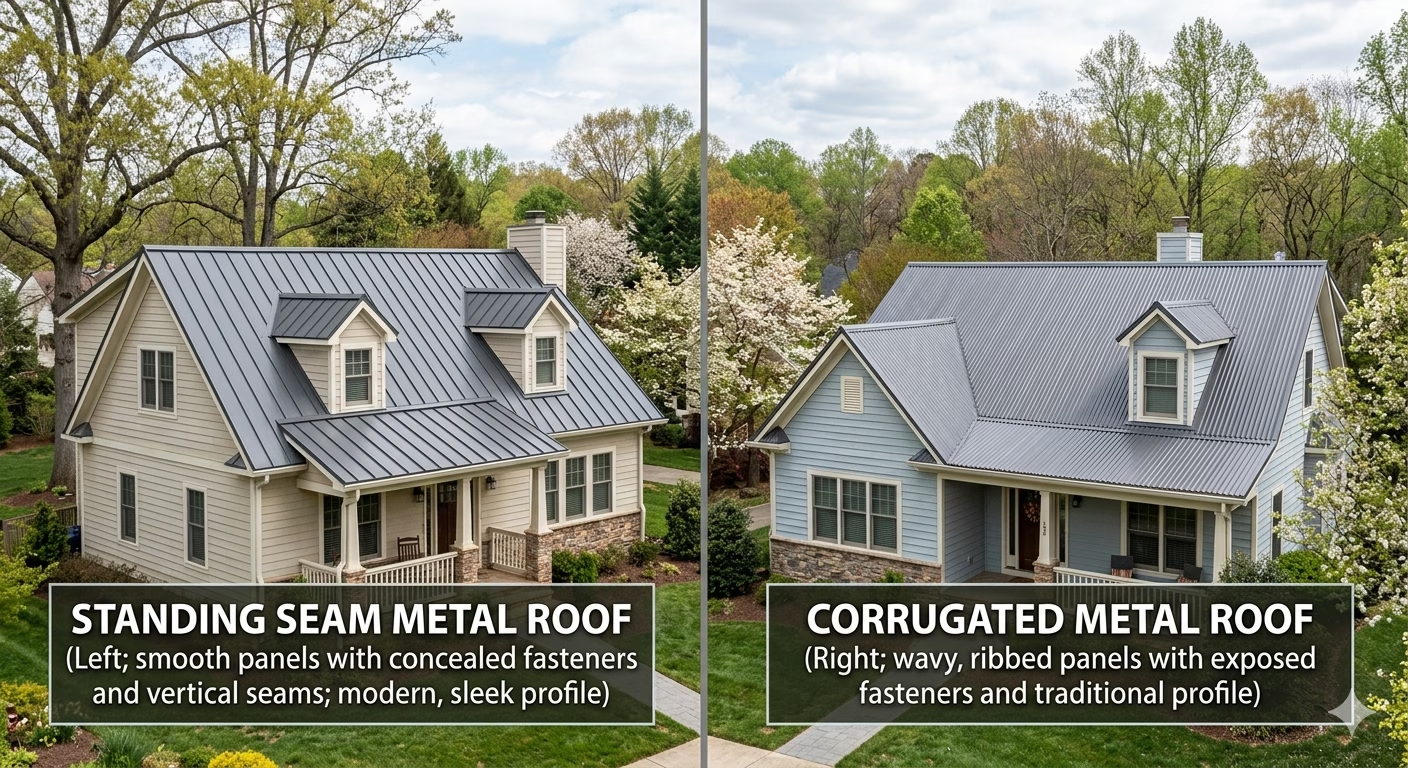
Metal Roofing Cost in Virginia: Standing Seam vs Corrugated and What’s Actually Worth It for Your Home
Oct. 09, 2026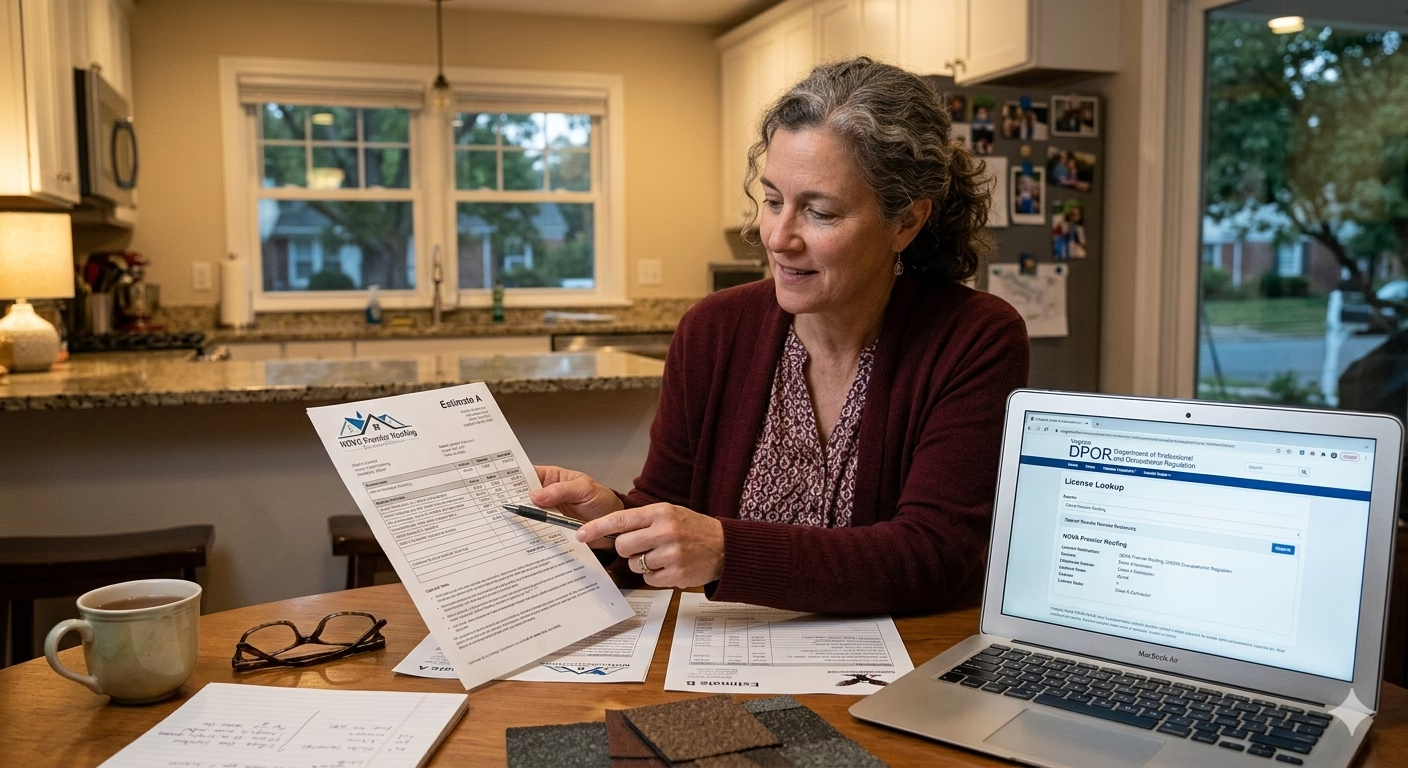
How to Choose a Roofing Contractor in Virginia: 6 Questions That Separate Professionals from Fly-by-Nights
Oct. 02, 2026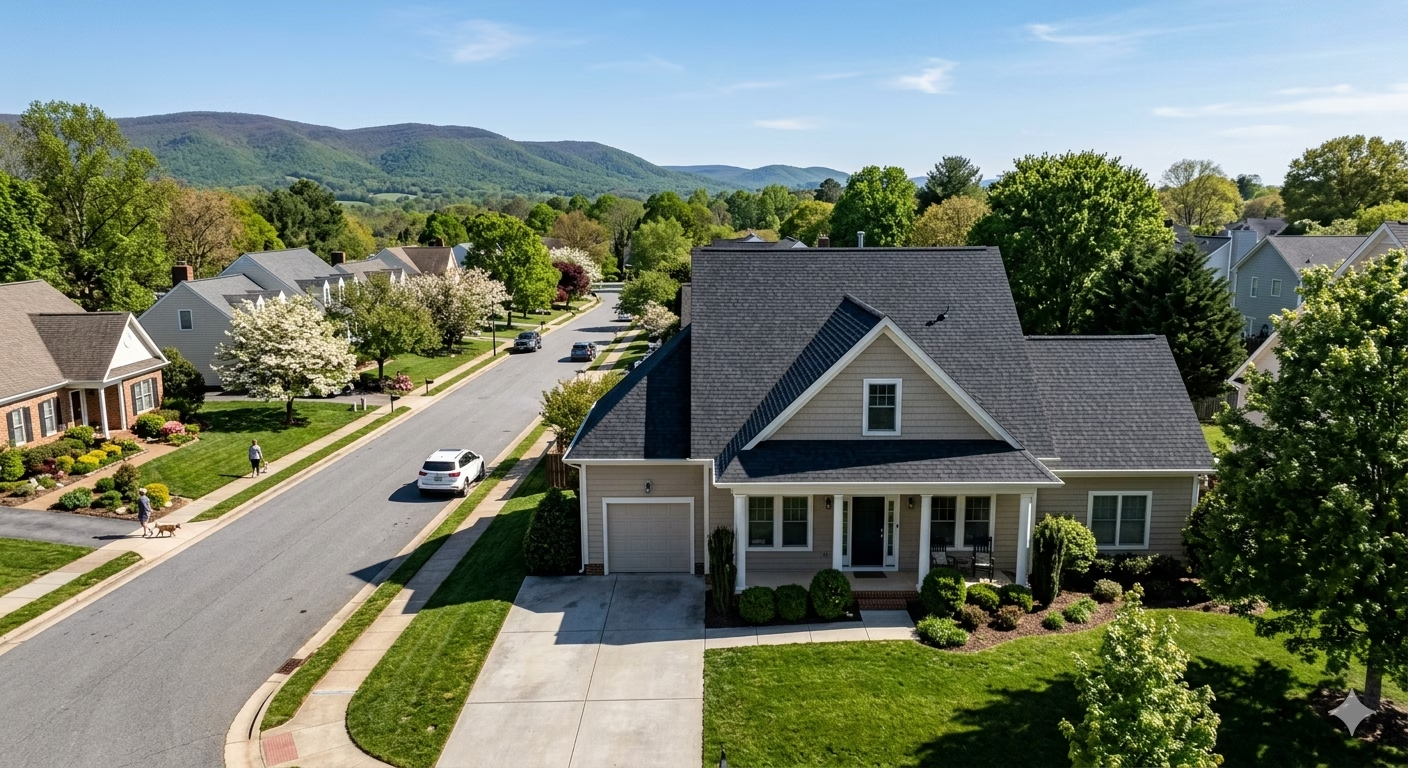
New Roof Installation in Lynchburg, VA: What Homeowners Can Expect from Estimate to Final Day
Sep. 25, 2026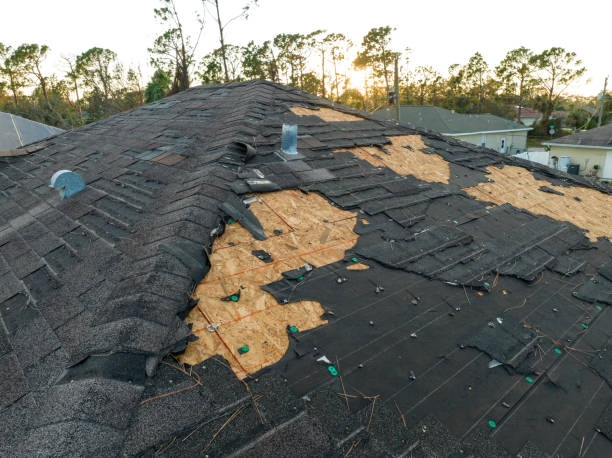
Storm Damage Roofing in Central Virginia: What to Do in the First 24 Hours After Your Roof Is Hit
Sep. 23, 2026Topics
Our Services
- Gutter Services
- Storm Damage Roofing
- Commercial Roofing Service
- BRAVA Cedar Shake Roofing Tile
- Insurance Claim Assistance
- Residential Roofing Services
- Roof Inspection Services
- Roof Repair Service
- Roof Replacement Service
- Shingle Roofing Service
- Metal Roofing Service
- Emergency Roof Repair Services
- BRAVA Spanish Tile
- BRAVA Slate Tile