
Contact Us Today
Uncategorized
Metal Roofing vs. Asphalt Shingles: Which is Best for Virginia?
July 22, 2026
Choosing the Right Roofing Material for Virginia’s Climate
- Virginia’s climate creates specific roofing demands that national comparisons often miss: sustained summer heat, high humidity, tropical storm remnants, occasional ice events, and UV-heavy sun exposure all affect how different materials perform over time.
- Asphalt shingles are the more affordable upfront choice and perform reliably when installed correctly, but they have a meaningful vulnerability to granule loss, moisture absorption, and thermal cycling over their lifespan.
- Metal roofing consistently outperforms asphalt shingles in Virginia on the dimensions that matter most for longevity: heat reflection, wind resistance, moisture management, and fire resistance.
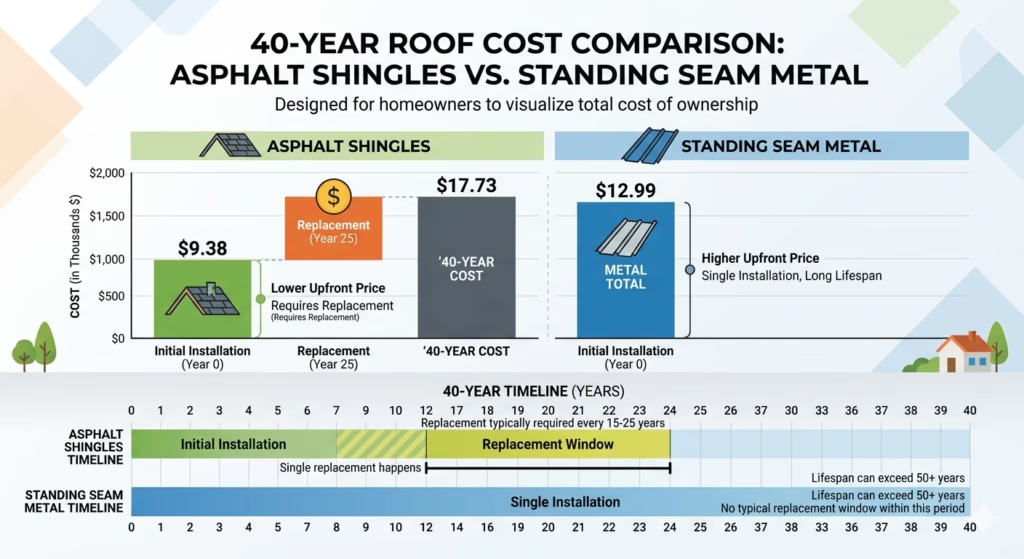
- The upfront cost gap between metal and shingles is real ($15,000 to $28,000 vs $8,000 to $14,000 for a typical home), but over a 40-year period, shingles are replaced at least once while metal typically is not.
- Standing seam metal in particular excels in Virginia’s storm environment because it has no exposed fasteners and a continuous panel system that sheds water and resists wind uplift more effectively than shingles.
- Neither material is wrong for every situation. The right choice depends on your timeline, budget, and which performance characteristics matter most for your specific home.
Why “Which Is Better” Depends on Where You Live
The metal vs shingles debate looks different in Phoenix than it does in Portland, and it looks different in Central Virginia than it does in either of those places.
Virginia homeowners deal with a climate that has a few specific characteristics worth understanding before making a material decision. Summers are hot and humid, with extended periods of UV exposure that stress roofing materials more aggressively than people often expect. Late summer and early fall bring Atlantic storm systems tracking inland, delivering the kind of wind and heavy rain events that test every component of a roof system.
Winters are milder than the northern Mid-Atlantic but include freeze-thaw cycles that create stress at flashings, valleys, and penetrations. And throughout the year, the wooded character of much of Central Virginia means roofs deal with shade, moisture retention, and debris accumulation that accelerates biological growth on some materials.
This post compares metal roofing and asphalt shingles through the lens of Central Virginia’s actual climate conditions, so you can make a decision based on what these materials actually do here, not on national averages that might not apply to your home.
Understanding What Virginia’s Climate Actually Does to Your Roof
Summer Heat and UV Exposure
Central Virginia summers are not gentle. Sustained temperatures above 90 degrees Fahrenheit, combined with significant UV intensity through June, July, and August, create real thermal stress on roofing materials.
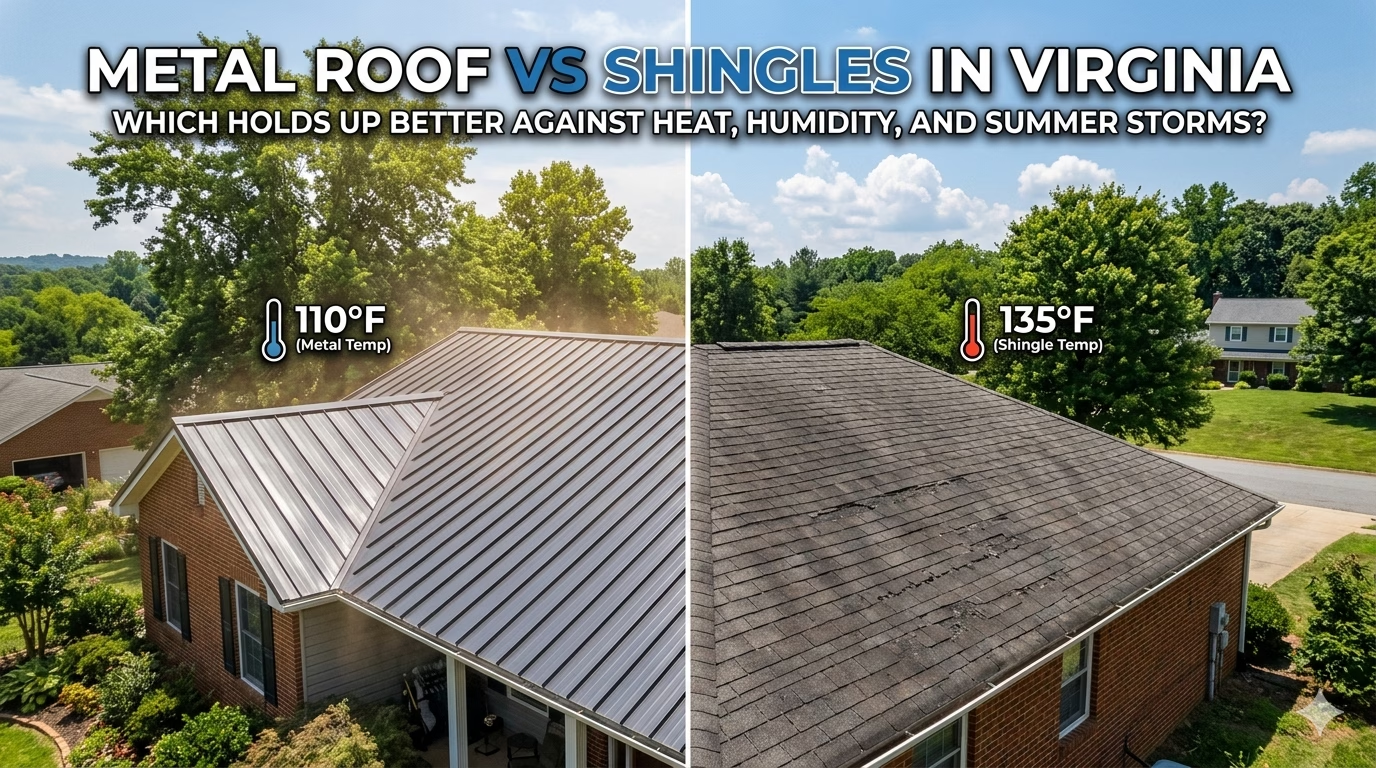
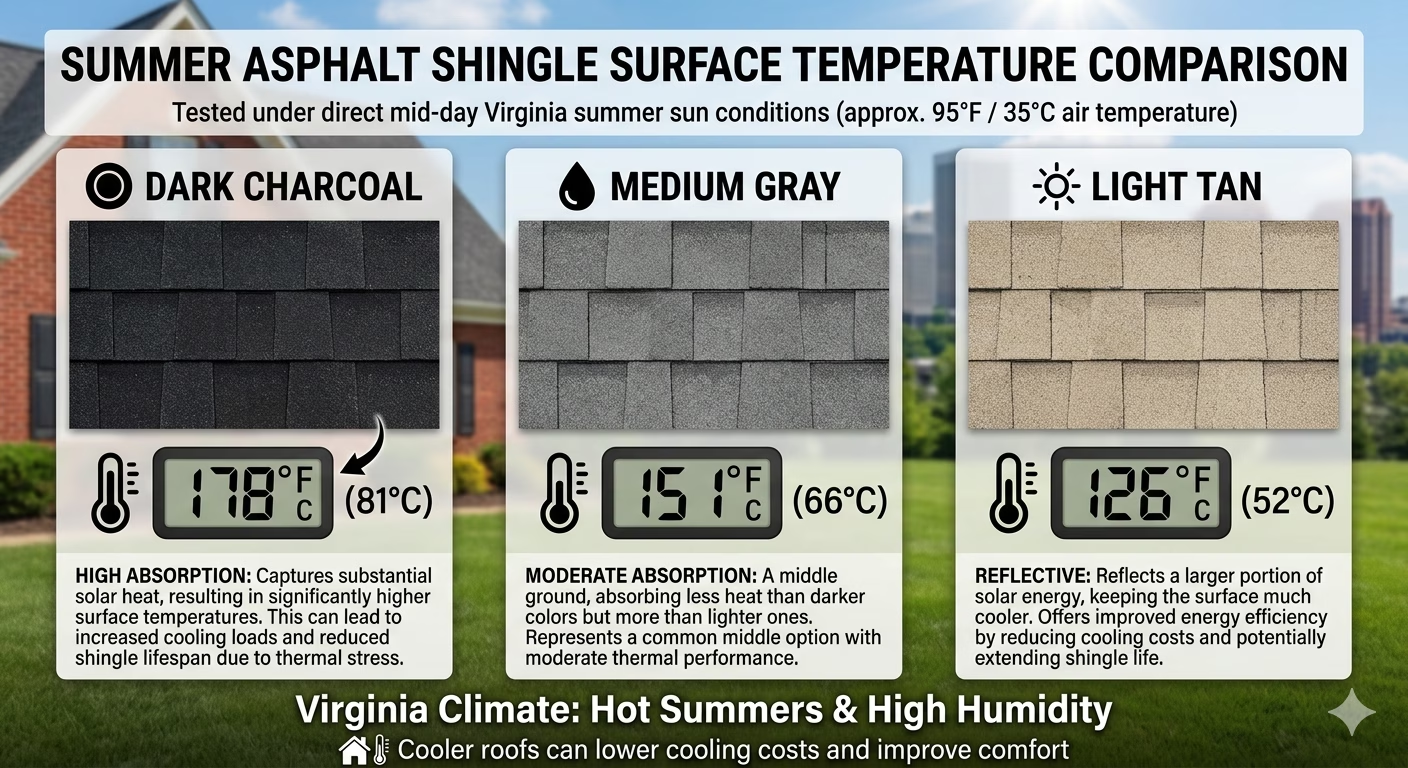
What this does to asphalt shingles: Asphalt is a petroleum-based product that softens in high heat. During a hot afternoon, the surface temperature of a dark asphalt shingle can reach 150 to 170 degrees Fahrenheit. At those temperatures, the binder that holds the granule surface to the shingle begins to soften, and granules that should last the life of the shingle start to loosen and migrate. This granule loss is what you see in your gutters after summer heat events. Each granule represents UV protection for the asphalt beneath it. As granules are lost, UV degradation of the underlying material accelerates, which shortens the effective lifespan of the shingle.
What this does to metal roofing: Metal surfaces also get hot, but quality metal roofing systems respond differently. Most residential metal roofing is coated with Kynar (PVDF) or similar polymer coatings that are significantly more UV-stable than asphalt’s granule system. Standing seam metal with quality coatings reflects more solar energy than asphalt shingles, reducing heat transfer into the attic and, in some cases, reducing cooling costs.
Metal also has no granules to lose. Its thermal resistance doesn’t degrade gradually through heat cycling the way asphalt does.
Humidity and Moisture
Virginia’s humidity is a year-round factor, peaking in summer but never fully absent in the Piedmont and Blue Ridge foothills region.
What this does to asphalt shingles: Quality modern architectural shingles are designed to manage moisture effectively. But shingles can develop granule loss, cracking, or missing sections that allow moisture to reach the underlayment beneath. When that happens, and when the issue isn’t caught quickly, the damage compounds into deck rot and structural damage that turns a simple shingle replacement into a more involved project.
High humidity also promotes algae and moss growth on shingle surfaces. The dark streaks visible on older asphalt roofs in Virginia are almost always algae colonies (Gloeocapsa magma) feeding on the limestone filler in the shingles. Algae growth is a cosmetic issue at first but can lift shingle edges and accelerate moisture intrusion over time.
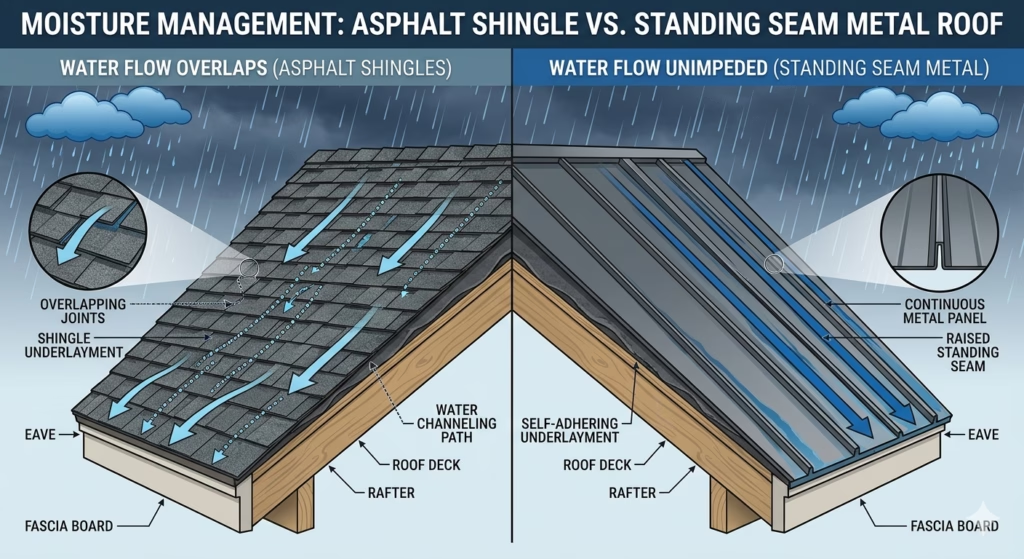
What this does to metal roofing: Metal is inherently non-porous and doesn’t support biological growth the same way. A standing seam metal roof does not provide the substrate or the moisture conditions that algae and moss require. The continuous panel construction also means there are no edges or gaps at individual shingle joints where moisture can begin to infiltrate.
Metal roofing does require attention at fasteners, trim, and penetrations to prevent rust and leakage at those specific points. On exposed fastener systems (corrugated metal), the fastener penetrations can develop small leaks over time if the rubber washers degrade. Standing seam avoids this issue by design.
Summer Storms and Wind
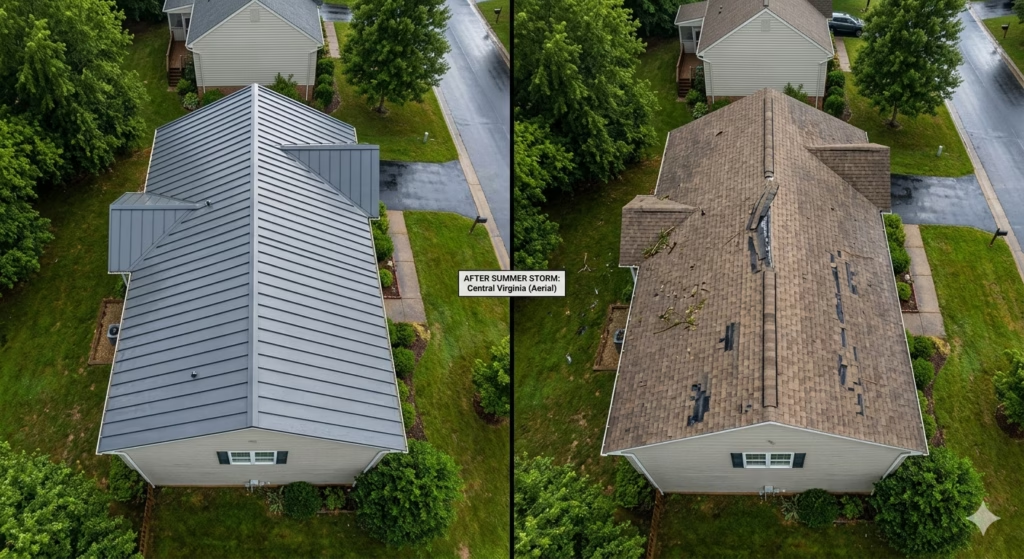
Atlantic tropical systems regularly track through Virginia, delivering sustained winds in the 50 to 70 mph range along with heavy rainfall. Occasional tornado touchdowns are not unknown in the Piedmont region, and any significant thunderstorm can include wind gusts well above what everyday weather brings.
What this means for asphalt shingles: Shingles have wind ratings that vary by grade. Standard architectural shingles carry ratings in the 60 to 90 mph range. Impact-resistant shingles carry higher ratings. But the performance of shingles in high wind depends significantly on two installation factors: whether the starter course at the eaves is properly bonded, and whether the adhesive strip on each shingle has fully sealed to the course below before it’s tested by wind.
A shingle that was installed in cold weather and whose adhesive strip never fully activated is more vulnerable to wind uplift than one that was installed in ideal conditions and had a full season to bond. This isn’t a failure of the material so much as a function of installation conditions and the time since installation.
What this means for metal roofing: Standing seam metal’s major structural advantage in a wind event is the concealed fastener system. Each panel is attached to the roof deck through clips that are hidden within the raised seam between panels, rather than through exposed fasteners that penetrate the surface. When wind creates uplift forces on a roof, these clips distribute that force across the full panel system rather than concentrating it at individual exposed points.
Standing seam panels on a well-designed system can be rated for 140 mph or higher. In Virginia’s storm environment, this represents a meaningful advantage over standard shingle systems.
Ice Events and Freeze-Thaw
Virginia winters are not severe by northern standards, but freeze-thaw events are real. An ice storm in January that coats every surface creates conditions where water can back up under shingle edges and freeze, creating ice dams that force moisture under the roofing material.
What this means for asphalt shingles: Ice and water shield, a self-adhering waterproof membrane installed at the eaves before shingles go on, is the primary defense against ice dam damage. A properly installed Virginia roof should include ice and water shield at the eaves and in vulnerable areas like valleys and around penetrations. If it was left out or installed too narrowly, ice dam events can cause significant damage.
What this means for metal roofing: Standing seam metal’s continuous panels and concealed fastener design make it inherently more resistant to ice dam damage than individual shingles. Water that backs up under a ridge or at a valley encounters fewer entry points on a metal system than on a shingle system. Metal also sheds ice faster once temperatures rise because its surface heats up quickly with solar gain.
Head-to-Head: The Key Metrics That Matter for Virginia Homeowners
Lifespan
Asphalt architectural shingles: 25 to 30 years under normal conditions, with the caveat that Virginia’s UV intensity and humidity tend to put that lifespan toward the lower end of the range for many roofs.
Standing seam metal: 40 to 70+ years. Metal roofs installed in the 1970s and 1980s that have been maintained are still performing in Virginia today.
The implication over a 40-year horizon: a homeowner who replaces an asphalt roof today is likely replacing it again in 25 years before the metal option would need attention.
Wind Resistance
Asphalt architectural shingles: Rated for 60 to 130 mph depending on grade. Impact-resistant (Class 4) shingles carry higher ratings. Performance depends significantly on proper installation.
Standing seam metal: Systems are commonly rated for 110 to 140 mph. The concealed fastener design distributes uplift forces across the panel rather than concentrating them at individual fastener points.
Fire Resistance
Asphalt architectural shingles: Class A rated. This is the highest classification available and is standard for modern architectural shingles.
Standing seam metal: Class A rated. Metal is non-combustible. In areas where wildfire risk or ember exposure is a concern, metal has an additional advantage in that it won’t ignite from ember accumulation the way wood or organic materials can.
Both materials match on fire resistance, which is a point in shingles’ favor relative to materials like natural cedar shake.
Impact Resistance
Asphalt shingles: Vary by grade. Standard architectural shingles are Class 1 or Class 2. Class 4 impact-resistant shingles are available at a higher price and are specifically designed to resist hail damage.
Metal roofing: Quality metal roofing with appropriate panel thickness and coating can achieve Class 4 impact ratings. The material’s elasticity allows it to dent under significant hail impact but typically maintains water-shedding function even when cosmetically affected.
Energy Performance
Asphalt shingles: Dark-colored shingles absorb heat significantly. Light-colored or “cool roof” shingles with reflective granules perform better, but even these don’t match metal’s reflective capacity in most configurations.
Metal roofing: Metal with Kynar coatings reflects a higher proportion of solar energy than asphalt. In Virginia’s hot summers, this can contribute to reduced attic temperatures and lower cooling loads. The energy savings don’t pay for the metal premium on their own, but they’re a real and measurable benefit.
Noise
Asphalt shingles: Essentially silent in rain. The combination of the shingle, underlayment, and attic space creates effective sound damping.
Metal roofing: A commonly raised concern. The honest answer: metal roofing installed with proper insulation and solid sheathing beneath it is not significantly louder than shingles for occupants inside a finished home. An uninsulated metal roof on a pole barn is loud. A metal roof over conditioned living space with solid decking and underlayment is barely perceptible. If noise is a concern, ask specifically about the installation details rather than relying on the general reputation of metal as a noisy material.
Cost
Asphalt shingles: $8,000 to $14,000 installed for a typical Central Virginia home of 1,500 to 2,200 square feet.
Metal roofing: $15,000 to $28,000 installed for the same footprint, depending on panel type and complexity.
The 40-year cost comparison shifts this picture. At minimum, the shingle option involves one replacement (and possibly two) over the same period that metal requires neither maintenance replacement nor full reinstallation. The total 40-year cost of metal and shingles is closer than the upfront numbers suggest.
When Shingles Are the Right Choice
Metal roofing isn’t the right answer for every homeowner or every situation. Here are the cases where asphalt shingles are the more practical choice.
Short-to-medium ownership horizon. If you’re planning to sell your home within 10 years, the premium you pay for metal roofing is unlikely to be fully recovered in increased sale price. A quality architectural shingle roof will satisfy buyers and support the transaction without the larger upfront investment.
Budget is the primary constraint right now. If your roof is failing and needs to be replaced, quality architectural shingles installed correctly by a reputable contractor will protect your home effectively. There’s no situation in which delaying a necessary replacement makes financial sense.
Home design doesn’t suit metal. Some architectural styles and neighborhood contexts pair naturally with shingles. A traditional colonial in a neighborhood of shingle-roofed homes may look out of place with standing seam metal. Visual context is a legitimate consideration.
Insurance incentives tip the math. If your insurer offers meaningful premium reductions for Class 4 shingles (impact-resistant architectural shingles), the effective cost gap between a premium shingle option and basic metal narrows in a direction that may make high-grade shingles the better value.
When Metal Roofing Is the Right Choice
Long-term ownership. If you’re staying in the home and want to deal with your roof once and not again, metal’s lifespan advantage is decisive. The math over 40 years generally favors metal for homeowners with a genuine long-term horizon.
Storm resilience is a priority. Homes in areas that regularly experience severe wind events, hail, or ice storms benefit meaningfully from standing seam metal’s structural advantages. If you’ve had multiple storm-related claims on an asphalt roof, the upgrade to metal is worth serious evaluation.
Historic or farm properties. Metal roofing has a long history in Virginia’s rural architectural tradition. Farmhouses, barns, and historic rural structures in Buckingham, Nelson, Fluvanna, and the surrounding counties were often metal-roofed originally. A metal replacement fits both aesthetically and historically.
Energy performance matters. Homes with significant cooling loads, large roof surfaces, or poor attic insulation may see measurable HVAC benefit from the reduced heat gain that quality metal roofing delivers.
Low maintenance is a priority. Metal roofing requires very little ongoing attention beyond periodic inspection of sealants and trim. For homeowners who don’t want to think about their roof between inspections, metal’s maintenance profile is significantly lighter than shingles.
What the Installation Quality Actually Determines
Both materials perform closer to their theoretical maximums when they’re installed correctly, and further from them when they’re not.
For shingles, the critical installation factors are proper starter strip application at the eaves, correct nailing pattern (four to six nails per shingle depending on wind zone and manufacturer requirements), adequate ice and water shield at the eaves and in valleys, and proper flashing at every penetration and roof-wall interface.
For metal, the critical factors are correct panel overlap and seam formation, proper fastener spacing and torque, sealed trim and flashing at every transition, and the quality of sealants at penetrations.
In both cases, the contractor’s experience and attention to manufacturer specifications is what separates a roof that performs for its full theoretical lifespan from one that develops problems in year five.
Four Seasons Roofing installs both shingle roofing and metal roofing across Central Virginia, with installation practices that follow manufacturer specifications and reflect 14 years of experience with the specific demands of this region’s climate.
The Storm Damage Question
A conversation about metal vs shingles in Virginia isn’t complete without addressing what happens after storm damage.
Both materials can be damaged by severe weather. Hail large enough will dent metal and crack shingles. Wind strong enough will lift both. The question for insurance purposes is whether the damage impairs the roof’s function (which typically triggers a covered claim) or is purely cosmetic.
Metal roofing that is dented but functionally intact is often treated differently by insurers than shingle damage. A hail event that clearly impairs a shingle roof’s protective function is straightforward to document. Metal’s response to hail is more nuanced and may require a more detailed inspection to assess.
If your existing roof has storm damage, or if a storm event raises questions about your roof’s condition, Four Seasons Roofing provides storm damage assessment and insurance claim assistance throughout Central Virginia. Getting a professional inspection is the right first step regardless of which material you currently have.
Common Questions Virginia Homeowners Ask About Metal vs Shingles
Will a metal roof increase my home’s resale value? Generally yes, but the return varies. Buyers recognize a metal roof as a long-term asset and may pay a modest premium. The increase rarely covers the full cost difference from shingles, but it does reduce the net cost gap and the buyer’s concern about near-term roof replacement.
Does metal roofing attract lightning? This is a persistent myth worth addressing directly. Metal does conduct electricity, but a metal roof does not increase the likelihood of a lightning strike. Lightning seeks the path of least resistance to ground and is attracted by the building’s height and location, not its roofing material. Metal roofing is specifically listed as non-combustible in fire safety terms precisely because if lightning does strike, a metal roof won’t ignite.
Can I put metal over my existing shingles? In some cases yes, but it’s not generally recommended. Installing over existing shingles hides the condition of the decking beneath, prevents proper inspection of any damaged or rotted sheathing, and can create moisture trapping conditions at the layer interface. Most reputable contractors recommend a full tear-off before metal installation.
How do I know if my attic is ventilated properly for a metal roof? Attic ventilation is critical for both shingles and metal. Inadequate ventilation traps heat and moisture in the attic space, accelerating degradation of the roofing material from the underside regardless of what’s on top. A professional roof inspection should include an assessment of attic ventilation as part of the overall project evaluation.
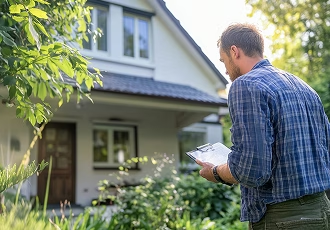
Do I need a roof inspection before making this decision? Yes, without question. The condition of your existing roof, the state of your decking, the configuration of your roof’s geometry, and any existing issues with flashings or penetrations are all variables that affect both which material is most appropriate and what the actual project will cost. A free inspection is the starting point for any well-informed material decision.
The Bottom Line
Both metal roofing and asphalt shingles are legitimate, well-supported choices for Virginia homes. Neither is universally superior. The right answer depends on how long you plan to stay, what your budget allows today, what storms have done to your previous roofs, and what value you place on reduced lifetime maintenance.
What the data consistently shows in Virginia’s specific climate is that metal roofing outperforms shingles on durability, wind resistance, moisture management, and lifetime cost for homeowners with a genuine long-term ownership horizon. Shingles remain the practical standard for most homes, delivering reliable protection at an accessible price point when installed well.
The decision is worth making carefully and making once.
Four Seasons Roofing has spent 14 years helping Central Virginia homeowners navigate exactly this choice, installing both materials at a quality level that lets the products perform as they’re designed to. If you’re trying to figure out what makes sense for your specific home, a free inspection is where that conversation starts.
Schedule a free roof inspection or call 434-390-0199 to talk through your options with a team that’s been doing this work in Central Virginia since before the last roof you’re standing under was installed.
Why Schedule a Call?
Popular Insights
Can a New Roof Lower Your Virginia Energy Bills? What to Expect by Material and Season
Oct. 21, 2026
Metal Roofing Cost in Virginia: Standing Seam vs Corrugated and What’s Actually Worth It for Your Home
Oct. 09, 2026
How to Choose a Roofing Contractor in Virginia: 6 Questions That Separate Professionals from Fly-by-Nights
Oct. 02, 2026
New Roof Installation in Lynchburg, VA: What Homeowners Can Expect from Estimate to Final Day
Sep. 25, 2026
Storm Damage Roofing in Central Virginia: What to Do in the First 24 Hours After Your Roof Is Hit
Sep. 23, 2026Topics
Our Services
- Gutter Services
- Storm Damage Roofing
- Commercial Roofing Service
- BRAVA Cedar Shake Roofing Tile
- Insurance Claim Assistance
- Residential Roofing Services
- Roof Inspection Services
- Roof Repair Service
- Roof Replacement Service
- Shingle Roofing Service
- Metal Roofing Service
- Emergency Roof Repair Services
- BRAVA Spanish Tile
- BRAVA Slate Tile